Although the COVID-19 pandemic was one of the greatest challenges the world has ever endured, it is important to acknowledge there were some notable advances in the fight against the infectious virus. Big data and AI technology have played a huge role in dealing with some of the challenges that arose. We previously talked about the benefits of big data and BI in overcoming the problems the pandemic caused for businesses. However, they were even more important when it came to dealing with public health concerns.
Consider that throughout the fight, many leading technology companies and other well-known parties have been using big data and AI technologies in new and innovative ways to help Public Health officials meet the challenge of COVID-19 since the outbreak’s inception.
Vaccine Matching Programs
One doctor recognized the high volume of vaccines that went to waste, despite many parties needing them. The resulting Dr. B platform allowed clinics with vaccines and people who wanted them to register and connect. Unlike the previously available state websites, this technology was simple for anyone to use. It used big data to better understand the needs of patients on an individual level and match them with the vaccines that they needed.
Anyone could join the waitlist by providing basic contact information and details about their eligibility in the state, such as employment and pre-existing health conditions, on a simple registration page. The website used state parameters to continuously readjust algorithms and suggest vaccine availability to only those who met their state’s requirements. This wouldn’t have been possible without major advances in big data technology.
3D Printing Helped Produce Nasal Swabbing Kits
One example is evident in the actions of the 3D printing community, which also wouldn’t have evolved without advances in AI and big data technology. Throughout the pandemic, one of the major issues confronting the healthcare system was a lack of tests and medical supplies such as Personal Protective Equipment (PPE). Companies like NASCAR donate 3D printing equipment and technology to Ford and Toyota to address the medical supply shortage. Other companies used their 3D printers to produce nasal swabs for Covid-19 testing.
Additionally, 3D printing is also helping to manufacture medical equipment such as ventilator valves and emergency respiration devices, as well as personal protective equipment (PPE) such as masks and mask fitters. AI and bigdata have helped improve the effectiveness and efficiency of 3D printing tools.
Artificial Intelligence Supported Covid-19 Diagnosis
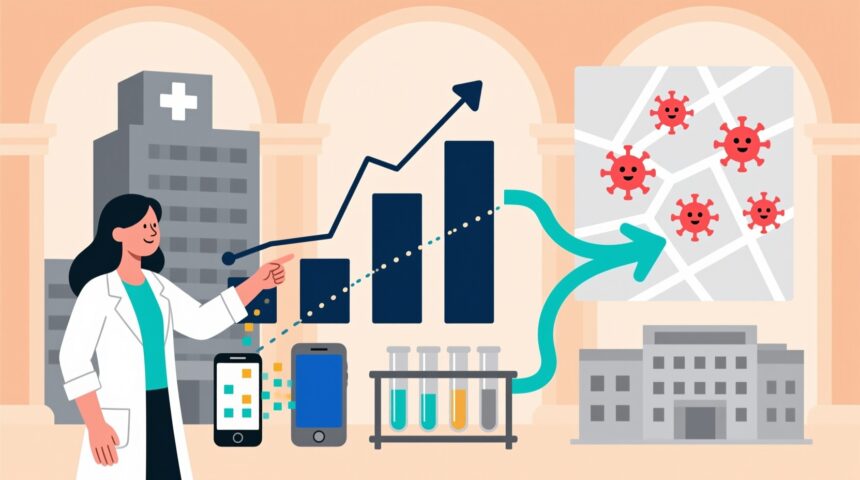
Big data and artificial intelligence (AI) have also shown advancement in detecting and monitoring infectious viruses. For example, one artificial intelligence company released free COVID-19 analysis software for early virus diagnosis and assessment. The software could detect, segment, and generate 3D models of lung damage caused by the virus by using CT image analysis.
In addition, contact tracing in certain offerings could combat the coronavirus outbreak via mobile technologies such as GPS, cellphone masts, and AI-powered big data analytics to assist the government in understanding and managing the spread of COVID-19 within their communities.
Some tools were even able to use AI to monitor the spread of COVID-19 and predict where and when outbreaks might occur. AI-powered chatbots also gained popularity in use cases designed specifically for travellers. The mobile app could inform and assist with coronavirus-related questions as people moved around.
Online Technologies Paved Way For At-Home Education
Another way technology helped fight the pandemic was through the support of online initiatives. During the pandemic, the world met a variety of online platforms available to connect students and workers to their schools and offices from home. Educators in China, Colombia, Italy, Jordan, South Korea, Spain, Uganda, and the United States embraced online learning. They conducted live-streaming classes using digital platforms such as Alibaba’s DingTalk, Google Hangouts, Kolibri, and Microsoft Teams.
Businesses worldwide are using video conferencing and screen sharing on electronic devices via digital platforms to bring their teams together without needing to be in person.
Improving Patient Care with the Internet of Things
Healthcare providers are already using the Internet of Things (IoT). With IoT, patient imaging, health devices or applications, worker solutions, and ambulance programs could help improve treatment plans for the public. However, COVID-19 forced the technology to adapt to new applications to assist the world in combating the epidemic.
Some examples were tracking quarantine, pre-screening and diagnosing, cleaning and disinfecting, innovative drone use, and reducing in-home infections.
Mobile Apps With Up-to-Date-Information
Mobile apps were another notable technology that changed the game amid the COVID-19 pandemic. Before the pandemic, mobile apps were already looking for ways to help patients receive online therapy, at-home testing, complete self-checks, and improve their mental health. Following the pandemic, the world saw an increase in their usage, making it possible to track the virus’s path and help limit its spread.
In a more specific example, one application contained vital and relevant information on the coronavirus pandemic from trusted sources, such as hand hygiene practices, social distancing FAQs, quarantine guidelines, self-checking tutorials, and cleaning and disinfecting surface tips. The same app included a screening tool that advised the world on what to do if they had or came in contact with someone with COVID-19 symptoms who had recently returned from abroad.
Big Data and AI Have Been Invaluable for Dealing with Challenges During the Pandemic
Despite the coronavirus pandemic now being in the endemic stage, we still see the effects of the disease lingering. However, those issues would have been much worse without interventions that were made possible with AI and big data.
Furthermore, while some of these effects caused enormous damage, others have driven the medical industry forward. Throughout this blog post, we noted how many tech innovators accelerate improving medical treatment with IoT, AI and mobile apps.
Although smart technologies cannot replace or compensate for public institutions’ measures, they play an important role in emergency response. A reality we see today.