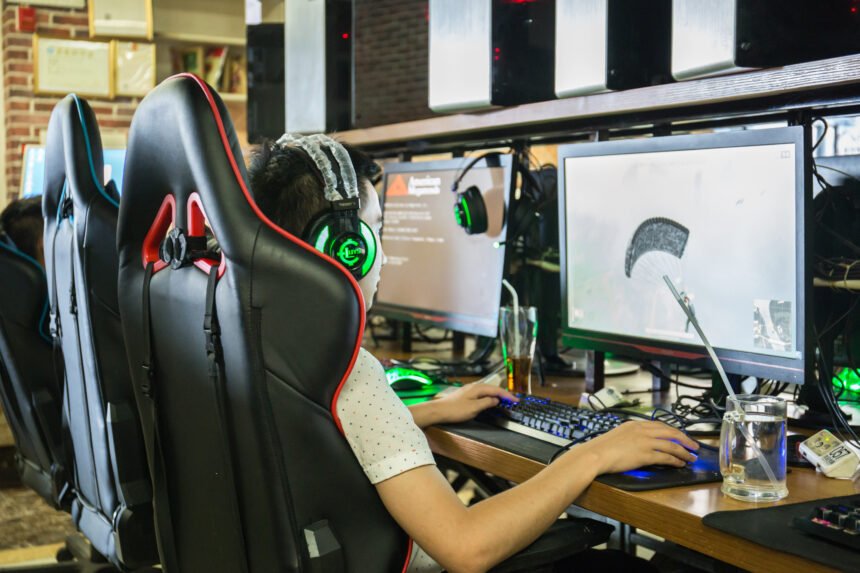
As internet speeds increased over the years, online multiplayer gaming took off and is now a core part of the video game industry. For some gamers it’s just a bit of occasional fun; a chance to pit their skills against others instead of sticking to single player campaigns, for others it’s a more dedicated hobby with organized teams and even prize money and bragging-rights at stake.
But, how many of you who have fired up a game and logged in to a multiplayer session have considered how you are matched with teammates and opponents?
Think about it—if you’re matched with players who are of vastly different skill levels, both ends of the spectrum will find themselves frustrated—if you’re matched correctly, hours of fun can be had.
Big data is what makes it all happen. Let’s explore it in more detail:

Accurate Matchmaking is More Fun
Modern game matching is much more complicated than connecting a bunch of random gamers together that are playing the same mode and are trying to join at the same time. Without considering more factors, things can soon go wrong.
Gamers in certain regions may have internet connection problems with gamers in other regions and experience lagging in performance.
Then there’s the more obvious problem of skill levels. If a beginner, who is still learning how to play effectively, is matched with someone who has clocked weeks of gameplay—the game just fails to be fun. The newcomer will eventually give up because they never get a win, while the expert gamer will become tired of not being challenged by someone of a similar skill level.
Even if the game is otherwise a masterpiece, poor online multiplayer matchmaking can harm its reviews and reception. This was the case with Halo: The Master Chief Collection.
Matching Based on Skills
Using big data and analytics combats this by providing game developers with a deep insight into the behavior of the game’s players. Just like businesses use customer data to determine how to market them products and improve their experience, video game companies can analyze everything from gamer playing style and skill, to how many hours the user has played the game.
Microsoft and its Xbox live platform utilize an algorithm called TrueSkill that expanded on the Elo rating system for chess, in order to rank players in a wide range of areas for better game matchmaking.
It knows, for example, whether a player isn’t very good in a free-for-all mode, but functions better if they have teammates. It doesn’t just take in to account wins and losses, but the number of kills a player scored, their tendency to quit, preferred game modes, and more.
Players are assigned a rank and matched accordingly, ensuring a more competitive experience. The more you play, the more data is collected, the better the matchmaking, which itself is always being tweaked in the background.
Tip: Need more funds for online gaming? Check out WeGot100 for fast borrowing.
Another Layer
A newer approach to matchmaking that adds an extra layer, is to take in to account demographics, interests, and the vast array of data that the likes of online advertisers and dating apps use.
Overdog is one company that has invested millions into an app for Xbox that uses this extra information to improve matchmaking. Now, instead of just focussing on skill, those that use the app are also matched based on music tastes, most visited websites, age and location, career etc.
The idea is to match people with similar personalities and backgrounds that ‘click’, instead of the stereotypical kid shouting obscenities through their headset to the 40-year-old banker. It’s about matching people who might choose each other to game with if they had that choice.
The Future
It would be naïve to think that matchmaking is all about competitiveness though. Ultimately, game companies want people to play their games for as long as possible. Competitiveness plays a role in that, but things are getting a bit more cynical.
EA, for example, has patented an ‘Engagement Optimized Matchmaking Framework,’ based on ‘churn risk.’
Jargon aside, this means their main motivation is a player’s likelihood of quitting. So, if you have been on a losing streak, they will automatically pair you with some weaker opponents to hook you back into the game. Win/Loss records then become meaningless, because there will be an optimum ratio for keeping people engaged.
This becomes more worrying when paired with microtransactions. The difficulty may be manipulated to encourage you to purchase items that make things easier.