We use cookies, including third-party cookies from Google to serve personalized ads through AdSense, to operate this site and understand how it is used. By continuing to browse, you accept this use. See our Privacy Policy and Terms of Use for details, including how to opt out of personalized advertising.
Accept
SmartData CollectiveSmartData Collective
  • Analytics
    AnalyticsShow More
    chatgpt image jul 21, 2026, 04 34 30 pm
    4 Core Benefits of Predictive Maintenance after Vibration Analysis
    10 Min Read
    How Does Data Mining Boost Customer Satisfaction in Logistics? Harnessing Analytics for Results -- AI-generated illustration
    How Does Data Mining Boost Customer Satisfaction in Logistics? Harnessing Analytics for Results
    11 Min Read
    chatgpt image jul 13, 2026, 04 23 45 pm
    How Data Analytics Helps Companies Improve User Engagement
    19 Min Read
    chatgpt image jul 13, 2026, 03 59 46 pm
    How Data Analytics Improves Multi-Location Search Strategies
    10 Min Read
    cybersecurity efforts
    How Behavioral Analytics and AI Are Redefining Cybersecurity for Boca Raton Businesses
    14 Min Read
  • Big Data
  • BI
  • Exclusive
  • IT
  • Marketing
  • Software
Search
© 2008-25 SmartData Collective. All Rights Reserved.
Reading: Fog Computing Will Trend Upwards With IoT Innovation
Share
Notification
Font ResizerAa
SmartData CollectiveSmartData Collective
Font ResizerAa
Search
  • About
  • Help
  • Privacy
Follow US
© 2008-23 SmartData Collective. All Rights Reserved.
SmartData Collective > Uncategorized > Fog Computing Will Trend Upwards With IoT Innovation
Uncategorized

Fog Computing Will Trend Upwards With IoT Innovation

CloudWedge
CloudWedge
3 Min Read
Fog Computing Will Trend Upwards With IoT Innovation
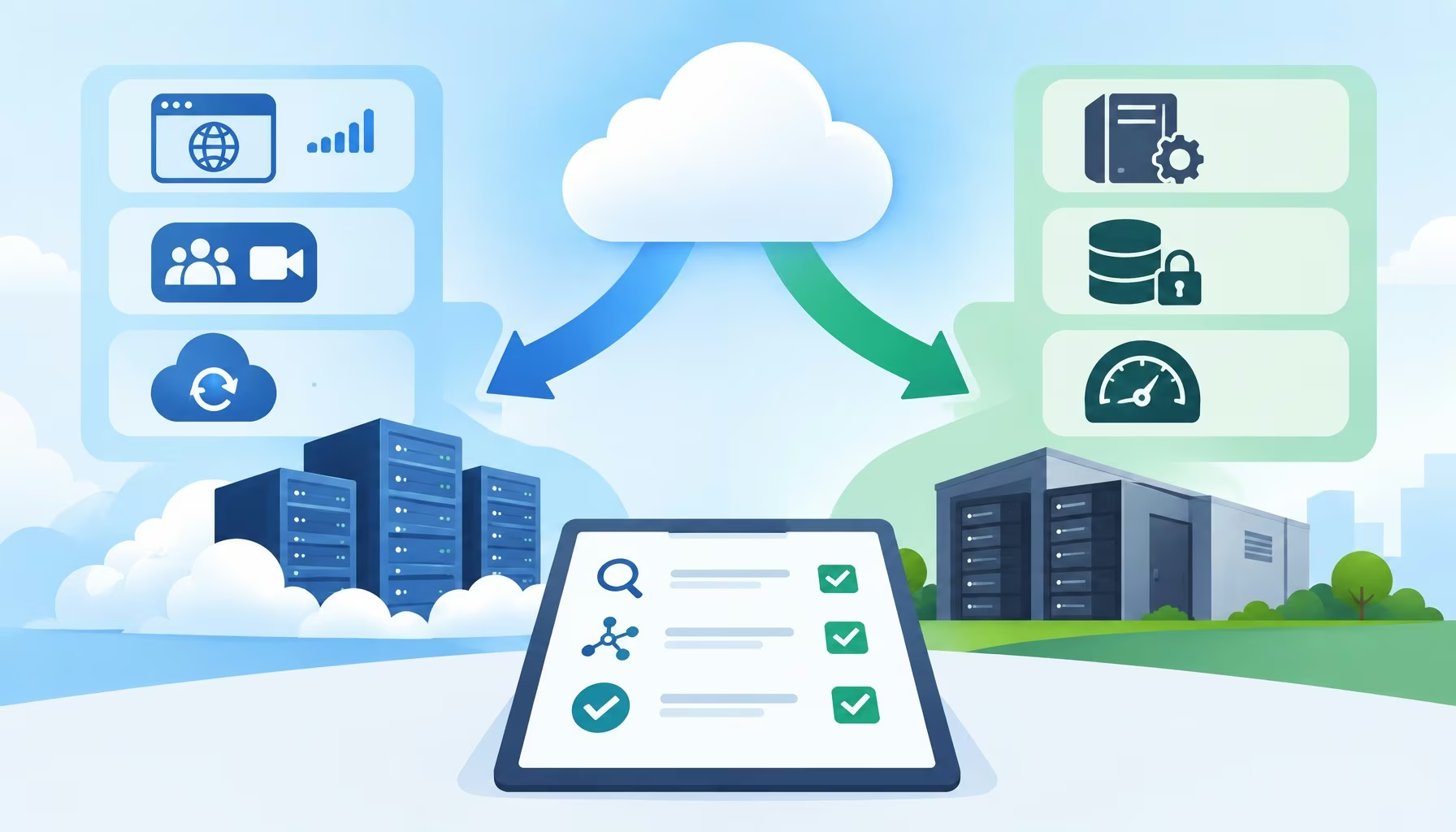
Illustration generated with FLUX.2 [klein 4B] via Cloudflare Workers AI.
SHARE

We often hear a lot about Cloud Computing in the tech world, but Fog Computing is real trend that is starting to take hold. So what exactly is Fog Computing?

Think about the way cloud computing has abstracted computing resources such as compute, storage and bandwidth. Fog Computing exists on the outer edges of the cloud and its main purpose is to interact with IoT devices.

When you explain Fog Computing as existing on the outer edges of the cloud, its important to realize that Fog Computing is part of the cloud itself; just a more streamlined version of a cloud resource that specifically exists to rapidly interact with other devices in the cloud.

Think about the inevitable cloud connected, driverless cars of the future. How will those cars communicate with each other? Does it make sense to risk car to car communications by sending data across the cloud and having latency impact the communication? Why don’t the cars just interact with each other and beam data into cloud when needed?

More Read

5 Sherlock Holmes Quotes That Prove Genius for Data-Driven Decision Making
A “New” Critical Requirement for Business Projects (Part 1 of 4)
Scientist: Influencer Theory Is Bogus
Change Capacity: What Makes Change Easy or Difficult
10 R Packages Every Data Scientist Should Know About

That’s what industry analysts mean when they talk about Fog Computing. In a press release, CeBIT mentions, “In view of the fact that many IoT devices are small, need to run on a tiny amount of electric power and perform only narrowly defined functions, they need a “big brother” who can give them the “right” amount of computing power.”

The CeBIT release goes on to say,“This is a job which the Cloud performs perfectly. But in the case where information is needed only locally and for just a short period of time, the situation becomes quite different: Data of this kind needs to be processed quickly, preferably onsite, without any need to store the data.”

Internet connected devices that have available computing power interact with each other, rather than travel across an entire cloud infrastructure to make a successful communication. The cloud to car example is just one example of this robust technology.

The applications of Fog Computing are endless. Fog Computing will become more prevalent in consumer related applications. Think about the technical advances the finance industry could muster up using the idea of Fog Computing. The Cloud Computing trend isn’t going anywhere anytime soon, yet, you should start to hear more about Fog Computing in the upcoming years.

Share This Article
Facebook Pinterest LinkedIn
Share

Follow us on Facebook

Latest News

How Search Engine Indexing Lags Behind Large-Scale Website Domain Migrations -- AI-generated illustration
How Search Engine Indexing Lags Behind Large-Scale Website Domain Migrations
News
How Great Content Moves Through A Marketing Ecosystem -- AI-generated illustration
How Great Content Moves Through A Marketing Ecosystem
Exclusive Infographic Marketing
What Your Brand Misses That Data Reveals -- AI-generated illustration
What Your Brand Misses That Data Reveals
Big Data Exclusive Infographic
5 Common Mistakes Businesses Make During the Risk Assessment Process -- AI-generated illustration
5 Common Mistakes Businesses Make During the Risk Assessment Process
Business Intelligence Exclusive Risk Management

Stay Connected

1.2KFollowersLike
33.7KFollowersFollow
222FollowersPin

You Might also Like

How GE Is Using Big Data to Drive Business Performance

7 Min Read
Honoring Anita Borg on Ada Lovelace Day
Uncategorized

Honoring Anita Borg on Ada Lovelace Day

5 Min Read
The Twitter fail whale has resurfaced
Uncategorized

The Twitter fail whale has resurfaced

1 Min Read

Virtual Reality: A New Creative Medium Where the Default State Is Belief

5 Min Read

SmartData Collective is one of the largest & trusted community covering technical content about Big Data, BI, Cloud, Analytics, Artificial Intelligence, IoT & more.

The Art of Conversation: Enhancing Chatbots with Advanced AI Prompts
Chatbots
5 Great Tips for Using Data Analytics for Website UX
Big Data

Quick Link

  • About
  • Contact
  • Privacy
Follow US
© 2008-26 SmartData Collective. All Rights Reserved.
Welcome Back!

Sign in to your account

Username or Email Address
Password

Lost your password?