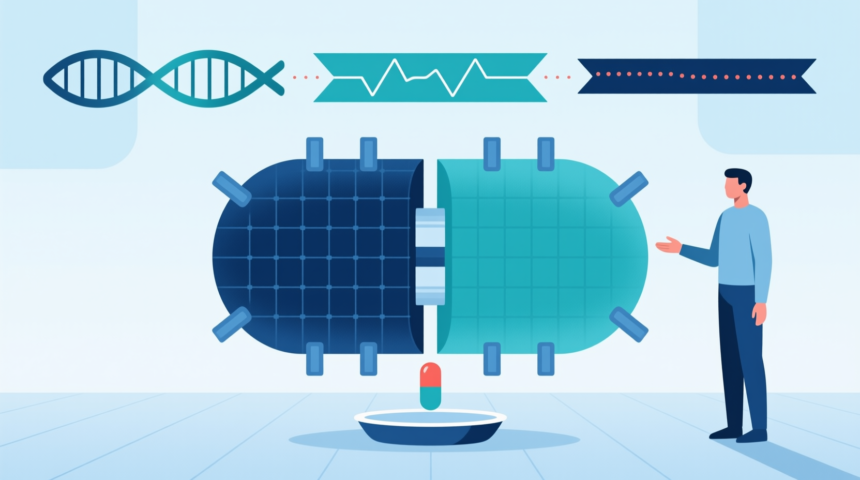
A Chinese genetic scientist recently caused an ethical outcry by claiming to have created the world?s first gene-edited babies, using CRISPR to modify their DNA before birth to make them resistant to HIV. The procedure, which is effectively barred in most countries, highlights the far-reaching potential of gene editing and CRISPR as well as the ethical, moral and social implications of going too far. And quite understandably, the incident has reignited the conversation around AI and how gene editing should be regulated.
How CRISPR Works
CRISPR is a gene editing technology that can be used to precision target specific DNA sequences to deliberately activate or inhibit genes. Ever since it was introduced six years ago, much of the focus has been on CRISPR?s potential to treat genetic diseases and its impact on drug discovery and development.
The ability to target an individual?s distinctive molecular and genetic profile opens up new opportunities in precision or personalized medicine. The precision targeting capabilities of technologies like CRISPR enable medical practitioners to develop protocols that can minimize harmful side effects and ensure more successful outcomes.
It is this potential that is driving the growth of the global precision medicine market, expected to be worth nearly USD 87 billion by 2023. And continued CRISPR-related breakthroughs are bringing the potential closer to reality. Last year alone, researchers were able to successfully extract HIV DNA from live animals, create a cancer-destroying gene and fix a genetic mutation in human embryos that caused a heart condition called hypertrophic cardiomyopathy.
More Read

Improvements In The Field
Last year also saw some incredible improvements to CRISPR itself. One of the biggest concerns with tools such as CRISPR was that cutting DNA may itself cause harmful new mutations. Scientists have addressed this issue with a modified CRISPR technique that alters the activity of a gene rather than its sequence. A re-engineered version of CRISPR also expands the technology?s precision capabilities by correcting single typos in DNA and RNA.
Precision medicine adoption also seems to be keeping pace with the pace of developments in the field. According to a Oracle-GenomeWeb study, 60 percent of hospitals and medical centers have an active precision medicine initiative in place with an additional 17 percent in the process of doing so. Going forward, technologies like AI and machine learning will play a central role in determining the pace of research as well as adoption.
Take genomics, for instance, the study of an organism?s complete set of DNA, including all of its genes. It took over a decade to sequence the human genome – about 3 billion units of DNA across 23,000 genes – using the classic Sanger sequencing method. Modern techniques like Next Generation Sequencing, or high-throughput sequencing (HTS), allow researchers to sequence a whole human genome in just a day and at a fraction of the cost. Today, scientists can build a more accurate reconstruction of true genome sequence from HTS sequencer data using a Google open source tool called DeepVariant.
As gene sequencing becomes cheaper and quicker, enormous volumes of genetic data are piling up at research and healthcare facilities around the world. Researchers now need to analyze volumes of DNA-sequence data to find variations that affect health, disease or drug response.
What Makes This Technology Unique
Traditional computational systems cannot cope with analyzing such huge volumes of data at scale and will still require researchers to manually identify patterns. Next generation AI-enabled computer systems, like MIT?s Data Science Machine (DSM) for instance, can help researchers not only by analyzing data but also in qualitatively parsing that data. Today, companies like Deep Genomics are already relying on advanced AI platforms to help researchers interpret genetic variations, understand how they lead to disease and analyze the impact of mutations. These next-generation solutions exponentially increase the effectiveness of data analysis, reduce the risk of human error and accelerate time to results.
If AI can understand the connections between genetics and disease, then it probably can also help us with using CRISPR to achieve the most optimal health outcomes.
Challenges Remain
There are still a couple of challenges in applying CRISPR and other similar gene editing systems. Perhaps one of the biggest challenges with CRISPR is off-target cutting, where the tool mistakenly cuts on sites other than the target, which can lead to harmful mutations. The second is the need for manual intervention in selecting an appropriate target sequence, a process involving a whole lot of variables and unpredictable outcomes.
Microsoft is already offering a cloud-based tool called Elevation that uses machine learning to predict off-target effects when editing genes with the CRISPR system. Genome engineering startup Synthego is meanwhile completely up-leveling the researcher by offering one-click delivery of modified cells to institutions that would rather focus on outcomes than on CRISPR optimization.
Machine learning and AI can help make genome sequencing and editing cheaper, faster and more accurate. But successful precision medicine will take more than just deep genetic data; in order to achieve optimal health outcomes it has to be based on a patient’s clinical, environmental, and behavioral data. According to Frost & Sullivan, the most effective AI solutions will also take into account the latest research evidence and regulatory guidelines before recommending personalized treatment pathways.
Final Thoughts
Technologies like machine learning and AI can significantly accelerate the adoption and growth of a data-intensive practice such as precision medicine. But there are complex legal, social and ethical concerns that have to be addressed before the full potential of technologies like CRISPR and AI can be effectively harnessed. But a shift from a traditional one-size-fits-all model to a more intelligent, personalized and data-driven approach to medical care can deliver tremendous benefits in terms of healthcare costs and quality of outcomes.