SPARC servers, even today, are used in data centers of many large banks, telecom giants, and government agencies. They are still quietly powering critical applications that process thousands of dollars in transactions every day. For several decades, they have been the backbone of businesses’ core infrastructure. They were designed for reliability and stability, which they delivered. But with time, with the rise of technologies, these SPARC systems become outdated.
Oracle has announced end-of-life for legacy SPARC hardware and Solaris applications. It has become a hurdle for the IT teams. Now the question is no longer whether to migrate but how to migrate these ticking time bombs. Surveys have shown that more than 60% of organizations still rely on legacy infrastructure for their core business operations. And any failure can be catastrophic; it will not only impact productivity but also the ROI.
SPARC emulation is a technology that cost-effectively migrates the Solaris OS and other critical SPARC workloads to a modern x86 server (on-premises) or cloud environment without rewriting a single line of code. This zero-code rewrite migration approach preserves the legacy investments (decades of intellectual property), while leveraging the modern technologies that accelerate digital transformation and innovation. In this post, we explore what SPARC emulation is and the benefits of this zero-code rewrite migration approach in transforming the legacy SPARC infrastructure.
What is SPARC Emulation?
Before understanding what SPARC emulation is, first let’s talk about the SPARC hardware. Its design is based on the RISC-based instruction set architecture. It was developed by Sun Microsystems in the 1980s. It became highly popular in enterprise environments for its reliability and high computing power. It supported Solaris OS and other SPARC applications for running critical operations.

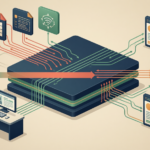
SPARC emulation is the process of replicating the SPARC environment on a standard x86-64 servers or cloud instances. It intercepts every processor instruction and translates it at runtime, delivering binary compatibility. This way, the SPARC applications and Solaris operating system will not feel any difference and continue operating in the same manner as they were running on the original infrastructure.
SPARC emulation solutions are available as open source as well as for the enterprise level. One of the most preferred enterprise-grade SPARC emulation solutions is Stromasys CHARON-SSP, which emulates SPARC systems on x86 servers with Linux or Windows hosts.
For example, a critical application running Solaris 10 on an obsolete SPARC T4 server can be seamlessly migrated to a modern platform with SPARC emulation. The Solaris 10 workload moves to a modern x86 server (with Linux as the host OS) without any code changes. Because of the full binary compatibility, the application behaves identically to the existing SPARC T4 while producing the same outputs and delivering comparable (or better) performance on the new platform.
How Zero-Code-Rewrite SPARC Emulation Works?
SPARC emulation relies on dynamic binary translation (DBT). The emulator will translate the SPARC instructions to the new host architecture (like x86 servers) while the application is running. For faster execution, codes that are frequently used are cached. This helps in delivering good performance without slowing down interpretation while ensuring the application runs exactly as it did on original SPARC hardware.
Key components of Solaris virtualization include:
- CPU Core: Emulates 32/64-bit SPARC V8/V9 pipelines, FPU (floating-point unit), and crypto extensions.
- Memory Subsystem: Virtual MMU with huge-page support mimics Solaris memory management.
- I/O Stack: Virtualizes PCIe buses, Fibre Channel HBAs, Gigabit Ethernet, and peripherals like framebuffers.
How to Run Legacy SPARC Workloads on the Emulator?
Here is the step-by-step process for running the legacy Solaris/ SPARC applications on the emulator:
- The emulator loads your original SPARC binary.
- It translates SPARC instructions to the host processor’s language (such as x86 servers) while the Solaris OS and other SPARC applications run in the background.
- For improved performance, the frequently used code sections are cached.
- Emulator maintains transparency in managing the system calls and device interactions.
- The application runs exactly as before with the same results, but with improved processing speed due to the supported new platform.
This entire process requires no changes to your source code.
What Are the Best Practices for SPARC Emulation?
Here are some tips to be followed for seamless SPARC emulation:
Benchmark Critical SPARC Workloads and Applications
- Test POC (proof-of-concept) on modern hardware (x86 server).
- Identify if your workload is CPU-bound, I/O-bound, or sensitive to memory latency.
- Evaluate your SPARC workload’s performance.
Choose the Right Emulator Based on Your Business Requirements
Look for an enterprise-grade SPARC emulator that meets PCI-DSS, SOX, and other standards, especially required for regulated industries.
Adopt Phased Migration Path
- Do not move all the applications at one time. This can impact your productivity.
- Also, phased migration helps with immediate stability and cost savings. It will help in reducing pressure and risk.
Validate Timing Behavior
- Test clock-sensitive applications, especially in the finance sector. This ensures accurate time-stamping and synchronization.
- Configure NTP or PTP properly on the host and emulator.
The emulation landscape is evolving rapidly. You can choose from a wide range of virtualization options for Solaris SPARC systems, like community-driven emulators or enterprise-grade solutions like Stromasys Charon SSP. Open-source emulators may offer free licensing, but when it comes to security, they offer no SLAs. Charon SSP is widely used across various industry sectors for mission-critical deployments due to its full binary compatibility and cloud readiness. It emulates legacy SPARC hardware on standard x86 servers and leading cloud platforms. It not only preserves the existing Solaris and SPARC investments but also leverages modern technologies to ensure continuity and innovation.
Conclusion
SPARC emulation is a zero-code-rewrite legacy migration approach to extend the life of your Solaris OS and other critical applications. It is one of the most cost-effective methods to improve the speed, cost savings, scalability, and compliance. It will not only eliminate the additional aging hardware maintenance costs but also ensure sustainability and innovation in 2026.