It doesn’t matter if you’re a Millennial or a Baby Boomer—classrooms today are starting to look a lot different than when we were kids.
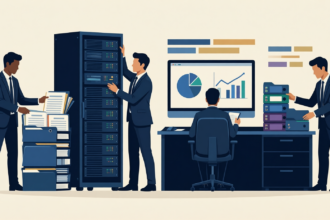
Children are being issued tablets or laptops as soon as they enter school, before many can even read. Second graders are being required to type 60 words per minute in order to easily take computer-based standardized tests. And a child’s digital trail within the school system may begin as early as preschool, with information including the child’s name, address, birth date, medical and behavioral history all entered into an administration system.
Technology and data collection in the classroom are a reality, and the field is changing so fast, it’s nearly impossible to predict what kids even a few years from now will accept as part of the norm of their education.
It’s yet another example of the ways in which big data is becoming an inextricable part of everyday life. But when it comes to our children’s education, is that a good thing, or a bad thing?

Closing the feedback loops and the benefits of data in education
Education has always fundamentally been about feedback loops. A teacher presents a problem and the student attempts to solve it. From that attempt, the teacher can learn what the student understands and doesn’t understand, and can adjust his or her instruction accordingly. Likewise, the student understands more about the problem he attempted.
That works very well in a one-to-one setting or with a low student to teacher ratio, but with classrooms overflowing with students—each one of whom is at a different level—it becomes much harder to create those individual feedback loops.
That’s one area where data and technology can step in.
Any teacher can walk students through a course. But to pinpoint and develop the specific problem areas of each student—in classrooms that are already at capacity—is a tough undertaking, which is where an education technology company like Knewton seeks to improve the process.
Through its digital platform, Knewton analyzes the progress of millions of students, from kindergarten to college level, to create better test questions and personalized course goals.
The company recently partnered with Houghton Mifflin Harcourt to provide adaptive K-12 math courses, as well as French startup Gutenberg Technology to create smarter digital textbooks—then capped off the year by raising an impressive $51 million, led by venerable venture firm Atomico.
Basically, these courses and textbooks adapt to each individual student. The program can assess, in real time, whether a problem is too easy, too hard, or just right, and adjust the remaining problems in a session accordingly.
Students can proceed at their own pace, regardless of what the other students around them are doing. Then, the teacher can receive that information and understand where any one student might be struggling, or analyze the performance of a class as a whole.
This video from the Knewton website explains the five types of data the company helps educators collect, and these sorts of personalised learning applications are often cited as the most exciting and promising components of big data in the classroom.
But what are the drawbacks?
The obstacles data must overcome in education
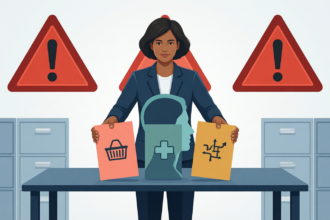
As with data use in almost any application, there are fears and concerns that follow big data into the education system.
Data breaches are a legitimate concern, as they have already happened. In 2009, one school district in Tennessee inadvertently left the names, addresses, birth dates and full Social Security numbers of 18,000 K-12 students on an unsecured server for months.
Another fear is that, like the mythical “permanent record” file folder schools used to use, students may get an unshakable data identity that follows them throughout their education career. A student branded a troublemaker in primary school, for example, may be a totally different behavior case by secondary school, but still be treated by administrators and teachers based on past problems—an education no fly list, if you will.
Some advocacy groups also fear that student data could be used to market to children. In theory, schools and program manufacturers could sell advertising within the digital space that could be tailored specifically for a particular student’s needs and tastes. Write an essay about baseball, and you might see ads for tickets to a local game or memorabilia. (And that’s in the most benign scenario.)
The changing role of teachers
Each of these is an obstacle faced by any sector using data—from finances to retail, but in education another problem is the changing role of the teacher.
With more and more technology and data in the classroom, there is the very real drawback of the teacher’s role becoming much more data-driven and administrative, which I believe already is a major problem.
Great teachers are in their profession because they are passionate about educating our children. They get a buzz from seeing kid’s eyes light up when they understand a new topic and they are passionate about making children flourish in a topic.
Unfortunately, those same great teachers are generally less passionate about the fact that now algorithms take over that job and that their role involves (even more) data input and administrative work, even if all of this might ultimately helps pupils to excel.
So big data and technology is probably not going to be the panacea for all of education’s woes. I believe that it is critical that we build the technology alongside the vital role of great teachers and not alienate them through the use of data and analytics. In the end, as with every industry, understanding and applying the data and analytics processes to education will yield positive results and ultimately benefit teachers and students.
—–
Finally, please check out my other posts in The Big Data Guru column and feel free to connect with me via Twitter, LinkedIn, Facebook, slideshare and The Advanced Performance Institute.