We use cookies, including third-party cookies from Google to serve personalized ads through AdSense, to operate this site and understand how it is used. By continuing to browse, you accept this use. See our Privacy Policy and Terms of Use for details, including how to opt out of personalized advertising.
Accept
SmartData CollectiveSmartData Collective
  • Analytics
    AnalyticsShow More
    Flat editorial illustration: The article is about joining public web signals with internal business metrics so BI teams can inter
    Alternative Data in BI: Bringing Public Web Data Into Your Dashboards
    23 Min Read
    Flat editorial illustration: The article is about automating the collection, preparation, and delivery of marketing data across p
    From Data to Dashboards: 5 Marketing Reporting Automation Software Picks
    12 Min Read
    Flat editorial illustration: The article contrasts passive follower totals with a behavioral path from attention and trust to cli
    Creator Analytics Beyond Follower Count: Seven Metrics That Measure Audience Behavior
    11 Min Read
    Flat editorial illustration: The article connects AI and marketing analytics with managerial judgment grounded in consumer behavi
    How an Online MBA in Marketing Connects AI and Data Analytics
    11 Min Read
    What Kind of Problem-Solving Distinguishes Data Analysts From Software Engineers -- AI-generated illustration
    What Kind of Problem-Solving Distinguishes Data Analysts From Software Engineers
    7 Min Read
  • Big Data
  • BI
  • Exclusive
  • IT
  • Marketing
  • Software
Search
© 2008-25 SmartData Collective. All Rights Reserved.
Reading: Artificial Intelligence Chatbots Could Make Your Doctors Obsolete
Share
Notification
Font ResizerAa
SmartData CollectiveSmartData Collective
Font ResizerAa
Search
  • About
  • Help
  • Privacy
Follow US
© 2008-23 SmartData Collective. All Rights Reserved.
SmartData Collective > Business Intelligence > Artificial Intelligence > Artificial Intelligence Chatbots Could Make Your Doctors Obsolete
Artificial IntelligenceExclusive

Artificial Intelligence Chatbots Could Make Your Doctors Obsolete

Ryan Kade
Ryan Kade
8 Min Read
Artificial Intelligence Chatbots Could Make Your Doctors Obsolete
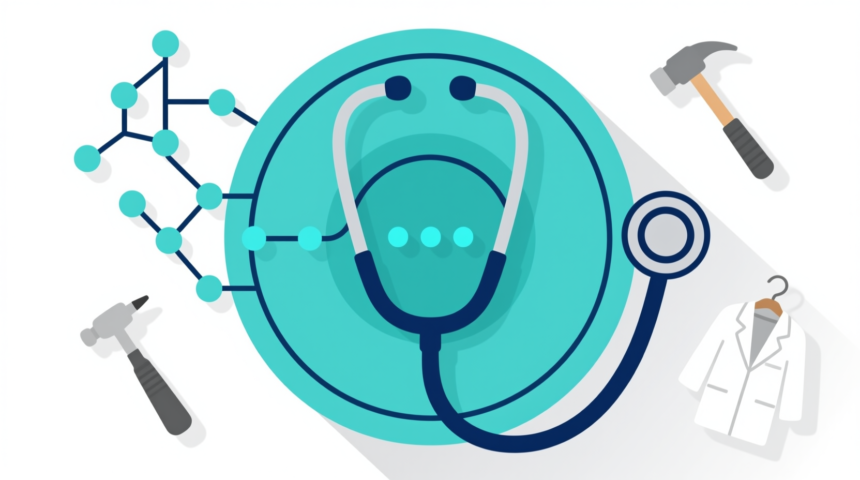
Illustration generated with Qwen Image.
SHARE

Just imagine a very familiar scene: 3 a.m. and you google your symptoms and self-diagnose your illness. Then you have to decide based on whatever search has come up whether or not you need to see a doctor. This is one of those times where AI chatbots come into play. More and more HealthTech companies are focusing on providing a software solution for patients to define symptoms and then get proper treatment. Triage chatbots is an alternative to googling your symptoms. A user can enter the main complaints and will then be asked a number of questions based on the given info. At the end of a session, the bot suggests the way to treatment. Chatbots can initiate video chats with real doctors, direct to patient booking systems or just advice where to ask for help. For the most part AI chatbots are intended to support physician workflow rather than replace them anytime soon. The key concept is to relieve the burden on physicians and medical teams. In fact, chatbots have limited authority. Indeed, the U.S. Food and Drug Administration does not allow an app to diagnose a patient or prescribe drugs without physician input. However, Joel Barthelemy, founder and CEO of Arizona-based GlobalMed, is sure that is to change in the near feature. Today?s AI-enabled apps, based on the experience of many thousands of similar patients with the same symptoms, can suggest doctors which medication to prescribe or which treatment to try. As software shows more accurate results, physicians will agree with these apps most of the time unless they know something unique about their patients. Then they can contact a patient and ask more specialized questions. But Mr. Barthelemy claims that, in most cases, patients will no longer have to see primary care doctors in person.

Contents
  • AI and chatbots in healthcare: case studies
  • AI in healthcare apps: criticism
    • Conclusion

AI and chatbots in healthcare: case studies

Ada Health

?s mobile software is described as ?a personal health companion and telemedicine app?. Users can figure out what symptoms they have via Ada?s conversational interface and get info on what might be the cause. If necessary, Ada then offers a follow up remote textual consultation with a real doctor.

?Ada has been trained over several years using real world cases, and the platform is powered by a sophisticated artificial intelligence (AI) engine combined with an extensive medical knowledge base covering many thousands of conditions, symptoms and findings,? the company explains.
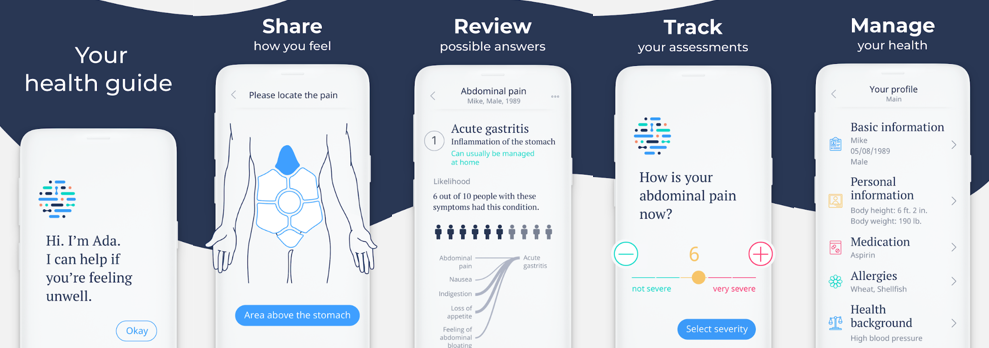
ADA Your Health Guide
Source – https://play.google.com/store/apps/details?id=com.ada.app&hl=en_US
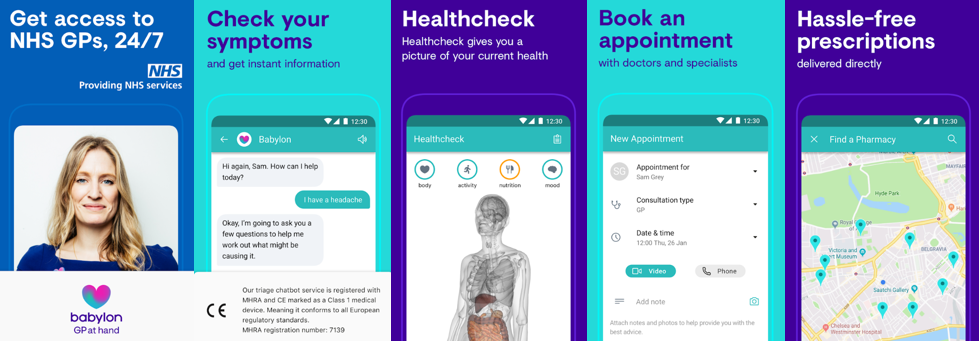
In every inquiry, Ada analyzes all available patient information, including past medical history, symptoms, and risk factors. By acting as a pre-screen consultation before being redirected to a real doctor, Ada saves time during any follow-up consultation. Babylon Health started out as a telemedicine app, offering live chat and video consultations with healthcare professionals. Today?s version provides a triage function where patients use the app to get medical advice rather than call the NHS hotline for help.
babylon online doctors app
Source: https://play.google.com/store/apps/details?id=com.babylon&hl=en_GB
The UK?s National Health Service (NHS) have used Babylon software on a trial basis for dispensing medical advice since 2017. Thus, NHS patients, living or working in the service areas of five clinics all within Greater London, can use the app to book consultations with NHS GPs. Triage via Babylon app requires about 12 text messages and takes about 90 seconds. The AI-powered chatbot can formulate a course of action based on personal medical history, and then schedule a video appointment with a real doctor, if necessary. On average, phone calls to the NHS helpline take up to 15 minutes that cost the government about £15 (about $20). Babylon Health can reduce consultation costs to £5/month based on a subscription. Belgian biopharma company UCB worked with Verint Systems to develop an app for patients with Parkinson?s disease. Their product, known as PD Coach, is equipped with an AI assistant named April, powered by Verint?s Intelligent Virtual Assistant (IVA) solution.

More Read

Shocking Ways Big Data Changed the Nature of Business Lending
5 Reasons Technical Support is Essential in the Big Data Age
Problems Solved with AI And Machine Learning in Customer Service
Putting Historic Business Data To Work With Machine Learning
When Ideology Reigns Over Data

?We designed the PD Coach to address specific challenges that Parkinson?s patients and their caregivers may face ? including its unique ability to learn and adjust to language and vocabulary for patients with dexterity and speech issues,? Mike Davis, head of UCB?s US Neurology Patient Value Unit, said. ?With insights from patients on the challenges they face with disease management, April was created as more than a resource to offer information. April is designed to build a relationship with the patient and help deliver what patients value when it comes to their care.?
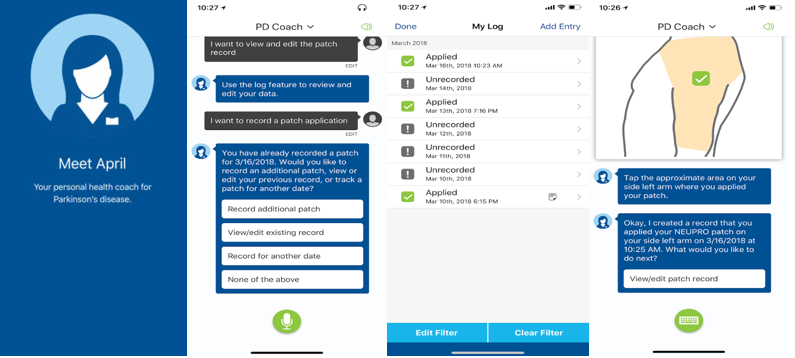
PD Coach - Google Playtstore
Source – https://play.google.com/store/apps/details?id=com.ucb.pdcoach
April is programmed with Parkinson?s-specific information and is able to communicate with patients through speech and text. Users with Parkinson?s disease have ongoing, personalized support and access to the resources they need.

“This AI and automation-powered technology creates a new avenue for patients to turn to for help and guidance that has the convenience of an app,? Michael Southworth, general manager of intelligent self-service at Verint, said. ?AI and intelligent assistant technology has the ability to transform healthcare and access for patients. With April, we?ve built a resource that can truly meet patients where they are and allow them to take greater control of their health.?

AI in healthcare apps: criticism

AI-enabled chatbots are not without controversy. A study from MIT computer scientists suggested that AI can?t provide the same quality of care as physicians. The researchers analyzed doctors? written notes on intensive care unit patients and found that ?internal sensations? about a particular patient?s condition played a prominent role in determining how many tests should the patient have.

?There?s something about a doctor?s experience, and their years of training and practice, that allows them to know in a more comprehensive sense, beyond just the list of symptoms, whether you?re doing well or you?re not,? Mohammad Ghassemi, a research affiliate at IMES, said. ?They?re tapping into something that the machine may not be seeing.?

Conclusion

Artificial intelligence now has a deeper touch in healthcare. AI-powered chatbots can diagnose patient conditions via mobile devices. The technology allows caretakers and doctors to remotely monitor the elderly and critically ill patients. The potential of AI in healthcare is both promising and alarming, considering the possible effects of one bad decision. Therefore, AI-powered software should earn its credibility in the eyes of physicians and patients. For instance, AI chatbots might support human decision making while providing a recommended treatment plan. Maybe in the distant future, a chatbot will replace a flesh-and-blood doctor. But today?s AI-powered solutions are not sufficiently effective lacking a doctor?s gut feeling. Supporting Resources: https://www.healthcareitnews.com/news/next-gen-telehealth-ai-chatbots-genomics-and-sensors-advance-population-health https://techcrunch.com/2017/04/19/ada-health/ https://www.businesswire.com/news/home/20181115005077/en/UCB-Verint-Announce-Launch-UCB%E2%80%99s-PD-Coach http://news.mit.edu/2018/doctors-rely-gut-feelings-decision-making-0720


TAGGED:AIAI in healthcareartificial intelligencechatbots
Share This Article
Facebook Pinterest LinkedIn
Share
ByRyan Kade
Follow:
Ryan Kade is the editor overseeing contributed content at Smartdata Collective and contributes weekly column.

Follow us on Facebook

Latest News

b2b payment data tells supplier about its customers
What B2B Payment Data Tells a Supplier About Its Customers
Business Intelligence
Flat editorial illustration: The article connects downstream report failures, data-quality gaps, and conflicting metric definitio
Signs Your Data Architecture Needs an Outside Review
Big Data Exclusive
Data-Driven Pultrusion: Best GFRP Rebar Machines & ROI
Big Data Exclusive
Flat editorial illustration: The article contrasts tools for gathering fresh interviews with tools for analyzing existing qualita
10 AI Market Research Tools That Turn Qualitative Data into Insights
Artificial Intelligence Big Data Exclusive

Stay Connected

1.2KFollowersLike
33.7KFollowersFollow
222FollowersPin

You Might also Like

Experts Debunk The Biggest Myths About AI In Business
Artificial IntelligenceExclusive

Experts Debunk The Biggest Myths About AI In Business

5 Min Read
3 Companies That Highlight The Power Of Crowdfunding For VR
Artificial IntelligenceExclusiveVirtual Reality

3 Companies That Highlight The Power Of Crowdfunding For VR

6 Min Read
AI driven big data company
Artificial IntelligenceData ManagementExclusiveRisk Management

How AI-Driven Workflows Are Changing the Way Companies Think About Data Risk

10 Min Read
AI Technology is Becoming Essential for App Store Publishers
Artificial Intelligence

AI Technology is Becoming Essential for App Store Publishers

6 Min Read

SmartData Collective is one of the largest & trusted community covering technical content about Big Data, BI, Cloud, Analytics, Artificial Intelligence, IoT & more.

ai chatbot
How AI Website Chatbots Improve Customer Support and Lead Generation
Chatbots Exclusive
5 Great Tips for Using Data Analytics for Website UX
Big Data

Quick Link

  • About
  • Contact
  • Privacy
Follow US
© 2008-26 SmartData Collective. All Rights Reserved.
Welcome Back!

Sign in to your account

Username or Email Address
Password

Lost your password?