Cookies help us display personalized product recommendations and ensure you have great shopping experience.

By using this site, you agree to the Privacy Policy and Terms of Use.
Accept
SmartData CollectiveSmartData Collective
  • Analytics
    AnalyticsShow More
    business using business intelligence
    How to Use a Competitive Intelligence Dashboard to Turn Market Data Into Smarter Marketing Decisions 
    9 Min Read
    unusual trading activity
    Signal Or Noise? A Decision Tree For Evaluating Unusual Trading Activity
    3 Min Read
    software developer using ai
    How Data Analytics Helps Developers Deliver Better Tech Services
    8 Min Read
    ai for stock trading
    Can Data Analytics Help Investors Outperform Warren Buffett
    9 Min Read
    media monitoring
    Signals In The Noise: Using Media Monitoring To Manage Negative Publicity
    5 Min Read
  • Big Data
  • BI
  • Exclusive
  • IT
  • Marketing
  • Software
Search
© 2008-25 SmartData Collective. All Rights Reserved.
Reading: Driving Data: A Slippery Ethical Slope?
Share
Notification
Font ResizerAa
SmartData CollectiveSmartData Collective
Font ResizerAa
Search
  • About
  • Help
  • Privacy
Follow US
© 2008-23 SmartData Collective. All Rights Reserved.
SmartData Collective > IT > Mobility > Driving Data: A Slippery Ethical Slope?
AnalyticsData ManagementITMobilityPrivacySecurity

Driving Data: A Slippery Ethical Slope?

paulbarsch
paulbarsch
5 Min Read
driving data
SHARE

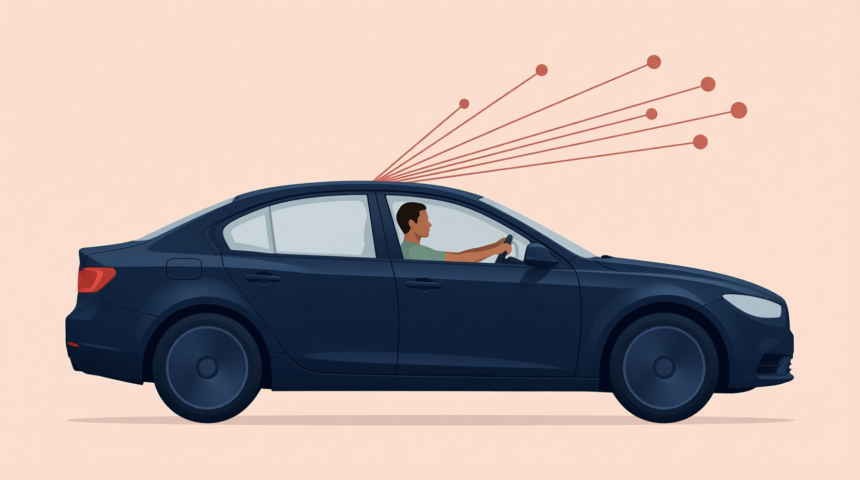
driving dataWhen thinking about telematics, it’s easy to conjure up images of fleet tracking via GPS, satellite navigation systems for driving directions, or even the ubiquitous onboard security and diagnostic systems. However, what’s less understood is that data on your driving habits, locations and more are being collected, sometimes without your explicit knowledge.

driving dataWhen thinking about telematics, it’s easy to conjure up images of fleet tracking via GPS, satellite navigation systems for driving directions, or even the ubiquitous onboard security and diagnostic systems. However, what’s less understood is that data on your driving habits, locations and more are being collected, sometimes without your explicit knowledge.

Most people don’t realize that driving data are being collected in 80% of the cars sold in the United States.  According to an Economist article, event data recorders (EDRs) are installed in most cars to analyze how airbags are deployed.  Some EDRs can also record events such as “forward and sideway acceleration and deceleration, vehicle speed, engine speed and steering inputs.”  

The Economist article also says EDR data can show if a driver stepped on the gas just before an accident, or how quickly brakes were applied. And EDRs can also record whether seat belts were locked. These data can be used to augment a police crash report, corroborate accident events as remembered by a driver, or even be used against a driver when negligence is suspected.

More Read

Alteryx’s Business Analytics Empowers New Generation of Data Artisans
Selecting the Right Self-Service Data Preparation Offering for Your Business
PROS Will Acquire Cameleon to Enhance Sales Effectiveness
10 Tips for a Successful Implementation of Cloud Computing
Grocery Data Streams Gain Value In Post-COVID Shopping Environment

This brings to mind a key question – who owns this data? The Economist article says that if you are the car owner, it’s probably you. However, if your car is totaled from a crash, and you sell it to the insurance company as part of a claim resolution process, then it’s likely your insurance company now owns the data.
Data can be used for purposes advantageous and disadvantageous to a driver.

An MIT Technology Review article cites how a new $70 device is now available to hook into your car’s EDR. This device wirelessly transmits data via Bluetooth to your mobile phone on your driving efficiency, cost of your daily commute, and information on possible engine issues.  And the company providing the device can deliver a “score” for your driving habits, gas savings and safety in relation to other drivers.

Driving data can also be collected for things you did not intend. For example, a team of scientists used mobile phone location data gleaned from wireless networks to detect commute patterns from more than 1 million users over three weeks in the San Francisco Bay Area. 

These scientists discovered “cancelling some car trips from strategically located neighborhoods could drastically reduce gridlock and traffic jams.”  In other words, some neighborhoods are responsible for a fair portion of Bay Area freeway congestion.  The scientists claimed by cancelling just 1% of trips from these neighborhoods, congestion for everyone else could be reduced by 14%.

Of course, drivers in urban areas could be incentivized to use public transportation, carpool or telecommute, but it’s also possible that a more heavy-handed government approach could restrict commutes from these neighborhoods—on certain days—“for the good of all.”

Data are of course, benign. However, driving data from GPS and other devices are collected daily—and sometimes without your consent.

Altruistically, these data may ultimately be used to design better cars, better freeways and improve the overall quality of life for everyone concerned. Yet, it’s also important to realize that mobile data from daily road travels can also be utilized for tracking purposes, to pin down exactly where you are located at any given moment in time, and how you arrived. And that thought should give everyone pause.

TAGGED:driving dataEDRgpsmobile analyticstelematics
Share This Article
Facebook Pinterest LinkedIn
Share

Follow us on Facebook

Latest News

ai product development
Why Businesses Outsource AI Product Development Companies
Exclusive News
banking tools
The Fintech and Banking Tools Global Entrepreneurs Rely On
Fintech Infographic
business using business intelligence
How to Use a Competitive Intelligence Dashboard to Turn Market Data Into Smarter Marketing Decisions 
Analytics Big Data Exclusive Marketing
fda14abd c869 4da5 943c c036ad8efc2e
How Data-Driven Journalists Are Using API News Apps to Improve Reporting
Big Data Exclusive News

Stay Connected

1.2KFollowersLike
33.7KFollowersFollow
222FollowersPin

You Might also Like

Location Intelligence and Mobile BI: Advancing Customer Relations in the Finance and Banking Sector

8 Min Read
Mobile Devices
Big DataIT

How Mobile Devices Are Revolutionizing the Big Data Industry

6 Min Read
data driven mobile applications
Big Data

Data-Driven Tactics to Increase Mobile App User Retention

8 Min Read

LightSquared vs FCC: What is the right position?

7 Min Read

SmartData Collective is one of the largest & trusted community covering technical content about Big Data, BI, Cloud, Analytics, Artificial Intelligence, IoT & more.

AI chatbots
AI Chatbots Can Help Retailers Convert Live Broadcast Viewers into Sales!
Chatbots
ai is improving the safety of cars
From Bolts to Bots: How AI Is Fortifying the Automotive Industry
Artificial Intelligence

Quick Link

  • About
  • Contact
  • Privacy
Follow US
© 2008-25 SmartData Collective. All Rights Reserved.
Welcome Back!

Sign in to your account

Username or Email Address
Password

Lost your password?