
We use cookies, including third-party cookies from Google to serve personalized ads through AdSense, to operate this site and understand how it is used. By continuing to browse, you accept this use. See our Privacy Policy and Terms of Use for details, including how to opt out of personalized advertising.
Accept
SmartData CollectiveSmartData Collective
  • Analytics
    AnalyticsShow More
    What Kind of Problem-Solving Distinguishes Data Analysts From Software Engineers -- AI-generated illustration
    What Kind of Problem-Solving Distinguishes Data Analysts From Software Engineers
    7 Min Read
    chatgpt image jul 21, 2026, 04 34 30 pm
    4 Core Benefits of Predictive Maintenance after Vibration Analysis
    10 Min Read
    How Does Data Mining Boost Customer Satisfaction in Logistics? Harnessing Analytics for Results -- AI-generated illustration
    How Does Data Mining Boost Customer Satisfaction in Logistics? Harnessing Analytics for Results
    11 Min Read
    chatgpt image jul 13, 2026, 04 23 45 pm
    How Data Analytics Helps Companies Improve User Engagement
    19 Min Read
    chatgpt image jul 13, 2026, 03 59 46 pm
    How Data Analytics Improves Multi-Location Search Strategies
    10 Min Read
  • Big Data
  • BI
  • Exclusive
  • IT
  • Marketing
  • Software
Search
© 2008-25 SmartData Collective. All Rights Reserved.
Reading: #28: Here’s a thought…
Share
Notification
Font ResizerAa
SmartData CollectiveSmartData Collective
Font ResizerAa
Search
  • About
  • Help
  • Privacy
Follow US
© 2008-23 SmartData Collective. All Rights Reserved.
SmartData Collective > Big Data > Data Warehousing > #28: Here’s a thought…
Business IntelligenceData WarehousingPredictive Analytics

#28: Here’s a thought…

brianfarnan1
brianfarnan1
8 Min Read
#28: Here's a thought...
Illustration generated with FLUX.1 [schnell] via Cloudflare Workers AI.
SHARE

An occasional series in which a review of recent posts on SmartData Collective reveals the following nuggets:

To make the most of analytics…
In-database/in-warehouse analytics will become more and more important and the analytical processing of streaming data likewise. However, the way data is stored in warehouses will have to change, too, not just the way analytics are done. Too many warehouses and marts today store summary data, rollups or data where the crucial time dimension is obscured. No matter how powerful the analytic engines get, this will have to change and warehouses will have to store the low-level transactional data that analytics need.

—James Taylor: Some thoughts on advanced analytics in 2010


C’mon Google, what’s the algorthm?

Google makes 99% of their revenue by selling text ads for things like plane tickets, dvd players and malpractice lawyers. Many of these ads are syndicated to non-Google properties. But the anchor that gives Google their best “inventory” is the main search engine at Google.com. And the secret sauce behind Google.com is the algorithm for ranking search results. If Google is really committed to openness, it is this algorithm that they need to open source.

—Chris Dixon: Google should open source what actually matters: their search ranking algorithm

It’s a data world
In the corporate world, it’s much of the same and even more important to our society. Marketing teams are addicted to information from web analytics and use marketing automation tools to track the success of their programs. Operations teams track assets like computers, buildings, trucks and people with data. Sales has been and will continue to track customers with data. Finance relies on the collision of credit scores data, invoice and payment data as well as making sure they have enough money in reserves to meet regulations. Executives will continue to rely on business intelligence and data. In fact, it’s hard to find anyone in the business world who doesn’t rely on data.
More Read

Image
Inside a Consumer’s Mind with Text Analytics
A Data Catalog Makes Quick Work of GDPR Compliance
Big Data Is Changing the Whole Equation for Business
How Big Data Technology Impacts Investments and Trading
Interview With Fellow UCONN Alumni and Successful Entrepreneur, Ted Hsu
—Steve Sarsfield: The World is Addicted to Data (and that’s good for us)


Spread the word

Business intelligence, data integration and data warehousing have become mainstream, but that does not mean most people know the how and why of them. They may be commonplace, but they aren’t necessarily pervasive. The usual scenario is that a separate IT group built them, and only a select few business people use them. So, it’s no surprise that BI knowledge is in short supply.

—Rick Sherman: No Shortcuts: Read the BI/DW Instructions and Ask for Directions


You say either, I say either

On reflection, perhaps it comes down to our different worlds. I’m only interested in data warehouses because of the opportunities they give me to drive greater insight and better decisions in the business. I think my data warehouse friends have the more modest aim of giving the business the data that makes insight possible – but it’s up to the business to make smart use of this data. Isn’t this just like a scientist inventing a cure and the drug company making it available to people? Sounds like a big enough challenge to me.

—Steve Bennett: Taser Your Data Warehouse


Doing it right

No, data perfection isn’t practical. But we should be able to guard against lost data and protect our users from formulas and equations that change. All too often these issues are thrown into the “post development” bucket or relegated to user acceptance. By then reports aren’t always corrected and data isn’t always fixed.

—Evan Levy: Bi Reports, Data Quality, and the Dreaded Design Review

As math, so computer science?
The paradox is that we’re heading into a century in which computer science will be the key to just about everything, from operating businesses to scientific discovery. It’s vital. And somehow some of our schools are sending the message that it’s boring. (Of course, they’ve been doing that with math for eons…)

—Stephen Baker: What to teach kids about computers?

Connecting here, there, everywhere
In the developing world and the OECD countries alike, mobility is not only redefining the telecom sector, as major as that may be. In addition, the notion of always being reachable, or becoming accustomed to connecting to people rather than fixed locations, is becoming commonplace so fast that we may not realize all that is happening. Worldwide, the number of cellphone subscriptions per 100 people has soared from just over five in 1998 to nearly 60 in 2008. In the midst of it, this change can be lost in fashion wars (RAZR vs. iPhone vs. Blackberry Pearl, or whatever), but eventually, in hindsight, we will see the magnitude of what we lived through.

—John Jordan: Early Indications December 2009: Yet Another Predictions Issue

Meanwhile, out on the social networks
One of my favorite fallouts of my involvement in Twitter has been the Tweetups and the people I’ve transitioned from just a Twitter connection to a real, face-to-face connection. I’ve met some very interesting people and connect with many of them both here in San Francisco and when I visit other cities. The community grows all the time and more and more I am able to connect on and off line with some great people.


—Michael Fauscette: What I’ve discovered about Twitter

TAGGED:social networking
Share This Article
Facebook Pinterest LinkedIn
Share

Follow us on Facebook

Latest News

Flat editorial illustration: The article’s core relationship is between growing compute density and adaptable rack hardware that
6 Details That Make a Data Centre’s Server Room Easier to Scale
Best Practices Data Management Exclusive IT
Flat editorial illustration: The article’s core relationship is a transfer of discipline from regulated laboratories to analytics
What Business Intelligence Teams Can Learn from Lab Data Governance
Business Intelligence Exclusive
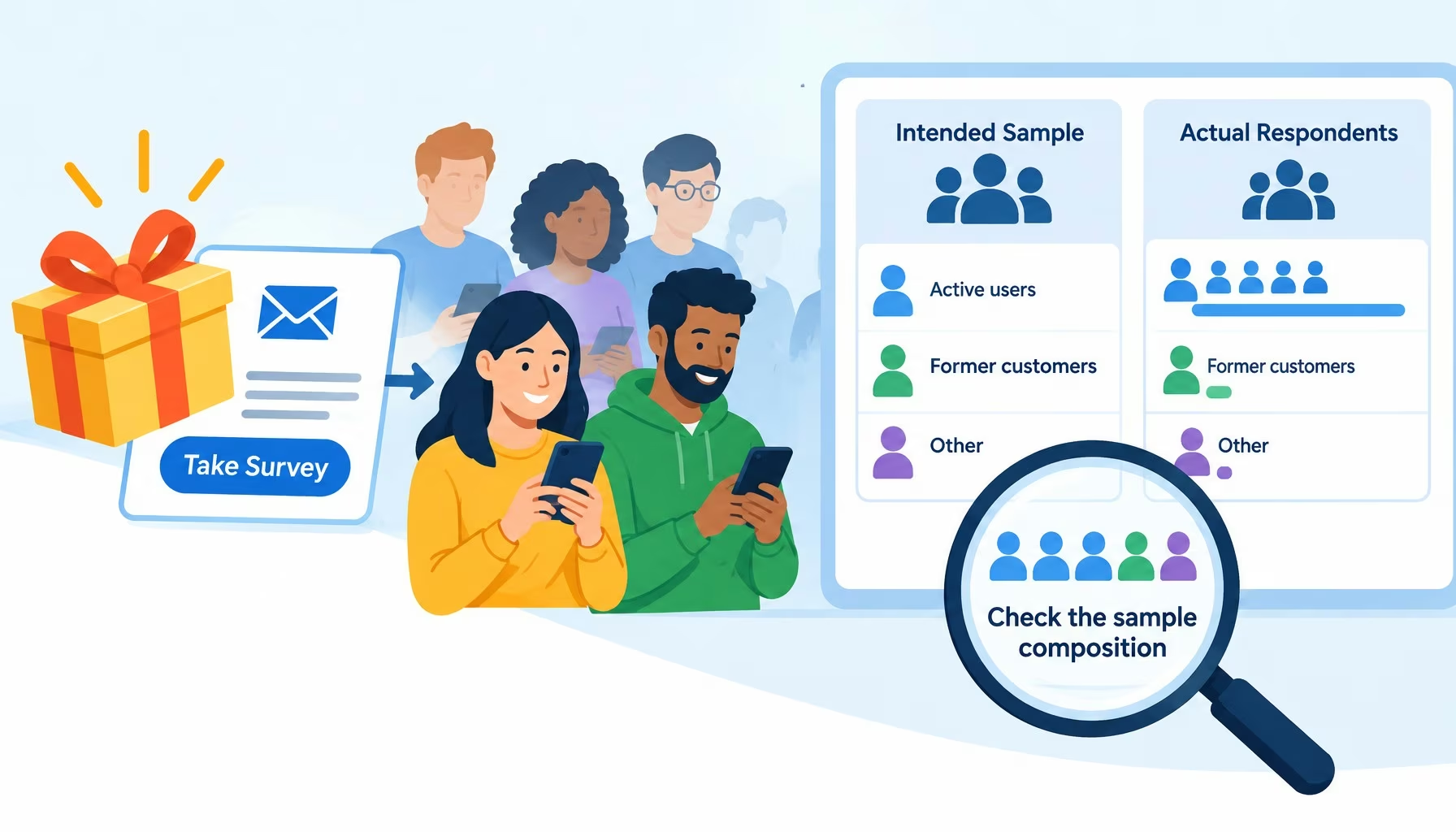
Flat editorial illustration: A guaranteed reward can raise participation while skewing the respondent pool toward active customer
Incentive-Driven Response Bias: Auditing Sample Composition Before You Trust Survey Data
Big Data Data Quality Exclusive
Flat editorial illustration: The article’s core relationship is observable blockchain activity becoming a trustworthy business me
Blockchain Dashboards Need Better Definitions, Not More Charts
Blockchain Exclusive

Stay Connected

1.2KFollowersLike
33.7KFollowersFollow
222FollowersPin

You Might also Like

Leveraging Your Social Capital
Business Intelligence

Leveraging Your Social Capital

6 Min Read
What I've discovered about Twitter
Uncategorized

What I’ve discovered about Twitter

8 Min Read
2009 Retrospective
Uncategorized

2009 Retrospective

12 Min Read
Social Networking: Theory and Practice
Uncategorized

Social Networking: Theory and Practice

7 Min Read

SmartData Collective is one of the largest & trusted community covering technical content about Big Data, BI, Cloud, Analytics, Artificial Intelligence, IoT & more.

Chatbots and SEO: How Can Chatbots Improve Your SEO Ranking?
Artificial Intelligence Chatbots Exclusive
How To Get An Award Winning Giveaway Bot
Big Data Chatbots Exclusive

Quick Link

  • About
  • Contact
  • Privacy
Follow US
© 2008-26 SmartData Collective. All Rights Reserved.
Welcome Back!

Sign in to your account

Username or Email Address
Password

Lost your password?