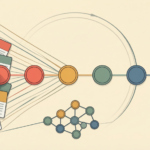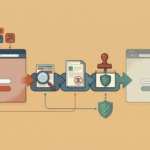
Most mid-market companies did not choose their current data setup: they inherited it. A connector added to solve a reporting gap, a reporting tool picked because someone on the team already knew it, a warehouse chosen under deadline pressure. Individually, each piece made sense. Together, they often form a stack nobody fully understands anymore – and that starts to show up in the numbers leadership cares about. More importantly, that fragmentation quietly undermines data quality and governance, making consistent policy enforcement difficult across disconnected systems.
Data stack consolidation can improve data quality and governance by bringing connection, transformation, reporting, and policy enforcement into one managed environment. For mid-market teams, the deciding factors are recurring reporting discrepancies, fragile handoffs, and dependence on individual staff. Where those problems are limited, better documentation and targeted quality checks may be enough.
The real cost of the assembled stack
For mid-market teams, the cost of disconnected tools includes time spent reconciling reports, maintaining handoffs, and waiting for answers. Look at how often these problems interrupt decisions. A stack that repeatedly produces conflicting numbers needs attention to its data quality rules and ownership, not just its software bill.
When data tools are picked one at a time, the gaps between them become someone’s problem. A marketing analyst pulls numbers from one system, a finance lead pulls slightly different numbers from another, and a Monday morning meeting turns into a debate about whose report is right instead of what the numbers mean. These discrepancies aren’t just annoying – they’re data quality failures that erode trust in the entire reporting pipeline.
The maintenance burden is just as real. Every connector, every custom script that moves data from one tool to the next, is a small dependency that someone has to keep working. When that person leaves, or simply gets busy with something else, the whole chain becomes fragile. Teams often do not notice how much time goes into keeping the lights on until they try to add something new and realize how much of their capacity is already spoken for. Governance suffers too – when no single owner oversees the full data flow, accountability for errors becomes diffuse and unclear.
There is also a slower, less visible cost: decision speed. When getting a clean answer to a business question takes days of cross-referencing spreadsheets, teams start making decisions on gut feeling instead of waiting for the data. This delay stems directly from how the tooling was assembled over time. Fragmented stacks force teams to bypass formal data governance processes simply to get answers in time.
What changes with a unified platform
A unified platform gives a lean team one environment for connecting, cleaning, and reporting on data, with shared quality rules and policy enforcement. The benefit depends on replacing fragile handoffs and applying those rules consistently. Moving the same unresolved ownership problems into a new platform leaves that work unfinished.
The alternative some mid-market teams are exploring is consolidating that fragmented stack into a single data management platform – one place where data gets connected, cleaned, and made available for reporting instead of being handed off between disconnected tools. Providers like BEEM build their offering around that idea, pairing connection, transformation, and reporting so a team is not stitching together several separate products and hoping the handoffs hold. This consolidation directly strengthens data governance by centralizing policy enforcement, access controls, and quality checks in one governed environment.
Distributed reporting teams have a specific reason to consider this approach. In its FineBI profile, Improvado’s enterprise data management tools guide identifies mid-market companies with 100-1,000 employees as a fit for business-user reporting without IT bottlenecks, particularly when regional offices or business units need centralized governance. For your team, the useful test is whether a business user can produce a report under shared rules without waiting for IT to assemble it. Employee count alone does not settle that question.

The appeal is not just fewer logins. It is fewer places where something can quietly break, and fewer people needed to keep the whole thing running. For a team without a dedicated data engineering group, that difference can be the gap between a project that ships and one that stalls indefinitely waiting for the right person to have time. A unified platform also means data quality rules can be applied consistently at the source, instead of being patched over after the fact in separate reporting tools.
Fewer tools still leave your team with ownership decisions to make. Panorama Consulting’s discussion of consolidation versus expansion identifies inconsistencies, compliance issues, and unreliable reporting as risks of weak governance. It recommends clear data ownership, standardized processes, and validation protocols. Put those controls into the platform evaluation: name the person responsible for a disputed number, document the calculation everyone should use, and test whether a failed quality check prevents an incorrect report from being published.
A workable data governance framework should explain what happens when marketing and finance disagree, not just list who can open a dashboard. Take an existing reporting discrepancy into the trial. Have both teams trace the number, agree on its definition, and check that the correction reaches both reports without separate manual patches. Keep the owner and the agreed rule alongside the report so the next person does not have to repeat the investigation.
That responsibility also extends to how data is used after a report is built. Discussing AI and the data life cycle, Nick Magnuson of Qlik described the changing demands on data teams:
how we think about constructing data and supporting that data through that life cycle now, because we’ve got autonomous things in the mix that aren’t human in nature
Nick Magnuson, Head of AI, Qlik, in SiliconANGLE, 2026When migration is worth it, and when it is not
Consolidation is worth considering when recurring quality failures, reporting delays, and dependence on a few individuals affect your team’s decisions. A small stack with traceable errors may need only targeted repairs. Weigh the frequency and cost of those failures against the disruption of changing platforms.
Consolidation is not automatically the right call for every team. A few honest questions help sort that out – especially when weighed against data quality and governance priorities.
How many distinct data sources are actually in play? A team pulling from only two or three systems may find the assembled approach still holds up reasonably well at that scale, though that can change quickly as more sources get added. At that small scale, manual data quality checks may still be manageable without a full platform overhaul.
How much institutional knowledge lives in one or two people’s heads? If understanding the current setup depends on a handful of individuals, that is a real risk regardless of whether the fix is consolidation or better documentation. That risk directly impacts governance – when knowledge is concentrated, policy enforcement becomes dependent on specific people instead of the system itself.
How often are reporting delays actually costing decisions, instead of merely causing operational frustration? If the honest answer is rarely, the case for change is weaker than it might feel in the moment. Similarly, if data quality issues are rare and easily traced, the governance case for consolidation loses urgency.
Teams that recognize themselves in most of these questions are often the ones where consolidation makes the biggest practical difference. Teams that only recognize one or two may be better served focusing on those specific weak points first, without a full platform change. For those teams, targeted fixes to documentation or specific data quality checks may deliver more value with far less disruption.
What to evaluate before choosing
Evaluate a unified platform against your team’s actual reporting work: supported connections, help when something fails, and the time needed to produce a working report. Those checks reveal whether consolidation removes maintenance work and supports shared quality rules, or requires custom integration before any improvement reaches users.
For teams that do decide to look at a unified platform, a few questions tend to matter more than a feature checklist – especially when the goal is stronger data governance and policy enforcement.
Support model. Is there a team of people who help when something goes wrong, or is it entirely self-serve? For a lean team, having someone to call is often worth more than an extra dashboard feature. That support directly affects governance – when issues arise, a responsive support team helps maintain data quality standards without overburdening internal staff.
Breadth of existing connections. Does the platform already support the systems the business runs on today, or will custom work be needed just to get started? Native connections mean data quality rules and governance policies can be applied immediately, without waiting for custom integrations to be built and tested.
Time to first value. How long before the team sees a working report, not a theoretical roadmap? Fast time-to-value means governance and quality improvements become visible quickly, building momentum for broader adoption across the organization.
None of these questions require a technical background to ask, and the answers usually say more about fit than any spec sheet. They also reveal whether a platform will genuinely improve data quality and governance – or simply add another layer of complexity.
Compare consolidation with narrower repairs
Your team can retain a small assembled stack, document its dependencies, repair specific quality checks, or consolidate into one platform. Choose the scope that addresses the failures you actually encounter. Documentation addresses concentrated knowledge, while consolidation addresses repeated handoffs and inconsistent rules across tools.
| Approach | Best fit | Quality and governance work | Main limitation |
|---|---|---|---|
| Retain the assembled stack | Few sources, rare errors, manageable reporting delays | Keep ownership and manual checks explicit | Connector maintenance and separate tools remain |
| Document the existing stack | Knowledge concentrated in a few people | Record dependencies, rules, and responsible owners | Documentation does not remove fragile handoffs |
| Repair specific quality checks | Errors are limited and easily traced | Correct the checks behind recurring discrepancies | Separate reporting tools still need consistent rules |
| Consolidate into a unified platform | Repeated discrepancies, delays, and maintenance pressure | Apply shared rules and ownership across connection, transformation, and reporting | Migration effort and unsupported connections can delay value |
Use the next disputed report as a concrete migration acceptance test. Have marketing and finance run the same agreed calculation against the same source records in the proposed platform, then compare results before retiring old reports. Record who owns the calculation and who corrects a failed check. If numbers still disagree, trace the difference through the connection and transformation steps before moving another report into the platform.