
We use cookies, including third-party cookies from Google to serve personalized ads through AdSense, to operate this site and understand how it is used. By continuing to browse, you accept this use. See our Privacy Policy and Terms of Use for details, including how to opt out of personalized advertising.
Accept
SmartData CollectiveSmartData Collective
  • Analytics
    AnalyticsShow More
    chatgpt image jul 21, 2026, 04 34 30 pm
    4 Core Benefits of Predictive Maintenance after Vibration Analysis
    10 Min Read
    How Does Data Mining Boost Customer Satisfaction in Logistics? Harnessing Analytics for Results -- AI-generated illustration
    How Does Data Mining Boost Customer Satisfaction in Logistics? Harnessing Analytics for Results
    11 Min Read
    chatgpt image jul 13, 2026, 04 23 45 pm
    How Data Analytics Helps Companies Improve User Engagement
    19 Min Read
    chatgpt image jul 13, 2026, 03 59 46 pm
    How Data Analytics Improves Multi-Location Search Strategies
    10 Min Read
    cybersecurity efforts
    How Behavioral Analytics and AI Are Redefining Cybersecurity for Boca Raton Businesses
    14 Min Read
  • Big Data
  • BI
  • Exclusive
  • IT
  • Marketing
  • Software
Search
© 2008-25 SmartData Collective. All Rights Reserved.
Reading: Machine Learning Spurs New Era In The Manufacturing Sector
Share
Notification
Font ResizerAa
SmartData CollectiveSmartData Collective
Font ResizerAa
Search
  • About
  • Help
  • Privacy
Follow US
© 2008-23 SmartData Collective. All Rights Reserved.
SmartData Collective > Exclusive > Machine Learning Spurs New Era In The Manufacturing Sector
ExclusiveMachine Learning

Machine Learning Spurs New Era In The Manufacturing Sector

Sean Mallon
Sean Mallon
5 Min Read
Machine Learning Spurs New Era In The Manufacturing Sector
Illustration generated with Qwen Image.
SHARE

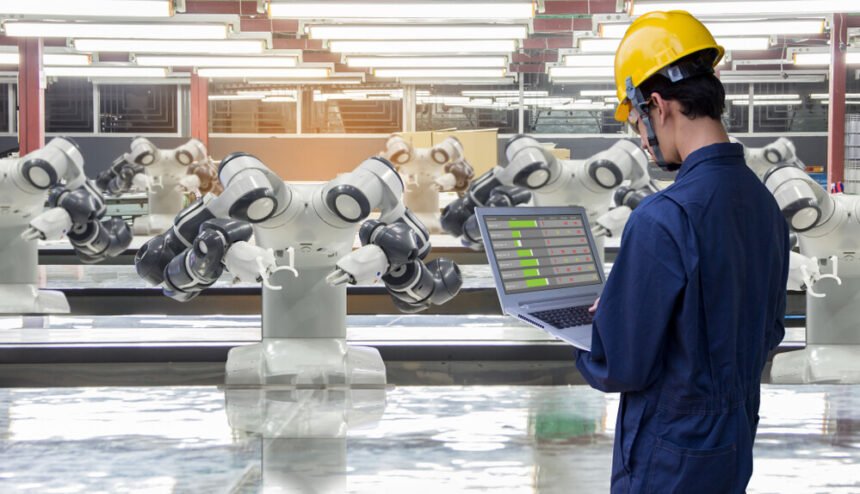
The manufacturing industry has always been an epicenter for technological change. Many of the most influential technological developments have been spurred by the need to improve operational efficiency and the bottom line for manufacturing facilities around the world. One of the most important technological breakthroughs that manufacturers are embracing is machine learning.

Contents
  • A growing number of manufacturers are leveraging machine learning technology
  • Some manufacturing companies are still reluctant to leverage machine learning
    • Machine learning is the future of the global manufacturing sector

A 2017 report by PWC showed that about 50% of manufacturing companies were using machine learning technology. That figure has risen sharply since that study was first published. The 2020 PWC report showed that 91% of manufacturing companies are investing in “digital factories.”

However, the proportion of companies that have become fully dependent on artificial intelligence is considerably lower. Only 6% of all manufacturing companies indicate that they are fully digitized.

While few companies have fully adopted machine learning, PWC research clearly shows that there is a growing trend towards machine learning in the global manufacturing sector. What factors are driving the trend? For example, smart manufacturing technology like Katana, which is used to improve and optimize business processes, planning and overall efficiency.

More Read

AI Is Empowering Everyone to Become Their Own Branding Expert
Data-Driven EHR Systems Are Invaluable to the Patient Experience
Anti-Spoofing is Crucial for Data-Driven Businesses
IT Hardware Startups Turn to Data Analytics for Market Research
Blockchain Will Unblock A Data Problem In Healthcare

A growing number of manufacturers are leveraging machine learning technology

Although manufacturing companies of all sizes are investing in machine learning technology, the largest companies in the industry are using it the most. Siemens, GE, Microsoft and Intel are some of the firms that have made massive strides with investments in machine learning.

These companies have discovered that machine learning can be beneficial in a number of ways. These benefits include:

  • Reducing the cost of labor
  • Minimizing the number of defective products
  • Cutting downtime sharply
  • Speeding up the production process

TrendForce recently published a press release showing that the reliance on machine learning in the manufacturing sector will increase significantly within the next three to five years. That study predicted that the smart manufacturing sector will be worth $200 billion this year.

DeepSense.AI talked about a case study on machine learning in an automotive plant:

“An automotive plant implemented a predictive maintenance solution for a hydraulic press used in vehicle panel production. Detailed studies of the maintenance process showed that engineers were spending far too much time attending to breakdowns instead of allocating resources for planned maintenance. The new solution enabled them to predict equipment failure with an accuracy of 92%, plan maintenance more effectively and offer greater asset reliability and product quality. Overall equipment efficiency increased from 65% (the industry average) to 85%.”

Other case studies have highlighted similar findings and show machine learning is highly beneficial.

Some manufacturing companies are still reluctant to leverage machine learning

The benefits of machine learning in the manufacturing industry are unquestionable. Nevertheless, some companies have been reluctant to take the plunge.

These companies have raised a few reasons that they have not yet adapted digitalization. The biggest concern is that there is a large upfront investment. Smart factories are well worth the investment in the long term, but the initial infrastructure costs are not cheap. Manufacturing facilities may need between three and five years to break even after investing in machine learning technology.

Many companies recognize that it is worth the investment. However, they want to get the timing right. They expect that the ROI of machine learning will be higher in the near future. Efficiency should increase 12% by 2025. Some manufacturers will wait to adapt smart factories after the infrastructure costs decline and the efficiency rates are higher.

Manufacturing facilities in developed economies might be most likely to make the investment. Many of these facilities are struggling to stay competitive, as they have to compete with overseas manufacturers with higher operating costs. They can make up for these costs by using more tech-savvy professionals that can deliver higher production.

Machine learning is the future of the global manufacturing sector

The global manufacturing industry is constantly evolving. New technology is driving some of the biggest changes. Machine learning is creating a new era for manufacturers in every country. They will either need to make the investment or risk getting left behind. This could change the global dynamic and possibly create a new competitive advantage for manufacturers in developed economies. It will also help restore economic vitality to manufacturers that face the possibility of obsolescence, due to weaning production, declining profit margins and stricter regulatory demands.


TAGGED:machine learningmanufacturingmanufacturing sector
Share This Article
Facebook Pinterest LinkedIn
Share
BySean Mallon
Sean is a freelance writer and big data expert with a passion for exploring the depths of information that can be extracted from massive datasets. With years of experience in the field, he has developed a deep understanding of how data can be harnessed to drive insights and make informed decisions.

Follow us on Facebook

Latest News

Beyond The First Impression: The Long-Lasting Impact Of Sensory Marketing -- AI-generated illustration
Beyond The First Impression: The Long-Lasting Impact Of Sensory Marketing
Infographic Marketing
The Infrastructure Gap Slowing Data Center Growth -- AI-generated illustration
The Infrastructure Gap Slowing Data Center Growth
Big Data Cloud Computing Exclusive Infographic IT
Managing Application Access When Corporate VPNs Reach Capacity Limits -- AI-generated illustration
Managing Application Access When Corporate VPNs Reach Capacity Limits
Exclusive IT Security
How Digital Knowledge Repositories Facilitate Self-Directed Research and Information Discovery -- AI-generated illustration
How Digital Knowledge Repositories Facilitate Self-Directed Research and Information Discovery
Exclusive News

Stay Connected

1.2KFollowersLike
33.7KFollowersFollow
222FollowersPin

You Might also Like

Traditional Vs Machine Learning For Software Development Paradigms
Machine LearningProgrammingSaaS

Traditional Vs Machine Learning For Software Development Paradigms

6 Min Read
How To Annotate Images For Deep Learning: Image Annotation Techniques
Machine Learning

How To Annotate Images For Deep Learning: Image Annotation Techniques

5 Min Read
Machine Learning Opens Door For Evocon OEE Software In Manufacturing
ExclusiveMachine LearningSoftware

Machine Learning Opens Door For Evocon OEE Software In Manufacturing

6 Min Read
Machine Learning Maximizes Email Marketing ROI With List Segmentation
Machine Learning

Machine Learning Maximizes Email Marketing ROI With List Segmentation

6 Min Read

SmartData Collective is one of the largest & trusted community covering technical content about Big Data, BI, Cloud, Analytics, Artificial Intelligence, IoT & more.

Chatbots and SEO: How Can Chatbots Improve Your SEO Ranking?
Artificial Intelligence Chatbots Exclusive
How To Get An Award Winning Giveaway Bot
Big Data Chatbots Exclusive

Quick Link

  • About
  • Contact
  • Privacy
Follow US
© 2008-26 SmartData Collective. All Rights Reserved.
Welcome Back!

Sign in to your account

Username or Email Address
Password

Lost your password?