The future long-hoped-for by supply chain managers arrived practically overnight. With the old ways of supply chain management, there were lots of unknowns — including lots of places where productivity slipped through the cracks left behind by missing data. But now that the Internet of Things has begun to pervade so much of our personal and productive lives, we have the means to connect dots that need connecting and, in general, operate with much greater oversight, awareness, and efficiency. When it comes time to bring the IoT for supply chain into your operation, you should know exactly how and why you stand to benefit — and how to proceed logically. Here’s some advice on both.
How to Build the Most Efficient Delivery Routes
Let’s start at the end of the process: the all-important “last mile” when your product is finally within reach of your customer. This is one of the few parts of the supply chain journey that the customer is likely to concern themselves with, which makes it one of your most important considerations. Maybe it sounds harsh, but the inevitable trouble with humans making decisions about deliveries is that they make mistakes or lack judgment from time to time. In other cases, they just can’t foresee problems down the road, including accidents and incidents. When customer satisfaction hinges on the timely and accurate delivery of their goods, it makes sense for those in the supply chain to take a closer look at how their delivery personnel and vehicles are actually performing. That means measuring things like:
- Vehicle location, speed, and engine performance.
- How frequently a vehicle’s brakes are used and how quickly it consumes fuel.
- How many turns (and turnarounds) are made.
- Whether vehicles are idling unnecessarily in traffic when alternate routes are available.
Lots of freight-moving companies and couriers now have the means, thanks to the IoT, to monitor how their vehicles are operating out in real-world conditions, and usually in real-time. Removing the human element from even a single piece of the puzzle — like planning delivery routes effectively — could mean significant savings on labor and fuel costs.
How to Build a Top-Down View of Your Inventory
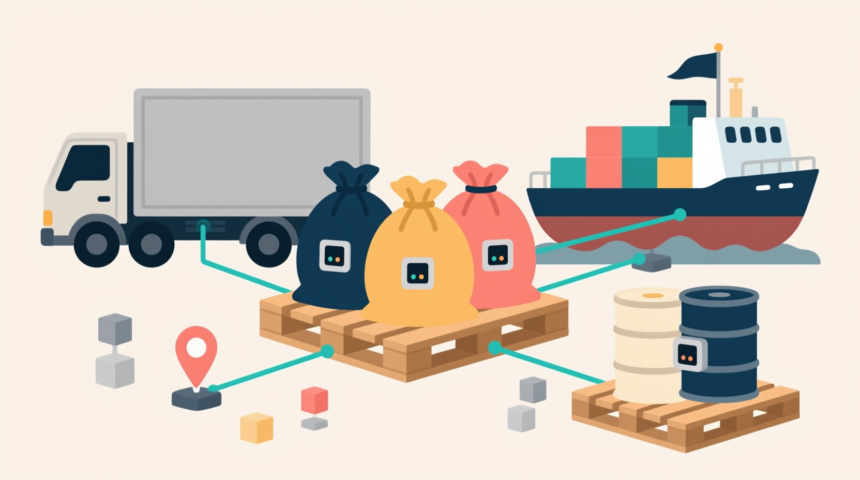
If there’s an obvious application for IoT in the supply chain, it’s inventory control. Maintaining real-time visibility of your inventory levels across each of your facilities and operational partners allows you to anticipate shortfalls, respond in a timelier fashion to customer orders and returns and, in many cases, have your management system place orders automatically long before you’re forced to slow down or stop production. Practically speaking, radio-frequency identification, or RFID, tags offer an effective and increasingly affordable way to track even tens of thousands of skids of product across millions of feet of warehouse or production facility space. In some case studies, the cost savings alone, to say nothing of productivity, have been substantial, with some companies netting over $200,000 in savings just by eliminating misplaced inventory.

How to Engage in More Detailed Freight Monitoring
The Industrial IoT has lots of possible applications in industries that deal with time-sensitive products or merchandise that requires specific environmental conditions. In many cases, especially where food products and pharmaceuticals are concerned, temperature and humidity must be kept as constant as possible. And with the supply chain growing ever larger and more global, weather and climate differentials mean we need more sensitive equipment and earlier warnings about mechanical failures or unforeseen changes in circumstance. You know the name Maersk. What you might not know is that they have tens of thousands of freight barges and trucks in operation at any given time that move refrigerated and climate-controlled goods around the planet. To improve the timeliness of their responses and impose some predictability on an otherwise delicate and complex operation, Maersk shifted to using IoT technology, including connected sensors, to monitor every detail about the conditions aboard their freight-carrying vehicles. What this means, ultimately, is an oversight that cuts the need for visual inspections on arrival by 40 percent or more.
How to Anticipate Bandwidth and Communication Needs
Now that we’ve discussed some of the clear advantages to pursuing and applying IoT technologies for your supply chain business, it’s worth taking some time to evaluate your infrastructure and technology needs. Even if the benefits are clear, some of the technologies you’ll be using are “always-on” and always working for you. When it comes to preparing your facilities and workflows, beyond the installation of the IoT equipment itself, think about things like:
- The means to store and retrieve the data you’re collecting.
- The bandwidth to keep your connected devices, tags, sensors and vehicles in “touch” with one another.
- The electrical service and equipment to handle the higher load safely.
- The right number of employees, placed correctly, who are conversant with the technologies and know how to apply decision-making to the data being gathered.
There are very real IT needs attached to this industrial revolution — but none of them are insurmountable when you have the right people and services involved and when you’ve laid the proper foundation. Ensuring your IT “ducks” are in “order” doesn’t always require a big spend on additional personnel, either — not when supply chain management is now a cloud-based Software as a Service, with lots of providers out there with software suites that can easily and affordably integrate with your existing management system to help you manage your warehouses and the flow of products from Point A to Point B.
How to Not Reinvent the Wheel
Unsurprisingly, connected cloud technologies for supply chain management have already emerged as a clear differentiator in a crowded field. Recent studies show companies that use the IoT for greater integration between their processes grow 20 percent faster than their competitors. If there’s a final reminder worth delivering here, it’s that none of this is about doing what you do in a vastly different way — it’s about making each one of your processes more intelligent and better in sync with all the others.