One of the things that have written about since Ryan took over at Smart Data Collective is the role of data analytics in business safety. It is easy to see why this topic keeps coming up when companies face constant pressure to reduce accidents while protecting their bottom line.
Josh Howarth of Exploding Topics writes that 59.5% of business leaders say their companies are using data analytics to drive business innovation. There are many executives who view risk mitigation as one of the clearest areas where this kind of insight pays off. You can see how this mindset connects safety programs with broader business goals, rather than treating them as a side concern, and that is why so many leadership teams are paying attention. Keep reading to learn more.
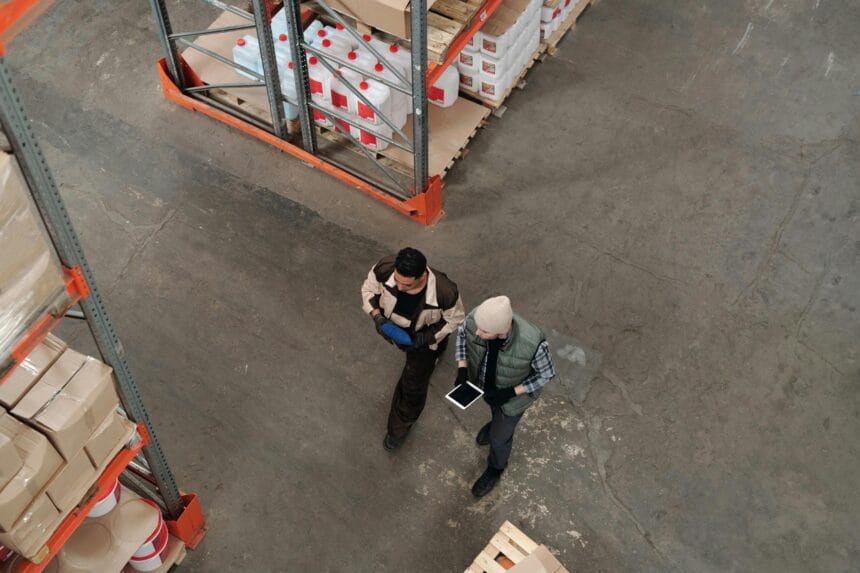
How Data Analytics Supports Safer Warehouses
A report by Nucleus Research found that companies generate an average return of $13.01 for every dollar invested in analytics. It is hard for managers to ignore numbers like these when deciding how much to spend on systems that track hazards, near-misses, and unsafe behavior.
A study published by the OSHA Online Center writes that the warehouse sector reports an injury and illness rate of 5.5 cases per 100 employees in 2023. You can quickly recognize how serious this is when compared to many office-based industries with far lower rates. There are several reasons warehouses face elevated danger, including heavy equipment, fast-moving vehicles, and repetitive manual tasks. It is in these settings that detailed records on incidents, shift schedules, and equipment use become especially valuable.
More Read

You often see safety managers rely on dashboards to spot patterns that would be invisible in scattered reports. It is common for these tools to highlight specific loading docks, time windows, or job roles where accidents cluster.
You can also use historical data to test whether past policy changes actually reduced injuries or simply shifted them to another area of the building. There are teams that review heat maps of incidents to decide where to place barriers, lighting, or warning signs. It is possible to compare similar facilities and learn why one has fewer forklift accidents than another. You end up with decisions grounded in evidence rather than habit or guesswork.
There are supervisors who find that sharing simple charts with staff makes risks easier to understand than long written rules. It is often more persuasive to show that accidents spike during certain overtime shifts than to repeat general warnings.
You may notice that predictive models are starting to influence how warehouses schedule maintenance and training. There are cases where sensors on machinery flag abnormal vibration or temperature before a breakdown leads to injury. It is also common to combine these signals with staffing data to avoid assigning new workers to the most dangerous tasks during peak hours.
When you think about warehouse accidents, you might picture some kind of chaos leading up to a big catastrophe. But the truth is that most injuries happen on normal days when operations feel like they’re under control. Warehouses run on tight deadlines and high pressure, often with understaffed teams who take shortcuts to get their work done. Sometimes those shortcuts involve ignoring safety regulations and other times it’s a matter of ignoring signs of equipment trouble. In any case, most accidents can be prevented with better training, reinforcement, and enforcement.
Routine creates complacency
Routines are the best way to ensure work gets done consistently and on time, but they can also be dangerous. When tasks are repeated hundreds or thousands of times without an incident, workers naturally start to rely on muscle memory rather than conscious decision making.
This shift feels normal but it’s a precursor to accidents. It’s those calm days when everything is going right that feel like certain safety rules are optional.
Safety training often fails to stick when not reinforced
Many warehouses invest in safety training during the onboarding process and assume that everyone will fully understand and embody the training. Unfortunately, that’s not what happens. Without regular reinforcement, adherence to safety protocols fades over time, especially in repetitive and low-risk environments. It doesn’t take more than a few weeks for safety training to be forgotten.
For example, all forklift operators need to be certified, but once a worker passes their hands-on training, they still need reinforcement to avoid skill degradation over time. This requires ongoing training along with periodic knowledge and skill re-assessments.
New hires are overloaded with information when they’re first hired and it’s impossible for them to remember all policies and procedures long-term without reinforcement. Once a worker adopts a routine based on what others are doing rather than their training, those habits will override proper safety protocols.
Many companies don’t provide ongoing reinforcement because they don’t want to pull teams off the floor, but that’s a bad idea, especially when equipment and layouts change and workers need to adapt to a new situation.
Near misses are red flags
Near misses are a strong predictor of future injuries, but they’re routinely dismissed on calm days. When nobody gets hurt and production isn’t disrupted, workers don’t report small incidents. This creates a false sense of safety that just masks underlying hazards.
Workers fail to report close calls for a variety of reasons. Sometimes they’re avoiding disciplinary action and other times they just don’t want to bother. The general consensus is that if nobody was injured, the incident isn’t worth reporting. But when small mistakes don’t cause harm, they become accepted practice, even when they violate safety protocols.
But near misses are early warning signs that can help prevent future injury when reported. For example, if workers are engaging in shortcuts, reporting a near miss can lead to mandatory retraining that will remind everyone of proper safety protocols. With safety fresh in their minds and the potential for disciplinary action, most workers aren’t going to take shortcuts.
Fatigue can cause accidents at any time
On calm days, workers are far more likely to become fatigued. On routine days, physical and cognitive exhaustion build up fast through repetition, unlike intense days that demand constant awareness and high alert. When routine induces fatigue, reaction times slow, attention wanes, and decision making skills degrade.
Over 13% of all workplace injuries are fatigue-related, and overly tired employees are 70% more likely to have an accident. Workers in this state are more likely to have delayed responses to unexpected events, create small spills, or misplace pallets. Since fatigue happens gradually it usually goes unnoticed until there’s an accident.
Equipment concerns are easy to ignore
When the day is routine and calm, it’s easier to ignore issues with equipment because it feels familiar. But when a trash compactor, pallet jack, conveyor, or forklift is acting up, that familiarity can cause operators to underestimate the risks. Forklifts are especially dangerous. OSHA estimates that forklifts cause around 85 fatalities and 34,900 serious injuries every year. If a forklift (or any piece of equipment) isn’t functioning properly, it’s more likely to lead to an accident.
Ordinary days require full attention
The most dangerous days in a warehouse are the predictable ones. Routine creates a level of complacency that can undermine even the best safety training and protocols. When near misses go unreported, fatigue builds, and equipment risks are ignored, the potential for injury increases. Preventing warehouse accidents requires treating safety as an absolute requirement even when cutting corners seems harmless.
You can view the broader lesson as one of awareness built from measurement. It is easier to correct unsafe behavior when it is clearly documented rather than based on anecdote.
You may come away from this discussion with a clearer picture of how numbers translate into practical steps on the warehouse floor. There are leaders who see analytics as a way to justify spending on guards, training sessions, or redesigned workflows. It is also a way to show workers that safety policies are based on real conditions, not abstract rules. You end up with a culture where preventing injuries becomes part of daily decision-making rather than a slogan on a poster.