We use cookies, including third-party cookies from Google to serve personalized ads through AdSense, to operate this site and understand how it is used. By continuing to browse, you accept this use. See our Privacy Policy and Terms of Use for details, including how to opt out of personalized advertising.
Accept
SmartData CollectiveSmartData Collective
  • Analytics
    AnalyticsShow More
    What Kind of Problem-Solving Distinguishes Data Analysts From Software Engineers -- AI-generated illustration
    What Kind of Problem-Solving Distinguishes Data Analysts From Software Engineers
    7 Min Read
    chatgpt image jul 21, 2026, 04 34 30 pm
    4 Core Benefits of Predictive Maintenance after Vibration Analysis
    10 Min Read
    How Does Data Mining Boost Customer Satisfaction in Logistics? Harnessing Analytics for Results -- AI-generated illustration
    How Does Data Mining Boost Customer Satisfaction in Logistics? Harnessing Analytics for Results
    11 Min Read
    chatgpt image jul 13, 2026, 04 23 45 pm
    How Data Analytics Helps Companies Improve User Engagement
    19 Min Read
    chatgpt image jul 13, 2026, 03 59 46 pm
    How Data Analytics Improves Multi-Location Search Strategies
    10 Min Read
  • Big Data
  • BI
  • Exclusive
  • IT
  • Marketing
  • Software
Search
© 2008-25 SmartData Collective. All Rights Reserved.
Reading: Robot Shoe Factory a New Trend of the Future?
Share
Notification
Font ResizerAa
SmartData CollectiveSmartData Collective
Font ResizerAa
Search
  • About
  • Help
  • Privacy
Follow US
© 2008-23 SmartData Collective. All Rights Reserved.
SmartData Collective > News > Robot Shoe Factory a New Trend of the Future?
News

Robot Shoe Factory a New Trend of the Future?

briggpatten
briggpatten
5 Min Read
Robot Shoe Factory a New Trend of the Future?
Illustration generated with FLUX.2 [klein 4B] via Cloudflare Workers AI.
SHARE

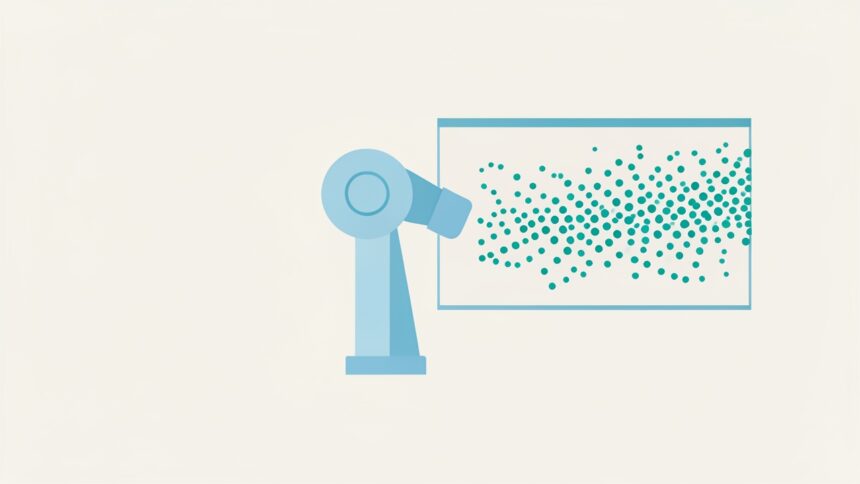
Factories filled with computerized robots may still sound futuristic, but major companies are starting to incorporate them into their production processes. Below introduces how robots and related technologies are impacting industrial production trends.

Human-based trends

The production processes still heavily relies on input and innovation from a variety of sources. For starters, advanced machine learning means that technologies will be able to master basic tasks with human oversight. Many new devices and technologies are embedded with information gathering sensors that become intuitive to users’ daily patterns. Many of these device meshes, such as wearables and mobile devices, are unconnected devices, but once they collectively share information, consumer convenience and marketing intelligence will increase. This is possible through data mining and big data, which are driving deeper understandings of consumers, markets and products. As a result, marketing companies have a much more intimate understand of consumer behaviors and preferences.

On the other hand, mobile technology is rapidly shifting how consumers and businesses communicate with each other, exchange information and drive product innovation. Clearly, even when robots become standard manufacturing features, humans will always be needed to translate new ideas and abstract concepts into marketable products. For the time being, companies will have to rely on corporate training companies and specialists to educate employees and improve manufacturing systems.

More Read

Big Data is Both a Weapon and Liability with Identity Theft
How Mobile Operators are Mining Big Data
5 Lessons Companies Can Learn From Facebook’s Data Privacy Scandal
New Startup Uses AI to Help Forex Traders Make Better Insights
Smart Factories Use AI to Create OT and IT Security Protection

Robotic production technology

Factories filled with automated robots are indeed rare, but when coupled with 3D printing, they may quickly become a reality. Adidas already employs over one million employees, so automation and technology are ideal ways to reduce labor costs. Adidas is creating a so-called speedfactory that will be operated by robots with less than a dozen employees to oversee operations. Fast-paced production companies like Adidas must continually adapt to market changes with annual product innovations if they want to stay ahead of the competition.

In order to make the project a reality, Adidas will utilize 3D printing technology that allows for mass customization of footwear that will be manufactured according to specific requirements at no additional process cost. 3D printing is currently driving product innovation and digital design proliferation at levels of complexity that in the past would not have been possible. The industrial ability to materialize complex components in shorter manufacturing production cycle time frames means more revenue and cost savings. 3D printing allows for additive manufacturing, which means that the tools needed for production are reduced. As an added benefit, 3D printing is a very sustainable and energy-efficient technology.

Autonomous agents

The principles of artificial intelligence needed to control robots are also being applied to complex production processes. For instance, manufacturing systems often suffer from downtime caused by tool and machine breakdowns, malfunctions and wear-and-tear. This reduces productivity while increasing product costs. Conventional manufacturing systems often struggle to monitor and deal with these disturbances because of their inflexible structure. However, manufacturing systems that use multiple cognitive agents to control robots and machines will automatically adapt to interruptions through intelligent learning and preventative measures.

This means that the manufacturing system will autonomously take an action while also continuing operations in functioning areas. However, in order to successfully manage production interruptions, manufacturing systems must be equipped with separate cognitive agents that collaborate with decision making and self-controlling functions. When used in conjunction with robots, these systems are highly flexible and self-adapting. These systems will always need highly skilled IT professionals with strong mechanical backgrounds to program functions and debug problems. For most manufacturers, traditional production tools and techniques must suffice for now.

In the end, advanced robotics perform complex or difficult tasks so that workers can focus on strategic and operational functions and decision making.

TAGGED:roboticstechnology
Share This Article
Facebook Pinterest LinkedIn
Share

Follow us on Facebook

Latest News

Flat editorial illustration: The article's core relationship is the engineering transition from an AI prototype to a production-r
From AI Prototype to Production: Observability and Scalability Requirements for Data-Heavy SaaS Applications
Artificial Intelligence Exclusive
Preparing Data Systems and Governance for a Scaling Global Gaming Brand -- AI-generated illustration
Preparing Data Systems and Governance for a Scaling Global Gaming Brand
Big Data Infographic
How Restaurant POS and Ordering Data Reveal Generational Customer Patterns -- AI-generated illustration
How Restaurant POS and Ordering Data Reveal Generational Customer Patterns
Exclusive Infographic
From Trucks To Data: How Telematics Can Improve Freight Transportation -- AI-generated illustration
From Trucks To Data: How Telematics Can Improve Freight Transportation
Big Data Exclusive Infographic

Stay Connected

1.2KFollowersLike
33.7KFollowersFollow
222FollowersPin

You Might also Like

Why Artificial Intelligence is The Future of Technology
Artificial IntelligenceBusiness Intelligence

Why Artificial Intelligence is The Future of Technology

5 Min Read
Are Phablets Finally Here?
Uncategorized

Are Phablets Finally Here?

6 Min Read
“Why do CFOs and CEOs hate IT? - ERP” - Thomas Wailgum at CIO.com
Business Intelligence

“Why do CFOs and CEOs hate IT? – ERP” – Thomas Wailgum at CIO.com

8 Min Read
Big Data Technology Is Crucial To Your Educational Pursuits
Big DataExclusive

Big Data Technology Is Crucial To Your Educational Pursuits

8 Min Read

SmartData Collective is one of the largest & trusted community covering technical content about Big Data, BI, Cloud, Analytics, Artificial Intelligence, IoT & more.

Chatbots and SEO: How Can Chatbots Improve Your SEO Ranking?
Artificial Intelligence Chatbots Exclusive
AI chatbots
AI Chatbots Can Help Retailers Convert Live Broadcast Viewers into Sales!
Chatbots

Quick Link

  • About
  • Contact
  • Privacy
Follow US
© 2008-26 SmartData Collective. All Rights Reserved.
Welcome Back!

Sign in to your account

Username or Email Address
Password

Lost your password?