Cookies help us display personalized product recommendations and ensure you have great shopping experience.

By using this site, you agree to the Privacy Policy and Terms of Use.
Accept
SmartData CollectiveSmartData Collective
  • Analytics
    AnalyticsShow More
    data analytics
    How Data Analytics Can Help You Construct A Financial Weather Map
    4 Min Read
    financial analytics
    Financial Analytics Shows The Hidden Cost Of Not Switching Systems
    4 Min Read
    warehouse accidents
    Data Analytics and the Future of Warehouse Safety
    10 Min Read
    stock investing and data analytics
    How Data Analytics Supports Smarter Stock Trading Strategies
    4 Min Read
    predictive analytics risk management
    How Predictive Analytics Is Redefining Risk Management Across Industries
    7 Min Read
  • Big Data
  • BI
  • Exclusive
  • IT
  • Marketing
  • Software
Search
© 2008-25 SmartData Collective. All Rights Reserved.
Reading: 3 Technologies That Are Changing How Business Continuity Is Handled
Share
Notification
Font ResizerAa
SmartData CollectiveSmartData Collective
Font ResizerAa
Search
  • About
  • Help
  • Privacy
Follow US
© 2008-23 SmartData Collective. All Rights Reserved.
SmartData Collective > Uncategorized > 3 Technologies That Are Changing How Business Continuity Is Handled
Uncategorized

3 Technologies That Are Changing How Business Continuity Is Handled

Entech Marketing
Entech Marketing
3 Min Read
SHARE

As new technologies emerge, we have to adapt the way that we handle our business continuity processes to accommodate these changing technologies.

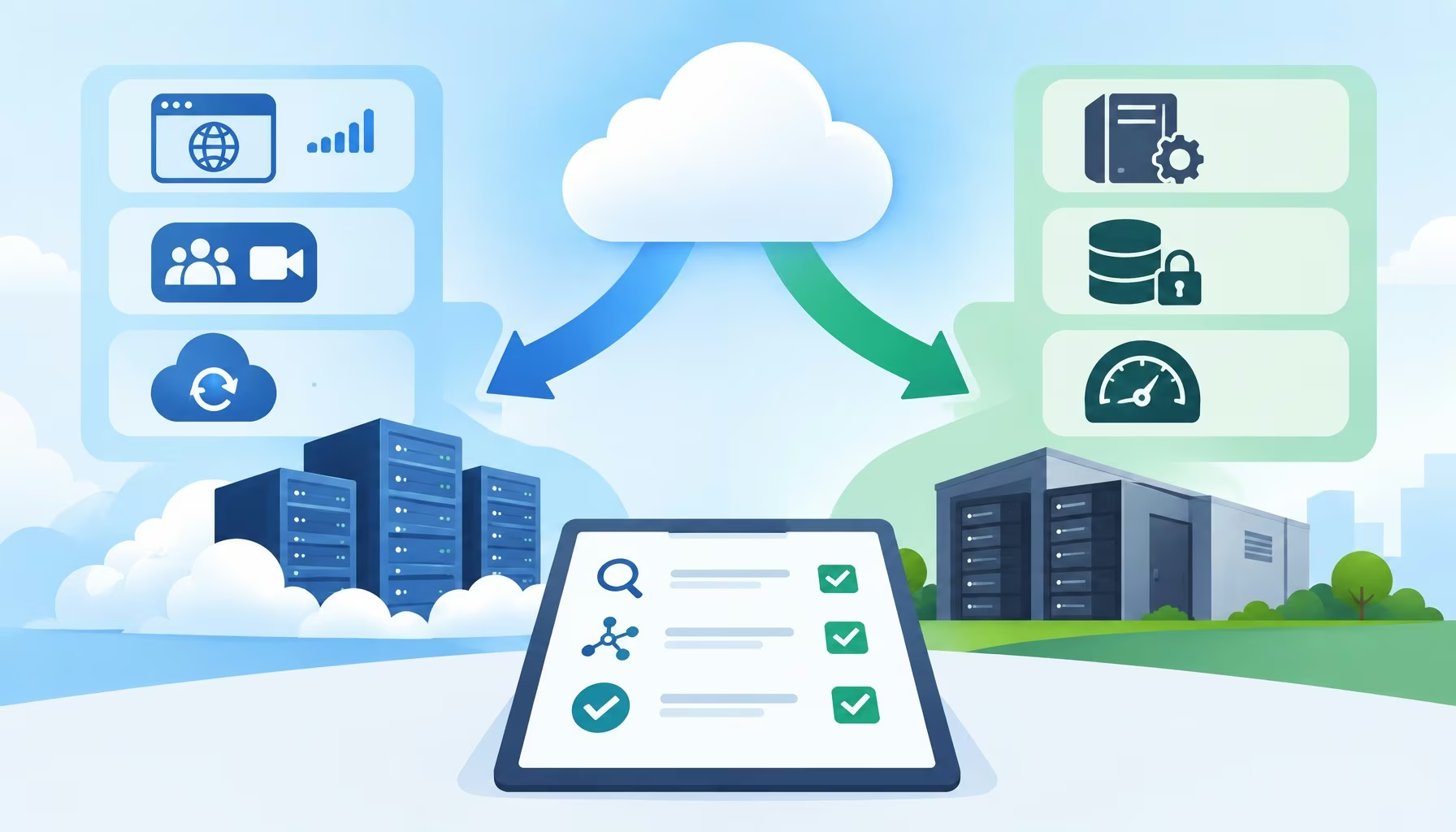
As new technologies emerge, we have to adapt the way that we handle our business continuity processes to accommodate these changing technologies. Each new development presents new challenges in planning, testing and modification of the business strategy. The IT world has been buzzing for awhile (we’ve written TONS on these topics), talking about how social media, mobility and cloud applications are changing the way organizations conduct business. But how do these popular advancements impact your business continuity solution? Not sure? Here’s some great insight. 

Software as a Service (SaaS)

Software as a service is becoming more and more popular for SMBs that can’t afford to shell out the money for proprietary application development. With these applications hosted entirely in the cloud, executives might write off the need for inclusion in the business continuity process, but the truth is that that the disaster recovery strategies of every SaaS provider should be audited carefully to understand what lengths they’re taking to protect an organization’s data. It will take a certain amount of technical knowledge to properly assess these disaster recovery processes and determine if they’re appropriate measures for a business to become a subscriber. 

More Read

Scientists have been plagued by Einstein’s theories which state…
It’s not a full-duplex world
Successful companies lead change with values and purpose at the forefront
“Why taking a few punches on the financial crisis just might save IT” by Patrick Gray on TechRepublic
Open, Open, Open: IBM’s SoftLayer Will Open Data Center in London

Mobile Devices and BYOD


Rather than adding complication to the process, mobile devices actually add a certain level of flexibility. With new continuous communication and VoIP services allowing you to install applications on your phone and mobile file access becoming more popular on tablets and smartphones – this is a no-brainer to work with disaster recovery and business continuity. Rather than being so reliant on the office in the event of a hurricane, flood, fire or other disaster, the flexibility of mobile brings piece of mind, making this particular technology invaluable for business continuity strategies.

Social Media
6124
A weird one, maybe, but social media can be invaluable for business continuity. By taking the time to understand which social media platform is most used by employees, you can easily identify the best way to keep in touch in the event of a disaster. Facebook messages, Twitter, SnapChat and even Instagram can be viable options, but be aware that this can present security concerns and reputation issues and should be closely examined by a business continuity expert before employing.

New technologies, millennials, and a different approach to work/life balance are changing the way that organizations do business every day. As we evolve our business processes, we must also evolve our approach to how we handle crisis and disaster recovery. A business continuity solution should be up to date in order to serve you in the best possible way. 
Share This Article
Facebook Pinterest LinkedIn
Share

Follow us on Facebook

Latest News

protecting patient data
How to Protect Psychotherapy Data in a Digital Practice
Big Data Exclusive Security
data analytics
How Data Analytics Can Help You Construct A Financial Weather Map
Analytics Exclusive Infographic
AI use in payment methods
AI Shows How Payment Delays Disrupt Your Business
Artificial Intelligence Exclusive Infographic
financial analytics
Financial Analytics Shows The Hidden Cost Of Not Switching Systems
Analytics Exclusive Infographic

Stay Connected

1.2KFollowersLike
33.7KFollowersFollow
222FollowersPin

You Might also Like

How IT Services Companies can Thrive in the Age of Cloud

5 Min Read

How to market in a Down Economy

3 Min Read

The Power of Twitter

2 Min Read

Long Tail vs. The Blockbuster

6 Min Read

SmartData Collective is one of the largest & trusted community covering technical content about Big Data, BI, Cloud, Analytics, Artificial Intelligence, IoT & more.

ai in ecommerce
Artificial Intelligence for eCommerce: A Closer Look
Artificial Intelligence
AI and chatbots
Chatbots and SEO: How Can Chatbots Improve Your SEO Ranking?
Artificial Intelligence Chatbots Exclusive

Quick Link

  • About
  • Contact
  • Privacy
Follow US
© 2008-25 SmartData Collective. All Rights Reserved.
Go to mobile version
Welcome Back!

Sign in to your account

Username or Email Address
Password

Lost your password?