We use cookies, including third-party cookies from Google to serve personalized ads through AdSense, to operate this site and understand how it is used. By continuing to browse, you accept this use. See our Privacy Policy and Terms of Use for details, including how to opt out of personalized advertising.
Accept
SmartData CollectiveSmartData Collective
  • Analytics
    AnalyticsShow More
    Flat editorial illustration: The article is about joining public web signals with internal business metrics so BI teams can inter
    Alternative Data in BI: Bringing Public Web Data Into Your Dashboards
    23 Min Read
    Flat editorial illustration: The article is about automating the collection, preparation, and delivery of marketing data across p
    From Data to Dashboards: 5 Marketing Reporting Automation Software Picks
    12 Min Read
    Flat editorial illustration: The article contrasts passive follower totals with a behavioral path from attention and trust to cli
    Creator Analytics Beyond Follower Count: Seven Metrics That Measure Audience Behavior
    11 Min Read
    Flat editorial illustration: The article connects AI and marketing analytics with managerial judgment grounded in consumer behavi
    How an Online MBA in Marketing Connects AI and Data Analytics
    11 Min Read
    What Kind of Problem-Solving Distinguishes Data Analysts From Software Engineers -- AI-generated illustration
    What Kind of Problem-Solving Distinguishes Data Analysts From Software Engineers
    7 Min Read
  • Big Data
  • BI
  • Exclusive
  • IT
  • Marketing
  • Software
Search
© 2008-25 SmartData Collective. All Rights Reserved.
Reading: 4 Benefits of the Private Cloud
Share
Notification
Font ResizerAa
SmartData CollectiveSmartData Collective
Font ResizerAa
Search
  • About
  • Help
  • Privacy
Follow US
© 2008-23 SmartData Collective. All Rights Reserved.
SmartData Collective > IT > Cloud Computing > 4 Benefits of the Private Cloud
Cloud Computing

4 Benefits of the Private Cloud

philcohen4
philcohen4
6 Min Read
4 Benefits of the Private Cloud
Illustration generated with Qwen Image.
SHARE

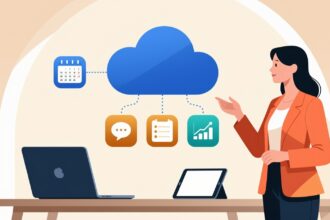
Let’s face it, you could be doing better by your data. Enter: the private cloud. It’s a new method of data management that goes beyond “crowd clouds”— those services available from Google and Amazon. The private cloud offers a built-for-business, enterprise-level solution.  

Contents
  • Security
  • Better Backups
  • Easy Access to SaaS
  • Customization, Flexibility, and Scalability
  • Implementing an Enterprise-Level Private Cloud

The private cloud promises to be a top contender for resource management with a future so big it’s bound to block the sun. Interested in joining the solo cloud movement? Read on to learn four benefits of the private cloud.

Security

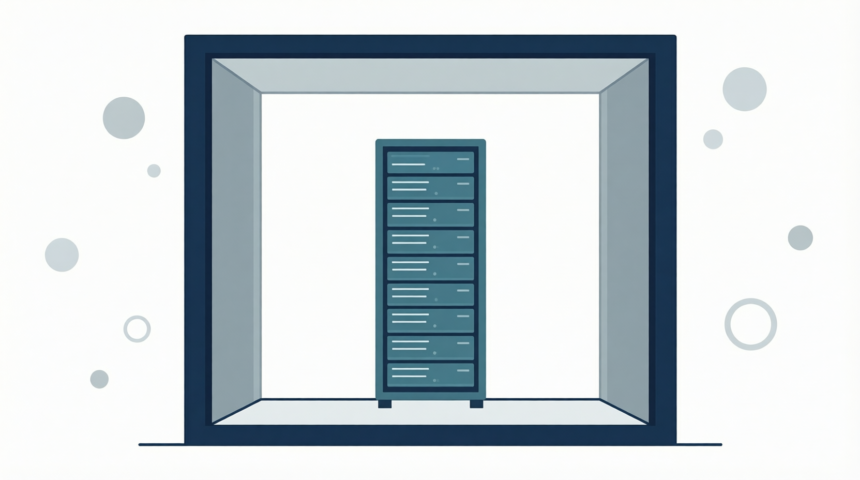
Unlike public clouds that are hosted together on a server shared by many, the private cloud is typically hosted on a company-specific corporate server. Encryption and security go further since the private cloud is often placed behind a firewall. This company specializes in cloud services and can keep your information safe. 

Different types of private clouds offer alternative security features as well. For example, in a report on cloud migration, Forbes notes, “[a hosted private cloud] is a dedicated private cloud that gives you the flexibility of being able to provision it via the Internet like you would public cloud. It’s still, however, secured either via a Virtual Private Network (VPN) or a dedicated private network circuit.” This is important for companies who need their data and information protected but readily available to employees. For example, a company like http://titantransline.com/ could be shipping something extremely valuable or volatile that they would need to keep private. A private VPN allows this while allowing access to specific people.

More Read

Consolidation in the Social Software Market Continues: VMware Acquires SocialCast
Moving to the Public Cloud? Do the Math First
Maximizing Project Efficiency With A Point Cloud Viewer Software
Simplifying Cloud Database Management with Infrastructure Automation
What’s the Difference Between Business Intelligence (BI) and EPM?

Better Backups

Savvis Direct, a hosted public cloud provider notes that the key to better cloud backups is still in server redundancy and rollover much like the automation found in public clouds. The difference: “With private cloud, however, you have even greater control over redundancy because you get to design your own environments with all of the redundancy you require,” Savvis states.  

A company can implement a customized disaster recovery strategy with a set number of servers; conversely, a company will also never pay for more redundancy than what it will actually use. In this way, public cloud users are buying into the backups for their company, as well as others, while private cloud users are buying into only their own backups. Whether your company specializes in a natural cure for migraines or finance, having backups is important to the business process.

Easy Access to SaaS

Software as a Service (SaaS) is easier than ever to access via the private cloud – especially for businesses. In fact, for business, the term is known specifically as “private SaaS” and it’s a feature of the cloud that allows employees to access operational applications fast and efficiently through a streamlined portal.

According to Information Week, “Taken together, this means higher asset utilization and much lower cost of service delivery. CIOs can implement private SaaS to modernize and recast their current software application portfolios as profit centers based on business value, rather than as cost centers. And they can deliver those software services faster, with improved management, oversight, and control.”

Customization, Flexibility, and Scalability

Perhaps the number one cited benefit of the private cloud is its variety of applications for a number of different business models. Public clouds providers are quick to sell a pre-packaged solution, whereas private clouds, and even hosted private clouds, are often completely customized with the benefits listed above and more. Not only are the hosted data and services customizable, but the actual cloud itself.

Public clouds often only come in incremental storage packages; alternatively, private clouds deal in enterprise server solutions and scalability. In many cases, the companies or organizations manage their own, specific resources so it’s up to them to decide when and how to scale up.

Implementing an Enterprise-Level Private Cloud

According to IBM, “The trick to maintaining the cloud environment lies precisely in the optimization of these computer resources through virtualization, service standardization, geographically compatible services, fast scalability, and what we call self-service.”

Sound complicated? It is – or at least a bit more so than the average process implementation.

You’ll want an IT person or business solutions architect with previous training from a variety of courses on data management and optimization to oversee the cloud’s overall application and security. Hiring someone with business credentials such as an MBA from a school like WSU’s College of Business doesn’t hurt either. The integrity of the private cloud is just as important as its benefits. The proper set up ensures success.

How will you use the private cloud to transform your data management? What would you like to see for the future of cloud solutions? Share your thoughts in the comments below. 

Share This Article
Facebook Pinterest LinkedIn
Share

Follow us on Facebook

Latest News

Flat editorial illustration: The article is about joining public web signals with internal business metrics so BI teams can inter
Alternative Data in BI: Bringing Public Web Data Into Your Dashboards
Big Data Business Intelligence Exclusive Web Analytics
Flat editorial illustration: A SaaS-editorial scene showing product usage, support patterns, and renewal feedback informing a fle
Using Product Usage Analytics and Support Data to Build a B2B Product Roadmap
Business Intelligence Infographic
From Hiring To Payroll: Managing HR Data Across Business Systems -- AI-generated illustration
From Hiring To Payroll: Managing HR Data Across Business Systems
Big Data Business Intelligence Infographic
Flat editorial illustration: The article is about automating the collection, preparation, and delivery of marketing data across p
From Data to Dashboards: 5 Marketing Reporting Automation Software Picks
Analytics Business Intelligence Exclusive Marketing

Stay Connected

1.2KFollowersLike
33.7KFollowersFollow
222FollowersPin

You Might also Like

The Era of Cloud Computing: An Interactive Timeline
Cloud Computing

The Era of Cloud Computing: An Interactive Timeline

5 Min Read
What Are the Benefits of Using Cloud-Based Workplace Apps?
Cloud Computing

What Are the Benefits of Using Cloud-Based Workplace Apps?

7 Min Read
Why Small Businesses Should Switch to Cloud Accounting Software
Best PracticesBig DataBusiness IntelligenceCloud ComputingData ManagementITSoftware

Why Small Businesses Should Switch to Cloud Accounting Software

4 Min Read
First Look – Ideate
Cloud ComputingMapReduce

First Look – Ideate

5 Min Read

SmartData Collective is one of the largest & trusted community covering technical content about Big Data, BI, Cloud, Analytics, Artificial Intelligence, IoT & more.

AI chatbots
AI Chatbots Can Help Retailers Convert Live Broadcast Viewers into Sales!
Chatbots
From Bolts to Bots: How AI Is Fortifying the Automotive Industry
Artificial Intelligence

Quick Link

  • About
  • Contact
  • Privacy
Follow US
© 2008-26 SmartData Collective. All Rights Reserved.
Welcome Back!

Sign in to your account

Username or Email Address
Password

Lost your password?