We use cookies, including third-party cookies from Google to serve personalized ads through AdSense, to operate this site and understand how it is used. By continuing to browse, you accept this use. See our Privacy Policy and Terms of Use for details, including how to opt out of personalized advertising.
Accept
SmartData CollectiveSmartData Collective
  • Analytics
    AnalyticsShow More
    chatgpt image jul 21, 2026, 04 34 30 pm
    4 Core Benefits of Predictive Maintenance after Vibration Analysis
    10 Min Read
    How Does Data Mining Boost Customer Satisfaction in Logistics? Harnessing Analytics for Results -- AI-generated illustration
    How Does Data Mining Boost Customer Satisfaction in Logistics? Harnessing Analytics for Results
    11 Min Read
    chatgpt image jul 13, 2026, 04 23 45 pm
    How Data Analytics Helps Companies Improve User Engagement
    19 Min Read
    chatgpt image jul 13, 2026, 03 59 46 pm
    How Data Analytics Improves Multi-Location Search Strategies
    10 Min Read
    cybersecurity efforts
    How Behavioral Analytics and AI Are Redefining Cybersecurity for Boca Raton Businesses
    14 Min Read
  • Big Data
  • BI
  • Exclusive
  • IT
  • Marketing
  • Software
Search
© 2008-25 SmartData Collective. All Rights Reserved.
Reading: Enterprise 2.0: It’s Still All About People
Share
Notification
Font ResizerAa
SmartData CollectiveSmartData Collective
Font ResizerAa
Search
  • About
  • Help
  • Privacy
Follow US
© 2008-23 SmartData Collective. All Rights Reserved.
SmartData Collective > Uncategorized > Enterprise 2.0: It’s Still All About People
Uncategorized

Enterprise 2.0: It’s Still All About People

PhilSimon
PhilSimon
5 Min Read
Enterprise 2.0: It’s Still All About People
Photo by Yan Krukau on Pexels (https://www.pexels.com/photo/men-using-computers-in-the-office-8866734/)
SHARE

I have spent most of the last year researching emerging trends for The Next Wave of Technologies. While it’s a very big book covering quite a few technologies, for now suffice it say that we have entered an exciting time with regard to IT. It’s obvious to me that, technology-wise, organizations can do pretty much whatever they want. SOA, mobility, open source, agile software development methods, clouds, SaaS, and other concepts allow for so much more flexibility than “Enterprise 1.0″ did.

Against this backdrop, I recently read a few posts that emphasize the continued importance of people in this very dynamic environment.

Cloud Computing

In Fixing IT in the cloud computing era,  Dion Hinchcliffe writes extensively about the game-changing nature of cloud computing. Ultimately,

More Read
Information Theory Approach to Data Quality and MDM
The Challenge of Making ERP Systems More Configurable
The Output Translator
Underwhelming experiences with Google Wave
3 Integration Trends IT Needs to Pay Attention to in 2016

…enterprise architects truly become business architects and business people become their own IT experts. Some of this is already here though much of it is not and there are certainly many issues to be worked out. But the writing is increasingly on the wall that this is the future of IT in the cloud computing era.

Translation: We are overcoming the traditional limitations of enterprise software. This has enormous implications for everyone, especially folks with “less than progressive” views on the normative roles of business end users and IT.

People-Oriented Architecture

In a related post, 2010 Watchlist: People-Oriented Architecture, Phil Wainewright writes:

I’ve used the term people-oriented architecture to make a deliberate contrast with our experience of service-oriented architecture in the past decade. Unlike SOA — which too often sought to remake the way that computers talk to one another without any reference to or consideration of user needs and business results — people-oriented architectures have to be developed collaboratively and iteratively with users and business owners, giving them as much freedom and autonomy as possible to control and manage information and processes to achieve the results they want. It’s an acknowledgment that people are both the commanding providers and the ultimate end consumers of any of the services in a computing architecture.

Put another way, just because we can doesn’t mean that we should, to paraphrase a quote from Jurassic Park. Enterprise 2.0 tools such as SOA, OS, and SaaS are very flexible. Because of this, the role of intelligent business decisions regarding design, architecture, UI, and the like are more important than before, not less.

Simon Says

In Enterprise 2.0, end users will drive how new apps and technologies ultimately work. I truly believe that we’re entering a period in which just about anything is possible on a technology front. The shackles of desktops and laptops, traditional networks, and client-server architecture are being removed. People matter, big time.

What do you think?

Enterprise 2.0: It’s Still All About People is a post from: Phil Simon

TAGGED:cloud computingenterprise 2.0it
Share This Article
Facebook Pinterest LinkedIn
Share
ByPhilSimon
Phil Simon is a recognized technology authority. He is the award-winning author of eight management books, most recentlyAnalytics: The Agile Way. He <consults organizations on matters related to communications, strategy, data, and technology. His contributions have been featured on The Harvard Business Review, CNN, The New York Times, Fox News, and many other sites. In the fall of 2016, he joined the faculty at Arizona State University’s W. P. Carey School of Business.

Follow us on Facebook

Latest News

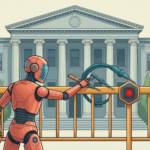
Flat editorial illustration: The article examines AI agents that escalate from legitimate data retrieval to attempted intrusions
OpenAI’s Government Website Incidents Raise a Hard Question for AI Agents: When Should They Stop?
Artificial Intelligence News Security
Flat editorial illustration: The article's core relationship is the alignment between customer behavioral data (visit frequency,
Data-Driven Loyalty: How Restaurants Use Behavioral Analytics to Optimize Revenue
Exclusive
Flat editorial illustration: The article's core relationship is that reliable eCommerce attribution depends on a unified, well-st
How eCommerce Data Teams Can Build Attribution That Holds Up
Big Data Exclusive
Flat editorial illustration: The article's core relationship is the contrast between fragmented inherited data infrastructure (wh
Data Stack Consolidation as a Data Quality and Governance Strategy for Mid-Market Teams
Big Data Exclusive

Stay Connected

1.2KFollowersLike
33.7KFollowersFollow
222FollowersPin

You Might also Like

Securing Venture Capital for Your New Cloud Startup
Cloud Computing

Securing Venture Capital for Your New Cloud Startup

7 Min Read
big data in space
ExclusiveITPrivacyRisk ManagementSecurity

The State of US Cyber Security

5 Min Read
Using Cloud and Big Data to Augment Your Sales Numbers
Big Data

Using Cloud and Big Data to Augment Your Sales Numbers

5 Min Read
ExclusiveIT

Know How to Handle the IT Woes Smartly In 4 Easy Ways

4 Min Read

SmartData Collective is one of the largest & trusted community covering technical content about Big Data, BI, Cloud, Analytics, Artificial Intelligence, IoT & more.

Artificial Intelligence for eCommerce: A Closer Look
Artificial Intelligence
The Art of Conversation: Enhancing Chatbots with Advanced AI Prompts
Chatbots

Quick Link

  • About
  • Contact
  • Privacy
Follow US
© 2008-26 SmartData Collective. All Rights Reserved.
Welcome Back!

Sign in to your account

Username or Email Address
Password

Lost your password?