We use cookies, including third-party cookies from Google to serve personalized ads through AdSense, to operate this site and understand how it is used. By continuing to browse, you accept this use. See our Privacy Policy and Terms of Use for details, including how to opt out of personalized advertising.
Accept
SmartData CollectiveSmartData Collective
  • Analytics
    AnalyticsShow More
    chatgpt image jul 21, 2026, 04 34 30 pm
    4 Core Benefits of Predictive Maintenance after Vibration Analysis
    10 Min Read
    How Does Data Mining Boost Customer Satisfaction in Logistics? Harnessing Analytics for Results -- AI-generated illustration
    How Does Data Mining Boost Customer Satisfaction in Logistics? Harnessing Analytics for Results
    11 Min Read
    chatgpt image jul 13, 2026, 04 23 45 pm
    How Data Analytics Helps Companies Improve User Engagement
    19 Min Read
    chatgpt image jul 13, 2026, 03 59 46 pm
    How Data Analytics Improves Multi-Location Search Strategies
    10 Min Read
    cybersecurity efforts
    How Behavioral Analytics and AI Are Redefining Cybersecurity for Boca Raton Businesses
    14 Min Read
  • Big Data
  • BI
  • Exclusive
  • IT
  • Marketing
  • Software
Search
© 2008-25 SmartData Collective. All Rights Reserved.
Reading: ReBlog: On Why I Don’t Like Auto-Scaling in the Cloud
Share
Notification
Font ResizerAa
SmartData CollectiveSmartData Collective
Font ResizerAa
Search
  • About
  • Help
  • Privacy
Follow US
© 2008-23 SmartData Collective. All Rights Reserved.
SmartData Collective > Big Data > Data Mining > ReBlog: On Why I Don’t Like Auto-Scaling in the Cloud
Business IntelligenceData MiningData WarehousingPredictive Analytics

ReBlog: On Why I Don’t Like Auto-Scaling in the Cloud

TonyBain
TonyBain
2 Min Read
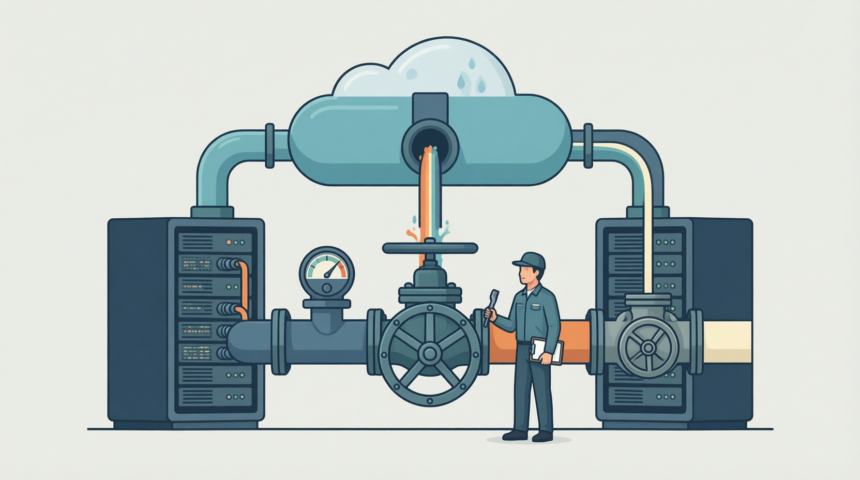
ReBlog: On Why I Don't Like Auto-Scaling in the Cloud
Illustration generated with Qwen Image.
SHARE

George Reese posted the following on the O’Reilly Blog

“I enter into sales meetings getting clients excited about dynamic scaling only having to vigorously talk them away from the idea of auto-scaling. I just don’t like auto-scaling.”

My reply to this was as follows (I am re-posting this here as it is relevant to the chain of posts I am working on at the moment).

George, you are dismissing a logical concept, “auto sizing”, based on current physical implementations of that concept.  A model where we don’t have to worry about manually planning application resources requirements because they are automatically allocated based on needs makes sense and certainly seems to the right direction to be heading.  One can predict a likely point in the not too distant future where planning I/O and other resource demands in detail will cease to be relevant and service providers charging metrics, such as based on network traffic, will become outdated just as charging based on number of CPU instructions or CPU time ceased to be (and charging based on number of database transactions used ceased to be, and charging based on disk space is starting to be).  Capacity planning as a discipline is becoming more holistic as the detail becomes less relevant to us humans, the focus will be on planning the capacity of an “environment” and leaving the individual allocations of applications that run in that environment up to it.

So I will agree with you that Auto Sizing systems are not necessarily fool proof or should be trusted, but only for now.

More Read

Open Source is Opening Data to Predictive Analytics
Start Up Spotlight: UserVoice
How AI Agents are Transforming B2B Advertising Data Management
Domo to Disrupt the BI Software Industry
Can Advancements In Data Science Address The Challenges To Cybersecurity?

Link to original postInnovations in information management
Share This Article
Facebook Pinterest LinkedIn
Share

Follow us on Facebook

Latest News

Analyst points at colorful circular data dashboard on screen - information technology business metrics
How Fragmented Workplace Tech Undermines Reliable Business Metrics and Reporting
Cloud Computing Exclusive Infographic IT
Using Multi-Source Data and Analytics to Detect Operational Drift Across Franchise Networks -- AI-generated illustration
Using Multi-Source Data and Analytics to Detect Operational Drift Across Franchise Networks
Exclusive Infographic
Beyond The First Impression: The Long-Lasting Impact Of Sensory Marketing -- AI-generated illustration
Beyond The First Impression: The Long-Lasting Impact Of Sensory Marketing
Infographic Marketing
The Infrastructure Gap Slowing Data Center Growth -- AI-generated illustration
The Infrastructure Gap Slowing Data Center Growth
Big Data Cloud Computing Exclusive Infographic IT

Stay Connected

1.2KFollowersLike
33.7KFollowersFollow
222FollowersPin

You Might also Like

Maximize Tax Deductions as a Business Owner with AI
Artificial Intelligence

Maximize Tax Deductions as a Business Owner with AI

9 Min Read
Super Bowl 12: It’s All Over But For Measuring the Impact of The Shouting
AnalyticsData QualityMarket ResearchMarketingSocial DataUnstructured Data

Super Bowl 12: It’s All Over But For Measuring the Impact of The Shouting

6 Min Read
Key Strategies to Develop AI Software Cost-Effectively
Artificial Intelligence

Key Strategies to Develop AI Software Cost-Effectively

10 Min Read
Oracle Brings Enhancements to Business Intelligence
AnalyticsBig DataBusiness IntelligenceCollaborative DataData ManagementNew ProductsSoftware

Oracle Brings Enhancements to Business Intelligence

12 Min Read

SmartData Collective is one of the largest & trusted community covering technical content about Big Data, BI, Cloud, Analytics, Artificial Intelligence, IoT & more.

ai chatbot
How AI Website Chatbots Improve Customer Support and Lead Generation
Chatbots Exclusive
AI chatbots
AI Chatbots Can Help Retailers Convert Live Broadcast Viewers into Sales!
Chatbots

Quick Link

  • About
  • Contact
  • Privacy
Follow US
© 2008-26 SmartData Collective. All Rights Reserved.
Welcome Back!

Sign in to your account

Username or Email Address
Password

Lost your password?