
We use cookies, including third-party cookies from Google to serve personalized ads through AdSense, to operate this site and understand how it is used. By continuing to browse, you accept this use. See our Privacy Policy and Terms of Use for details, including how to opt out of personalized advertising.
Accept
SmartData CollectiveSmartData Collective
  • Analytics
    AnalyticsShow More
    Flat editorial illustration: The article connects AI and marketing analytics with managerial judgment grounded in consumer behavi
    How an Online MBA in Marketing Connects AI and Data Analytics
    11 Min Read
    What Kind of Problem-Solving Distinguishes Data Analysts From Software Engineers -- AI-generated illustration
    What Kind of Problem-Solving Distinguishes Data Analysts From Software Engineers
    7 Min Read
    chatgpt image jul 21, 2026, 04 34 30 pm
    4 Core Benefits of Predictive Maintenance after Vibration Analysis
    10 Min Read
    How Does Data Mining Boost Customer Satisfaction in Logistics? Harnessing Analytics for Results -- AI-generated illustration
    How Does Data Mining Boost Customer Satisfaction in Logistics? Harnessing Analytics for Results
    11 Min Read
    chatgpt image jul 13, 2026, 04 23 45 pm
    How Data Analytics Helps Companies Improve User Engagement
    19 Min Read
  • Big Data
  • BI
  • Exclusive
  • IT
  • Marketing
  • Software
Search
© 2008-25 SmartData Collective. All Rights Reserved.
Reading: A Two-Stage Approach to Financial Return for Data Lakes
Share
Notification
Font ResizerAa
SmartData CollectiveSmartData Collective
Font ResizerAa
Search
  • About
  • Help
  • Privacy
Follow US
© 2008-23 SmartData Collective. All Rights Reserved.
SmartData Collective > IT > Cloud Computing > A Two-Stage Approach to Financial Return for Data Lakes
AnalyticsCloud ComputingCommentaryITOpen Source

A Two-Stage Approach to Financial Return for Data Lakes

paulbarsch
paulbarsch
6 Min Read
A Two-Stage Approach to Financial Return for Data Lakes
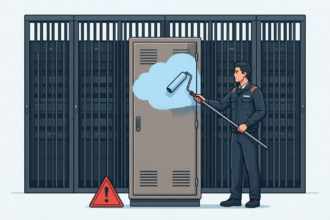
Illustration generated with Qwen Image.
SHARE

Depending on whether you “build” your data lake in the cloud or on premise, it could take anywhere from six months to a year—and in some cases longer to be fully deployed. In our “want it now” culture, this timeframe might be too long for some CIOs. But those companies that are faithful to creating and using a big data platform should see not only breakeven but real return too.

Plainly speaking, a data lake—done right—takes time. Laying the foundation for analytics, making sure data are transformed so as to be usable, secured/protected, and properly managed—all these things are gradual tasks. A real data lake and its associated applications don’t happen overnight, or at least shouldn’t.

What is a data lake? In an effort to avoid too much sales-speak, here’s a working definition: a data lake is a group of data stores where you can capture, manage and analyze massive amounts of raw data. It’s a home for messy data such as web logs, social data, text files, PDFs and more. You can also keep non-messy data in a data lake, the kind that traditionally belong in a relational table. Data lakes are mostly built on open source Hadoop; however other platforms such as NoSQL databases or cloud storage (i.e. Amazon’s S3) work just as well.

From a financial lens, a two stage approach is a good way of looking at a data lake project. In stage 1 most of your time will be spent identifying use cases, examining current data sets and data sources, assessing your current technologies and checking on what new systems you’ll need that can scale as your business grows. You’ll also want to build a plan for data quality, data management, security, and metadata management throughout your “data pipelines.” 

More Read

big data in politics
Analyzing the Role of Big Data in Modernizing American Elections
Get The Best Out Of Your Marketing Strategy By Integrating Analytics
Business Intelligence: Intuitive vs Cool Data Visualization and Infographics
Data Analytics and the New Era of Gold Trading
Factors Behind Data Storage Security: Is Your Business Vulnerable?

Stage 1 will continue as you either go straight to the cloud or start the process of jumping through the fiery hoops of capital allocation requests for hardware with your CFO. These efforts could add anywhere from one to three months to your project (maybe more). And of course you’ll want to start proof of concepts, and then pilot various use cases. All in all, stage 1—which is preparing for comprehensive analytics—is an exercise in delayed gratification.

In stage 1 of a data lake build, your incoming revenues will mostly be tiny and initial costs could be substantial. Considerations for initial cash outlays include hardware, data management software and engineering costs to expand needed functionality. Don’t forget incremental utility, overhead, supply costs and more for the data lake project. Consider stage 1 the “investment” part of your data lake effort while you get operational.

Now we get to stage 2 of your data lake project. In this round you’ll be in full production and doing “magical things” such as enabling Apache Spark and its various algorithmic libraries, turning your data scientists loose on raw data sets and possibly building BI-like reports for business analysts from data on the lake. You might also realize cost savings from consolidating various data facilities in your organization and possibly offloading ETL processes to Hadoop.

In truth, your data lake project—no matter how many stages—should be viewed in totality. Stage 1 or whatever you choose to call it will likely not have stand-alone profitability from a NPV perspective. And it’s hard to get to stage 2 without doing stage 1. Combining stages 1 and 2 should give you an “accept” from a capital budgeting viewpoint.

There are a few cautions: the above analysis isn’t black and white as there could be instances where you start earning more than you are investing in the first stage of your data lake project. However, in most cases it’s good to remain cognizant that you might not earn a financial return (on a discounted basis) until you’re well down the road of your data lake initiative. And that may be OK with your leadership team, as long as expectations for financial return are adjusted accordingly.

Read the other articles in this series:

  • NPV Considerations for Open Source Big Data Projects
  • Big Data ROI? Not Likely in Year 1
Share This Article
Facebook Pinterest LinkedIn
Share

Follow us on Facebook

Latest News

Flat editorial illustration: The article connects AI and marketing analytics with managerial judgment grounded in consumer behavi
How an Online MBA in Marketing Connects AI and Data Analytics
Analytics Artificial Intelligence Big Data Exclusive
Flat editorial illustration: The article connects commercial drone capture with integrated software workflows that organize and r
Drone Technology as a Business Investment: Calculating ROI, Costs, and Long-Term Value
Business Intelligence Marketing Software
Flat editorial illustration: The article connects weekly technician productivity and related shop metrics to timely scheduling an
Workforce Analytics for Auto Repair Shops: Reading Technician Productivity Weekly
Business Intelligence Exclusive
Flat editorial illustration: A business-editorial depiction of two account-growth routes: data-guided targeted advertising and cr
Targeted Ads and Cross-Promotion: Using Audience Segments and Platform Statistics to Grow
Exclusive Social Data

Stay Connected

1.2KFollowersLike
33.7KFollowersFollow
222FollowersPin

You Might also Like

Greening the Workplace 1.0: Going Paperless
Cloud ComputingData Warehousing

Greening the Workplace 1.0: Going Paperless

7 Min Read
How Mobile Operators are Mining Big Data
AnalyticsBig DataData MiningNewsSocial Data

How Mobile Operators are Mining Big Data

4 Min Read
Beware Cloud Washing: 6 Ways to Spot Fake "Cloud" CRM
AnalyticsBig DataBusiness IntelligenceCloud ComputingCRMData ManagementITSocial DataSoftware

Beware Cloud Washing: 6 Ways to Spot Fake “Cloud” CRM

5 Min Read
Analytics and Ending the Tyranny of the Anecdotal
AnalyticsDecision Management

Analytics and Ending the Tyranny of the Anecdotal

4 Min Read

SmartData Collective is one of the largest & trusted community covering technical content about Big Data, BI, Cloud, Analytics, Artificial Intelligence, IoT & more.

ai chatbot
How AI Website Chatbots Improve Customer Support and Lead Generation
Chatbots Exclusive
Chatbots and SEO: How Can Chatbots Improve Your SEO Ranking?
Artificial Intelligence Chatbots Exclusive

Quick Link

  • About
  • Contact
  • Privacy
Follow US
© 2008-26 SmartData Collective. All Rights Reserved.
Welcome Back!

Sign in to your account

Username or Email Address
Password

Lost your password?