Cloud computing and other technological advances have made organizations focus more on the future rather than analyze the reports of past data. To gain a competitive business advantage, companies have started combining and transforming data, which forms part of the real data science.
At the same time, they are also carrying out Business Intelligence (BI) activities, such as creating charts, reports or graphs and using the data. Although there are great differences between the two sets of activities, they are equally important and complement each other well.
Cloud computing and other technological advances have made organizations focus more on the future rather than analyze the reports of past data. To gain a competitive business advantage, companies have started combining and transforming data, which forms part of the real data science.
At the same time, they are also carrying out Business Intelligence (BI) activities, such as creating charts, reports or graphs and using the data. Although there are great differences between the two sets of activities, they are equally important and complement each other well.
For executing the BI functions and data science activities, most companies have professionally dedicated BI analysts as well as data scientists. However, it is here that companies often confuse the two without realizing that these two roles require different expertise.
It is unfair to expect a BI analyst to be able to make accurate forecasts for the business. It could even spell disaster for any business. By studying the major differences between BI and real data science, you can choose the right candidate for the right tasks in your enterprise.
Area of Focus
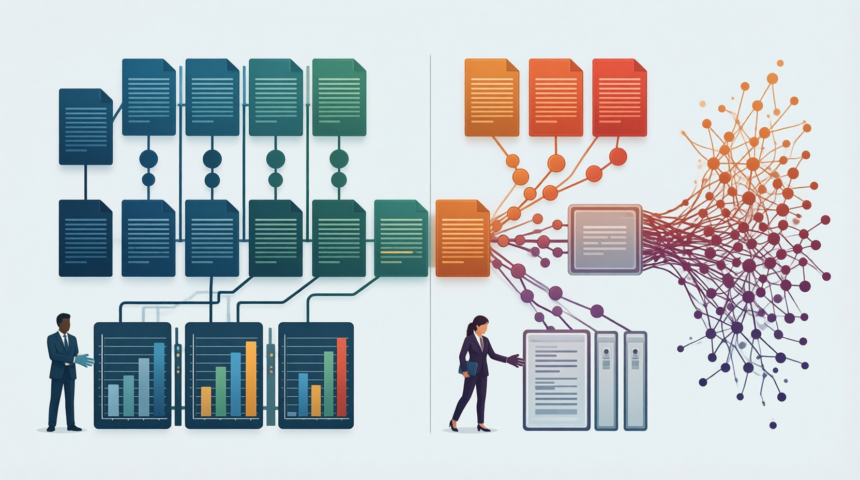
On the one hand, traditional BI involves generating dashboards for historic data display according to a fixed set of key performance metrics, agreed upon by the business. Therefore, BI relies more on reports, current trends, and Key Performance Indicators (KPIs).
On the other hand, real data science focuses more on predicting what might eventually happen in the future. Data scientists are thus more focused on studying the patterns and various models and establishing correlations for business forecasts.
For example, corporate training companies may have to predict the growing need for new types of training based on the existing patterns and demands from corporate companies.
Data Analysis and Quality
BI requires concerned analysts to look at the data backwards, namely the historical data, and so their analysis is more retrospective. It demands the data to be absolutely accurate, since it is based on what actually occurred in the past.
For example, the quarterly results of a company are generated from actual data reported for business done over the last three months. There is no scope for error as the reporting is descriptive, without being judgmental.
With regard to data science, data scientists are required to make use of predictive and prescriptive analyses. They have to come up with reasonably accurate predictions about what must happen in the future, using probabilities and confidence levels.
This is not guesswork, as the company will execute the necessary steps or improvement measures based on the predictive analysis and future projections. It is clear that data science cannot be 100% accurate; however, it is required to be “good enough” for the business to take timely decisions and actions to deliver the requisite results.
An ideal example of data science is estimating the business revenue generation of your company for the next quarter.
Data Sources and Transformation
With BI, companies require advanced planning and preparations for using the right combination of data sources to achieve the data transformation. To get appropriate data insights about customers, business operations and products, data science is able to create data transformations on the fly, using data sources available on demand.
Need for Mitigation
BI analysts do not have to mitigate any uncertainty surrounding the historical data, since they are based on actual occurrences and accurate and do not involve any probabilities.
For real data science, there is a need to mitigate the uncertainty in the data. For this purpose, data scientists use various analytic and visualization techniques to identify any uncertainties in the data. They eventually use appropriate data transformation techniques to convert the data into a format that is workable and approximate, which helps to get the data into a format that can be easily combined with other data sources.
Process
As you cannot get the data transformation done instantly with BI, it is a slow manual process involving plenty of pre-planning and comparisons. It needs to be repeated monthly, quarterly or annually and it is thus not reusable.
Yet, the real data science process involves creating instant data transformations via predictive apps that trigger future predictions based on certain data combinations. This is clearly a fast process, involving a lot of experimentation.
Whether you need reports over the last five years or future business models, BI and real data science are necessary for any business. By knowing the difference, you can make better decisions that will lead to business success.