We use cookies, including third-party cookies from Google to serve personalized ads through AdSense, to operate this site and understand how it is used. By continuing to browse, you accept this use. See our Privacy Policy and Terms of Use for details, including how to opt out of personalized advertising.
Accept
SmartData CollectiveSmartData Collective
  • Analytics
    AnalyticsShow More
    What Kind of Problem-Solving Distinguishes Data Analysts From Software Engineers -- AI-generated illustration
    What Kind of Problem-Solving Distinguishes Data Analysts From Software Engineers
    7 Min Read
    chatgpt image jul 21, 2026, 04 34 30 pm
    4 Core Benefits of Predictive Maintenance after Vibration Analysis
    10 Min Read
    How Does Data Mining Boost Customer Satisfaction in Logistics? Harnessing Analytics for Results -- AI-generated illustration
    How Does Data Mining Boost Customer Satisfaction in Logistics? Harnessing Analytics for Results
    11 Min Read
    chatgpt image jul 13, 2026, 04 23 45 pm
    How Data Analytics Helps Companies Improve User Engagement
    19 Min Read
    chatgpt image jul 13, 2026, 03 59 46 pm
    How Data Analytics Improves Multi-Location Search Strategies
    10 Min Read
  • Big Data
  • BI
  • Exclusive
  • IT
  • Marketing
  • Software
Search
© 2008-25 SmartData Collective. All Rights Reserved.
Reading: Question: Why Are You In Social Channels?
Share
Notification
Font ResizerAa
SmartData CollectiveSmartData Collective
Font ResizerAa
Search
  • About
  • Help
  • Privacy
Follow US
© 2008-23 SmartData Collective. All Rights Reserved.
SmartData Collective > Business Intelligence > Decision Management > Question: Why Are You In Social Channels?
Decision ManagementKnowledge ManagementPolicy and GovernanceSocial Data

Question: Why Are You In Social Channels?

EstebanKolsky
EstebanKolsky
7 Min Read
Question: Why Are You In Social Channels?
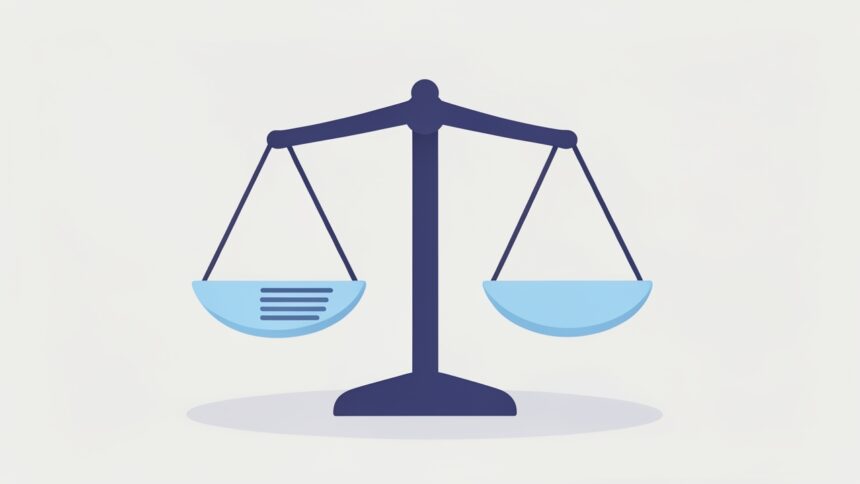
Illustration generated with FLUX.2 [klein 4B] via Cloudflare Workers AI.
SHARE

I was moderating a great panel recently at the Inbound Marketing Summit: “How Does Inbound Marketing Affect SCRM?”.  The speakers were superb – thanks Sameer Pattel, Kirk Mosher, and Chris Spears – but the audience was outstanding.  I hate to ask questions of panelists since it basically bores the audience with pre-packaged statements, I prefer to let those listening guide the conversation and I just stand there and look pretty — well, pretty for me.

This was one of the bestest panels I did lately – the audience was engaged and driving the conversation in the right direction (away from soundbites and into real-life experience and knowledge).  One of the audience members asked a killer question, something that has been plaguing me for quite some time and I finally get to ponder out loud (I would love to thank whoever it was that asked that question, as I foolishly failed to get her name on my rush out of the door following my panel).  Her statement (followed by a question) was (and I paraphrase):

The people on Twitter and most social channels are not Decision Makers when it comes to enterprise purchases, why would you need to be in social channels?

Clearly this is a statement that applies to B2B (or whatever you want to call the model of selling to other businesses – not the place or time for that debate), but it got me thinking deeper.  OK, not that deep – but certainly got me thinking.

Forget the fact that we were talking Marketing and forget the fact that most organizations still don’t understand why they have a social presence or what they are doing in there (no disrespect, of course, simply a question of maturity for the channels).  Forget all that.

More Read

Who Gets the Call When Your Analytics Process Crashes?
Tips for Managing Priorities in a Data Team
Can Big Data Help Bridge the Workplace Skills Gap?
Big Data and the Perception of Privacy
3 Ways Big Data Is Changing Financial Institutions Forever

Let’s focus instead on how decisions are made in enterprises and how social affects that.

Truth be told, decisions are not made by a single person in B2B models – they are made in a chain-of-command or committee model.

In a chain-of-command model a lower-level employee finds and processes the information and passes it along to their boss with a recommendation, who in turn adds value (more processing, a recommendation, an alternative, customized information, financial analysis, etc.) to it before passing it to their boss — and so forth.  By the time the decision-maker has the information it has benefited from the addition of several layers of add-ons that make the decision making simple: choose one of a few options, all well (OK, fairly well at least) documented and pre-chewed.

The people in Twitter, traditionally the lower rungs in this corporate ladder of decision making, consume the  information necessary to understand the market, but they don’t prepare the customized information about the industry or organization when doing so (from my experience, fewer than 20 percent of product or solution searches are carried out in customized fashion; that is done later).  Those added layers of information and customization provided by their bosses are focused on the industry and or the organization itself.  That is their value add as it climbs the ladder.

The committee model is not very different, with the exception that it is more social – the people in the committee will seek the information, discuss it among themselves, tap into experts where necessary to add more customization or personalized information, and craft a response that will go one or two more layers or approval before getting to the decision makers.  Similar model, but involving more conversations and customization before getting to the people adding the industry and company specific information and fewer, hopefully, layers between information and selection.

It is (anecdotal experience for now but working on a primary research project to solve that) very rare for the decision makers to be in the social channels.  Even in those cases where they are, the time availability to find and understand all the necessary information is beyond their available resources – they may never notice the content created for the situation they are involved in – even in cases where the committee or the lower-level workers point out the existence of the content.

Going back to the question that prompted this post (and giving you the comments area below) – if you cannot reach the people making the decision — why are you on Social Channels?  Is reaching the influencers and recommenders sufficient? Can you reconcile the organization’s roles and  responsibilities — with your needs and desires? Can you prove the value of presence in social channels by the reach/distribution/velocity of the sames in contrast? Is this enough justification?

How are you doing this, how are you making these decisions — how are yo making it work in your organization? Would love to hear your thoughts on this…
Share This Article
Facebook Pinterest LinkedIn
Share

Follow us on Facebook

Latest News

Flat editorial illustration: The article's core relationship is the engineering transition from an AI prototype to a production-r
From AI Prototype to Production: Observability and Scalability Requirements for Data-Heavy SaaS Applications
Artificial Intelligence Exclusive
Preparing Data Systems and Governance for a Scaling Global Gaming Brand -- AI-generated illustration
Preparing Data Systems and Governance for a Scaling Global Gaming Brand
Big Data Infographic
How Restaurant POS and Ordering Data Reveal Generational Customer Patterns -- AI-generated illustration
How Restaurant POS and Ordering Data Reveal Generational Customer Patterns
Exclusive Infographic
From Trucks To Data: How Telematics Can Improve Freight Transportation -- AI-generated illustration
From Trucks To Data: How Telematics Can Improve Freight Transportation
Big Data Exclusive Infographic

Stay Connected

1.2KFollowersLike
33.7KFollowersFollow
222FollowersPin

You Might also Like

TechAmerica Foundation Announces Leadership for “Big Data” Commission
Culture/LeadershipData MiningPolicy and GovernanceTransparency

TechAmerica Foundation Announces Leadership for “Big Data” Commission

10 Min Read
Big Data Robots: Are They After Your Job?
AnalyticsBig DataBusiness IntelligenceExclusiveModelingPredictive AnalyticsSentiment AnalyticsSocial DataSocial Media AnalyticsText AnalyticsUnstructured DataWeb Analytics

Big Data Robots: Are They After Your Job?

7 Min Read
Unstructured Data: A Contrarian's View
Best PracticesBig DataBusiness IntelligenceCommentaryData ManagementMarket ResearchSocial DataSocial Media AnalyticsUnstructured Data

Unstructured Data: A Contrarian’s View

5 Min Read
Connecting the Data Dots Keeps These Companies Alive
Best PracticesBig DataData ManagementKnowledge Management

Connecting the Data Dots Keeps These Companies Alive

6 Min Read

SmartData Collective is one of the largest & trusted community covering technical content about Big Data, BI, Cloud, Analytics, Artificial Intelligence, IoT & more.

ai chatbot
How AI Website Chatbots Improve Customer Support and Lead Generation
Chatbots Exclusive
5 Great Tips for Using Data Analytics for Website UX
Big Data

Quick Link

  • About
  • Contact
  • Privacy
Follow US
© 2008-26 SmartData Collective. All Rights Reserved.
Welcome Back!

Sign in to your account

Username or Email Address
Password

Lost your password?