Internet of Things technology is a hot topic. You can’t read a tech news site without coming across at least one mention of IoT. But if you’re looking to take advantage of sensors, you will likely have to update your data store to handle the workload. Once you’re set up data-wise, get ready to monitor everything from weather and the environment to overseas factory floors and even fleets of trucks.
Why NoSQL for IoT?
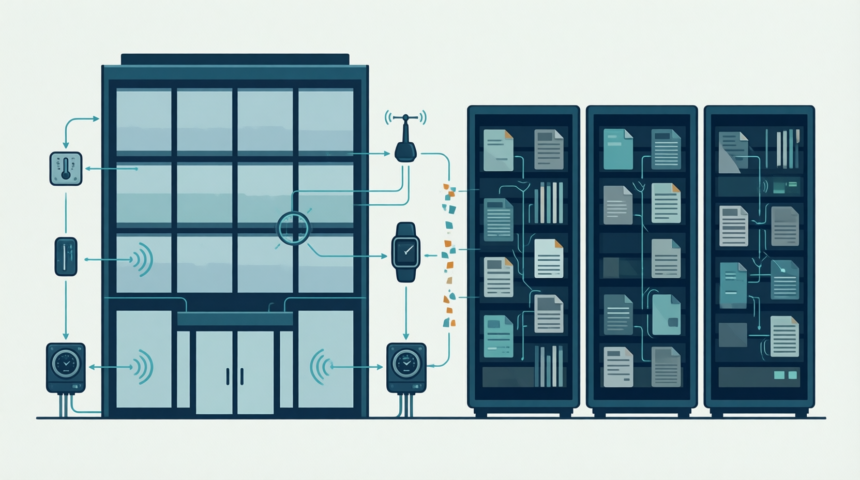
You might think your data needs for sensors are as tiny as these little devices, but there are several reasons you should consider a NoSQL database.
The first reason is that these sensors can send huge amounts of data since they run 24/7. All of that data adds up to the need for a larger storage capacity. While you might be tempted to use an RDBMS, relational databases were never really meant to deal with the kind of data that sensors generate. For one thing, sensor data doesn’t always make sense in tabular format.

SQL was originally designed for relatively static data structured as a table. Data from sensors can change a lot and provides a continuous stream. And you need to be able to add or remove entries on the fly, which can prove difficult with relational databases.
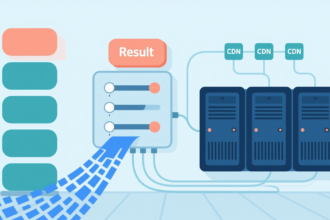
NoSQL databases are also more scalable, offering flexibility in data models. You can have a structure similar to SQL with wide tables, or you might choose to go with a document-oriented database, key-value database, or graph database. Time series databases are one of the more obvious choices for Internet of Things applications specifically.
Some businesses may join the big data revolution without knowing where they are actually going to store their data. You could have a cluster dedicated to your data and another to your analytics, but that’s expensive. Wouldn’t it be great if you could have your data and analytics in the same cluster? NoSQL eliminates budget waste for those with two different clusters that amount to the same thing.
Applications
So now that you’ve got your IoT-capable database, what can you do with Internet of Things technology?
In “The Only Living Boy in New York,” Paul Simon famously got all the news he needed on the weather report. While the weather might seem to most of us like no more than a cliche, “safe” topic for conversation, for many people, receiving the weather report is a matter of safety and survival.
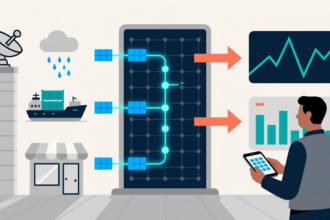
The severe weather that has impacted much of the U.S. in recent years shows how timely weather forecasts can save lives by allowing forecasters to give accurate, quick, and up-to-the-moment warnings and alerts. Both the National Weather Service and private forecasters use sophisticated models to predict the weather, and those models get better all the time. One of the primary reasons they continue to improve is that the forecasters feed the programs with real data gathered from weather stations around the world. The Weather Channel acquired Weather Underground largely for its extensive network of weather stations operated by enthusiasts.
If you’re not interested in weather monitoring, IoT offers other options, such as monitoring pollution. Sensors can measure particles in the air, or chemicals and bacteria in the water. Agencies could use this information to plan congestion pricing for commuters or direct cleanup resources.
Nearly every State in the U.S. has called for more manufacturers to bring jobs back to the U.S. instead of offshoring, but manufacturers cite high costs as a reason to keep factory jobs overseas. One way to monitor operations abroad is to deploy IoT on factory floors. While automated process control is nothing new, what is new is the ability to connect directly to factory floors from around the world. Businesses can monitor production and instantly track problems before they become big ones.
One of the biggest successes for Internet of Things industry is in logistics, particularly fleet tracking. Trucking companies can see instantly where their vehicles are, and customers can know exactly where their stuff is. Managers can even track fuel usage and see when trucks are due for maintenance. All of these factors help logistics companies cut costs, save fuel, and keep customers.
Conclusion
NoSQL may be just the solution you need to venture into IoT technology. With the ability to handle the vast workloads from sensors running 24/7, you’ll be able to react to new situations quickly. NoSQL can help you save money, save time, and even save lives.