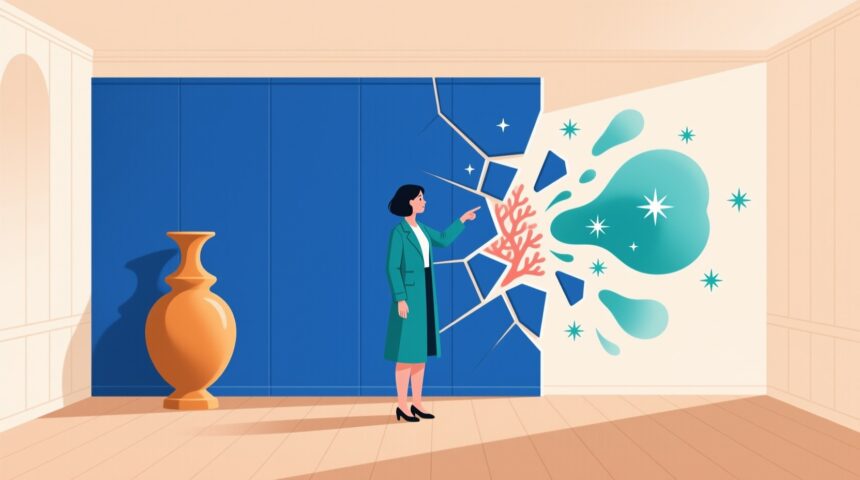
Last September, various news outlets picked up the story of an AI-generated painting taking first place at the Colorado State Fair’s art contest. To create the winning piece, the contestant entered some text into Midjourney, an online app that creates images based on text input. The result is a piece called ‘Théâtre D’opéra Spatial,’ one of the first AI-generated images to win an art contest.
While the blue-ribbon finish is a milestone-worthy achievement in AI technology, not everyone is happy. Some artists have accused him of cheating, even though the contest didn’t explicitly prohibit AI-generated imagery. Others were understandably worried that they might lose their artistic jobs to robots in the future—‘the death of artistry,’ they commented.
But this story spurs another problem. Who can be the legitimate owner of creations that anyone can create using such programs? Is the practice considered plagiarism? As it stands, intellectual property law is partly prepared to tackle this.
How AI Generation Works
Ahmed Elgammal, director of Rutgers Art and Artificial Intelligence Laboratory, explains in his article published in American Scientist that these programs employ one of two algorithm classes. The majority of these programs use generative adversarial networks (GAN).
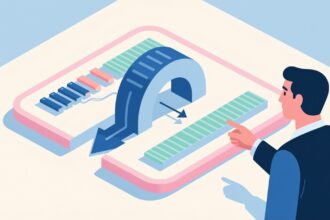
Contrary to popular belief, some human input is still necessary for running these programs, and GAN is proof of that. The user feeds the algorithm hundreds of pictures, and the algorithm tries to imitate them as best it can. Then, the user goes through the generated images, tweaking the algorithm based on the ones they deem acceptable.
The later iteration is the artificial intelligence creative adversarial network (AICAN), which the laboratory has been developing since 2017. It takes human input out of the equation, forcing the AI to learn through the images fed to it alone. AICAN’s results have surprised researchers, as they were so accurate that people couldn’t tell that AI made it.
The Ownership Dilemma
In both GAN and AICAN, Elgammal presents an interesting thought. When his team exhibited AICAN’s works throughout the United States, people constantly asked for the artist’s name. He stressed that while he developed the algorithm, he didn’t have control over what it would do. In this instance, is the rightful artist the algorithm itself or its creator?
It wasn’t this complicated before, as the human artist would be credited even if they used tools like paintbrushes or even Photoshop. After all, these tools could only act with direct input from the user. But with AI generation, AI can make decisions regardless of human input.
Amid the lack of a clear answer to this dilemma, other AI generation programs have made steps to allow their outputs to be used for commercial purposes. OpenAI went down this route with its DALL-E 2 system, as per its announcement last July, coinciding with the creation of paid plans.
The proliferation of AI-generated creations—not just images—will profoundly affect copyright and trademark application processes. Since applying for a trademark involves searching for any conflicting application, the likelihood of stumbling upon one can increase. Businesses might get stuck in needless intellectual property conflicts—a ‘legal minefield,’ as legal experts say.
The Law As It Stands
The legal implications of AI-generated creations are slowly inspiring actions. Following the case of ‘A Recent Entrance to Paradise,’ another AI-generated work, the U.S. Copyright Office said last February that such works aren’t eligible for copyright due to the lack of human authorship. The program responsible, Creativity Machine, created it with virtually no human input.
Then, in September, media repository Getty Images followed the example of some websites by banning AI-generated content. Its official statement stated concerns with the copyright status of such works and unaddressed relevant issues as the reasons for the move. Other similar websites have done so mainly in support of human-based creativity.
In spite of these developments, some blanks in the relevant legalese have yet to be filled, namely on the matter of fair use. According to an article published in the Texas Law Review, there’s no law upholding fair use of training datasets at the moment.
As mentioned earlier, AI generation programs rely on inputted data—such as publicly available images—to produce results. AICAN was fed around 80,000 works that have embodied Western art for the past 500 years. Most of these, if not all, were made with human hands, but there’s a good chance that some have copyright protection.
Legal experts ponder the implications of AI-generated work that uses copyrighted training data. Not only is it ineligible in the eyes of the U.S. Copyright Office, but it also raises the question if it’s considered plagiarism. Is it plagiarism if a user takes credit for an AI-generated creation? Is the program committing plagiarism if it takes copyrighted work?
The AI generation programs’ developers are cautious about guarantees. According to DALL-E’s Terms of Use, the program doesn’t guarantee that it’ll work as the user intended. Others, like Midjourney, are reluctant to provide legal assistance if the work gets involved in legal trouble.
Current Legal Options
Experts say it’s highly likely that the ambiguity regarding AI-generated content will remain in the following years. According to the World Intellectual Property Organization (WIPO), as it stands, the world currently has two legal options to rely on.
The first is, as demonstrated by the U.S. Copyright Office’s decision, to deny copyright to all non-human-generated content. Apart from the U.S., authorities in Australia and the European Union have settled similar cases by rejecting copyright applications on the grounds of works not being entirely made by human hands.
The second is to credit the creator for any work generated by any AI programs. This option is evident in the United Kingdom, as stated in Section 9(3) of the Copyright, Designs and Patents Act 1988, which not only gives credit to the human creator but also grants the work copyright protection. Other countries that have taken this approach include India, Ireland, and New Zealand.
Conclusion
Intellectual property law will struggle to catch up with the proliferation of AI-generated creations in the digital age. WIPO asserts that as the technology behind the programs evolves, the fine line between human-made and AI-generated art will blur. A time will come when distinguishing the two will be practically impossible, for which the law might not have an answer.