Customer Relationship Management, commonly referred to as CRM, is the business practice of fostering and maintaining relationships with customers through various platforms, practices and technologies. In practice, this means utilizing tools to organize, automate, make more efficient and improve:
- Sales
- Marketing
- Customer support
- Technical support
Prior to the advent of digital technologies such as software and hardware, Internet and cloud-based programs, and data analysis tools, CRM was inefficient, often unreliable, and difficult. Now, with the help of technology, CRM has become, if not perfect, at least streamlined and more effective. There now exist tools which allow businesses to lower costs and increase revenue, all through customer relations.
Ultimately, customer relationship management helps businesses acquire new customers, capture customer data for marketing purposes, and retain customers for greater return on investment, all of which (it should go without saying) are good for the bottom line. If your company is looking to streamline its CRM processes and gain an advantage, there are some basic do’s and dont’s.
Tools of the Trade
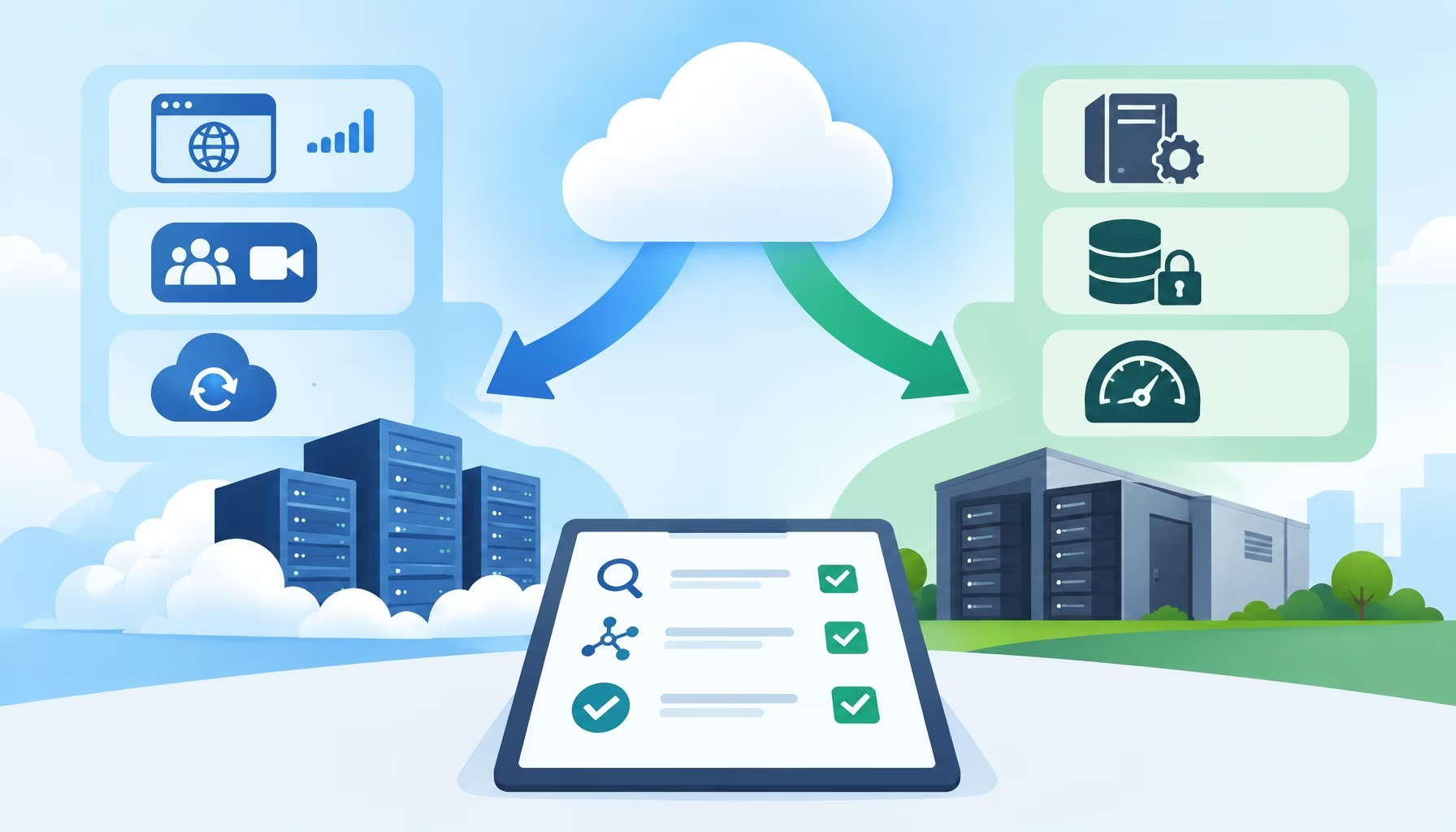
Perhaps the simplest way in which technology has changed customer relationship management is that the industry now has a multitude of tools from which to choose – effective, easy-to-use, and often working in real time. Broken down into fundamentals, these tools consist of software (and cloud-based programs) and hardware.

Soft Options – Salesforce and Other Platforms
There are a number of traditional software programs and cloud-based Internet platforms available for the purpose of customer relationship management. The largest, however, is undeniably Salesforce, a system which includes multiple specialized tools and services, such as Sales Cloud, Service Cloud, Data Cloud, Collaboration Cloud, and Custom Cloud. These tools, and others like them, make the entire sales and marketing process more efficient through such features as decentralized storage, universal data retrieval, comprehensive data analysis and more. Any company that includes within its organization a sales department will find that a platform such as Salesforce is invaluable in the modern business environment.
Hard Options – Tablets and Mobile Devices
When it comes to CRM, hardware plays just as big a role as software – particularly at ground level, where increasingly, businesses that rely on brick-and-mortar storefronts are finding tablet uses tailored to their needs to be incredibly beneficial. Remember, any interaction with the customer is considered customer relationship management, whether it be marketing, sales, or the overall customer experience. Tablet uses in stores can range from interactive menus, which provide for not only a novel transaction experience but often a quicker and more convenient one as well, to customer data acquisition. Employees equipped with tablets and other Smart devices can easily capture customer demographics, or better yet, contact information for later marketing efforts.
Stumbling Blocks and How to Avoid Them
There are some things to be wary of if your business is diving head-first into the world of CRM. Namely, be sure that your business needs will be served by the platform, service, or technology that is ultimately adopted. Furthermore, be sure that your business possesses the resources and people needed to make best use of these tools. All of the data mining in the world is useless if there isn’t someone on the other end to analyze that data and make recommendations based off of it.
Remember, a tool is only as good as the person wielding it, and that is just as true for a hammer as it is for a cloud-based CRM platform such as Salesforce. Don’t be intimidated or coerced into adopting a platform that you’re ill-equipped to use correctly or which will fail to meet the specific needs of your business. There is no perfect solution, there are only tailored solutions – choose wisely. Otherwise, you could find your business floundering.