Cookies help us display personalized product recommendations and ensure you have great shopping experience.

By using this site, you agree to the Privacy Policy and Terms of Use.
Accept
SmartData CollectiveSmartData Collective
  • Analytics
    AnalyticsShow More
    How Data Analytics Is Reshaping Patient Financing Decisions
    How Data Analytics Is Reshaping Patient Financing Decisions
    13 Min Read
    business using business intelligence
    How to Use a Competitive Intelligence Dashboard to Turn Market Data Into Smarter Marketing Decisions 
    9 Min Read
    unusual trading activity
    Signal Or Noise? A Decision Tree For Evaluating Unusual Trading Activity
    3 Min Read
    software developer using ai
    How Data Analytics Helps Developers Deliver Better Tech Services
    8 Min Read
    ai for stock trading
    Can Data Analytics Help Investors Outperform Warren Buffett
    9 Min Read
  • Big Data
  • BI
  • Exclusive
  • IT
  • Marketing
  • Software
Search
© 2008-25 SmartData Collective. All Rights Reserved.
Reading: Could Data Science Have Saved Greece?
Share
Notification
Font ResizerAa
SmartData CollectiveSmartData Collective
Font ResizerAa
Search
  • About
  • Help
  • Privacy
Follow US
© 2008-23 SmartData Collective. All Rights Reserved.
SmartData Collective > Uncategorized > Could Data Science Have Saved Greece?
Uncategorized

Could Data Science Have Saved Greece?

Timo Elliott
Timo Elliott
3 Min Read
SHARE

Whatever the right solution is for the current Greek crisis, many observers believe that the problems could have been avoided if Greece had not joined the Euro in the first place.

Whatever the right solution is for the current Greek crisis, many observers believe that the problems could have been avoided if Greece had not joined the Euro in the first place.

It is no secret that Greece struggled to meet the official criteria for Euro entry. It was revealed in 2004 that the official Greek deficit figures used to justify accession were incorrect, and the Greek authorities continued to submit frequently-revised statistics to the EU for the next decade. The final official figures show that country’s annual budget deficit has never met the Eurozone’s 3% limit.
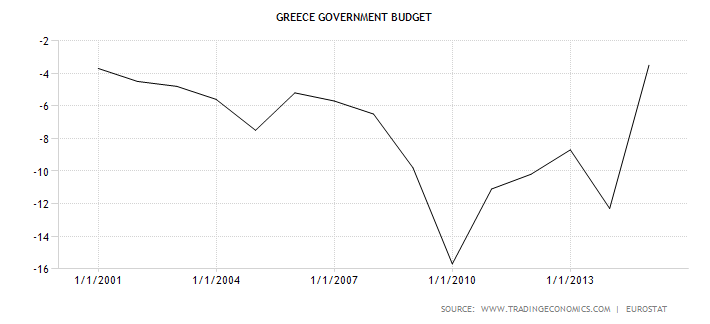

Data science may have helped expose the problems earlier. A research paper published in 2011 called Fact and Fiction in EU-Governmental Economic Data applied Benford’s Law to a decade of economic data from 27 EU states.

More Read

What Data Governance leaders have in common around the world
Will Hyperscale Networking Shake Up the Data Center?
Supply Management BPO on the verge of overheating
Common File Elimination Demystified
More Conservative

Benford’s Law says that the first digit of certain sets of real-world numbers are not evenly distributed — for example, that there will be six times as many numbers starting with the digit “1” as with the digit “9”. (For math fans, here’s a good explanation of why this might happen: basically, a lot of nature shows exponential and logarithmic behavior).

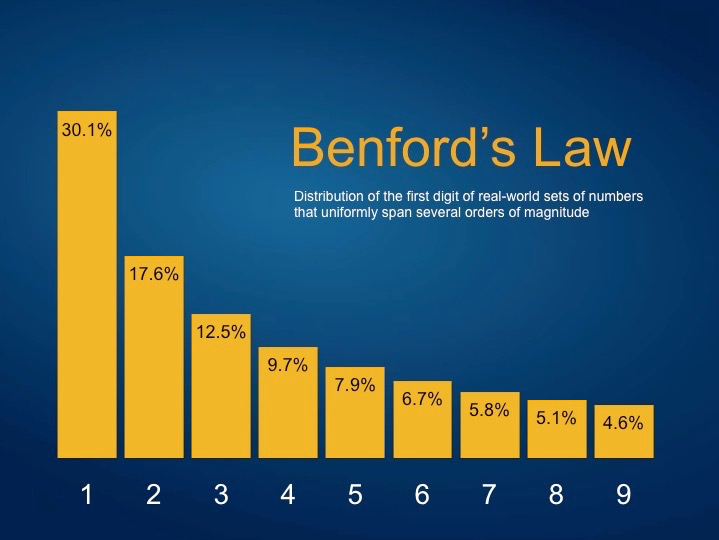
Financial auditors had already successfully used Benford’s law as part of their fraud detection processes, and the researchers wanted to determine whether it could also be applied to economic data.

For each country, they calculated the difference between the reported values and what would have been expected from Benford’s Law:

The country with the greatest deviation was Greece, and the researchers concluded that this can be regarded as evidence for the effectiveness of Benford’s law in the detection of irregularities and manipulations in macroeconomic data.

So could Data Science and Benford’s Law have helped head off the crisis, by keeping Greece out of the Euro? Probably not. It was apparently an open secret among EU officials that the numbers for Greece were dubious, and it was ultimately Germany and France who first officially broke the 3% budget deficit rule.

Using Benford’s Law may have revealed the problems earlier and more publicly, but Greece’s entry into the Euro was ultimately the result of political decisions rather than economic theory.

There’s still scope for using Benford’s Law to help with any future recovery, though — for example, to help Greek governments crack down on fraudulent tax returns!

Share This Article
Facebook Pinterest LinkedIn
Share

Follow us on Facebook

Latest News

How Data Analytics Is Reshaping Patient Financing Decisions
Analytics Big Data Exclusive
AI driven big data company
How AI-Driven Workflows Are Changing the Way Companies Think About Data Risk
Artificial Intelligence Data Management Exclusive Risk Management
ai product development
Why Businesses Outsource AI Product Development Companies
Exclusive News
banking tools
The Fintech and Banking Tools Global Entrepreneurs Rely On
Fintech Infographic

Stay Connected

1.2KFollowersLike
33.7KFollowersFollow
222FollowersPin

You Might also Like

CTOvision.com and Facebook Connect: A Request

1 Min Read

Faux Viral Maketing

3 Min Read

Triumfant real-time malware detection and remediation

3 Min Read

How IT Services Companies can Thrive in the Age of Cloud

5 Min Read

SmartData Collective is one of the largest & trusted community covering technical content about Big Data, BI, Cloud, Analytics, Artificial Intelligence, IoT & more.

ai in ecommerce
Artificial Intelligence for eCommerce: A Closer Look
Artificial Intelligence
AI and chatbots
Chatbots and SEO: How Can Chatbots Improve Your SEO Ranking?
Artificial Intelligence Chatbots Exclusive

Quick Link

  • About
  • Contact
  • Privacy
Follow US
© 2008-25 SmartData Collective. All Rights Reserved.
Welcome Back!

Sign in to your account

Username or Email Address
Password

Lost your password?