We use cookies, including third-party cookies from Google to serve personalized ads through AdSense, to operate this site and understand how it is used. By continuing to browse, you accept this use. See our Privacy Policy and Terms of Use for details, including how to opt out of personalized advertising.
Accept
SmartData CollectiveSmartData Collective
  • Analytics
    AnalyticsShow More
    What Kind of Problem-Solving Distinguishes Data Analysts From Software Engineers -- AI-generated illustration
    What Kind of Problem-Solving Distinguishes Data Analysts From Software Engineers
    7 Min Read
    chatgpt image jul 21, 2026, 04 34 30 pm
    4 Core Benefits of Predictive Maintenance after Vibration Analysis
    10 Min Read
    How Does Data Mining Boost Customer Satisfaction in Logistics? Harnessing Analytics for Results -- AI-generated illustration
    How Does Data Mining Boost Customer Satisfaction in Logistics? Harnessing Analytics for Results
    11 Min Read
    chatgpt image jul 13, 2026, 04 23 45 pm
    How Data Analytics Helps Companies Improve User Engagement
    19 Min Read
    chatgpt image jul 13, 2026, 03 59 46 pm
    How Data Analytics Improves Multi-Location Search Strategies
    10 Min Read
  • Big Data
  • BI
  • Exclusive
  • IT
  • Marketing
  • Software
Search
© 2008-25 SmartData Collective. All Rights Reserved.
Reading: Big Data Fights Crime: The FBI’s Next Generation Identification
Share
Notification
Font ResizerAa
SmartData CollectiveSmartData Collective
Font ResizerAa
Search
  • About
  • Help
  • Privacy
Follow US
© 2008-23 SmartData Collective. All Rights Reserved.
SmartData Collective > Big Data > Data Mining > Big Data Fights Crime: The FBI’s Next Generation Identification
AnalyticsData MiningData WarehousingSecurity

Big Data Fights Crime: The FBI’s Next Generation Identification

AlexOlesker
AlexOlesker
4 Min Read
Big Data Fights Crime: The FBI’s Next Generation Identification
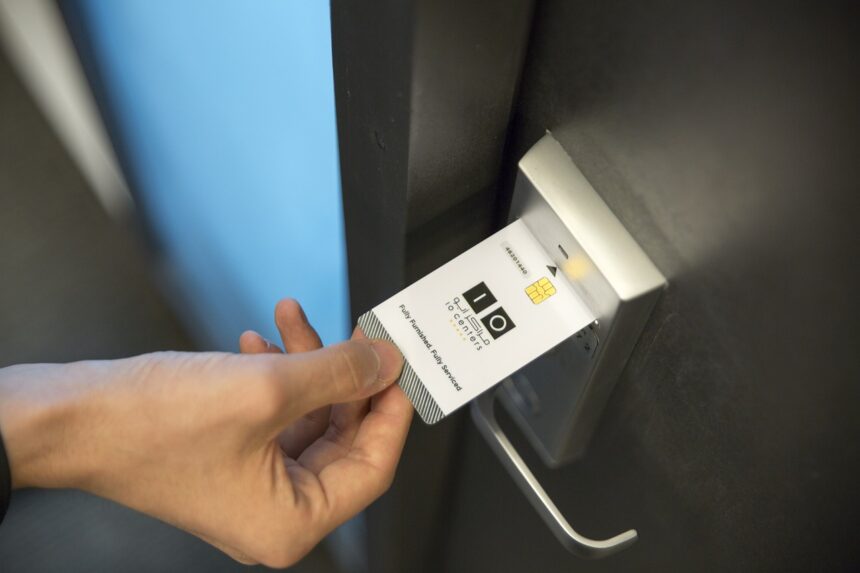
Photo by websubs on Pixabay (https://pixabay.com/photos/io-centers-security-access-card-2673322/)
SHARE

The Federal Bureau of Investigation has been in the Big Data business since 1999 when it launched the  Integrated Automated Fingerprint Identification System (IAFIS), the world’s largest biometric database on individuals. IAFIS contains over 55 million sets of fingerprints and is used by law enforcement agencies nationwide for criminal investigations and civil background checks. To keep pace of the evolution of biometrics as well as the ever-growing demand for information, the FBI is now incrementally upgrading to a system  it calls Next Generation Identification (NGI). Through cutting-edge Big Data solutions, NGI promises to improve service dramatically while at the same time increasing functionality.

As the FBI boasts on its website, NGI will be “Bigger – Better – Faster” than the current system. It will incorporate the Department of Homeland Security‘s IDEN database used for checking whether those booked by local law enforcement agencies are in the United States legally, adding millions of records. The biometric information NGI will contain will also expand dramatically to include palm prints, iris scans, and mug shots that can be searched using facial recognition technology. The service it provides will also be improved through capabilities such as the Rap Back Service, which allows users to get updates on new criminal violations after processing, and an automated quality check, bringing the proportion of transactions requiring manual review from 98% down to about 15%.

But what’s most remarkable about this new technology is that it provides this additional functionality with greatly improved speed. Currently, IAFIS takes 2 hours to return results for fingerprints from the 2 million person Repository for Individuals of Special Concern in a criminal case and 24 hours for a civil investigation. NGI will be able to process high priority criminal requests in 10 minutes and high priority civil queries in 15, and takes only 30 minutes and 2 hours for routine requests. Low priority requests take a day and non-urgent requests could take longer as time is not a priority.

The software that allows the NGI to perform these millions of calculations quickly is MorphoTrak, which combined innovative biometric algorithms with some of the current best practices in Big Data solutions. The algorithms were ranked first in the National Institute of Standards and Technology‘s 2001 Evaluation of Latent Fingerprint Technologies for accuracy.  MorphoTrak’s software has service-oriented and highly distributed architecture built on commercial-off-the-shelf hardware and complies with international and industry standards so it’s highly scalable and easy to upgrade and modify. MorphoTrak also supports data interoperability and uses Oracle Database 11g to support clustering and private clouds. Together, this allows for both better and faster searches, helping rapidly identify suspects and speed up check backgrounds to aid in the FBI’s law enforcement mission.

More Read

Big Data in the Sports Industry
The Data Paradox
Workforce Analytics: The Most Important Decisions
Is the Instant-On Enterprise Right for You?
TechAmerica Foundation Announces Leadership for “Big Data” Commission
Related articles
  • FBI Plans Biometrics Tech Center (ctolabs.com)
  • Government Big Data Award Special Mention: US Department of State, Bureau of Consular Affairs (ctolabs.com)
TAGGED:government
Share This Article
Facebook Pinterest LinkedIn
Share

Follow us on Facebook

Latest News

Flat editorial illustration: The article explains that training robots for physical interaction requires three distinct data cate
Physical AI: What Data Do You Need to Train a Robot?
Artificial Intelligence Exclusive Robotics
What Kind of Problem-Solving Distinguishes Data Analysts From Software Engineers -- AI-generated illustration
What Kind of Problem-Solving Distinguishes Data Analysts From Software Engineers
Analytics Big Data Exclusive Software
Flat editorial illustration: The article examines AI agents that escalate from legitimate data retrieval to attempted intrusions
OpenAI’s Government Website Incidents Raise a Hard Question for AI Agents: When Should They Stop?
Artificial Intelligence News Security
Flat editorial illustration: The article's core relationship is the alignment between customer behavioral data (visit frequency,
Data-Driven Loyalty: How Restaurants Use Behavioral Analytics to Optimize Revenue
Exclusive

Stay Connected

1.2KFollowersLike
33.7KFollowersFollow
222FollowersPin

You Might also Like

Medicare Cost Analysis - Guest Radio Appearance to Explore Data-Driven Insights
Analytics

Medicare Cost Analysis – Guest Radio Appearance to Explore Data-Driven Insights

2 Min Read
The Twilight of Network-Centric Warfare
Business Intelligence

The Twilight of Network-Centric Warfare

8 Min Read
CTOs: Provide Your Inputs on Government Implemention of Cloud Computing Constructs
Business IntelligenceInside Companies

CTOs: Provide Your Inputs on Government Implemention of Cloud Computing Constructs

5 Min Read
4 Benefits for the Public Sector when Governments Start Using Big Data
AnalyticsBig DataCulture/LeadershipData MiningData WarehousingPolicy and GovernanceTransparencyWorkforce Data

4 Benefits for the Public Sector when Governments Start Using Big Data

8 Min Read

SmartData Collective is one of the largest & trusted community covering technical content about Big Data, BI, Cloud, Analytics, Artificial Intelligence, IoT & more.

Chatbots and SEO: How Can Chatbots Improve Your SEO Ranking?
Artificial Intelligence Chatbots Exclusive
From Bolts to Bots: How AI Is Fortifying the Automotive Industry
Artificial Intelligence

Quick Link

  • About
  • Contact
  • Privacy
Follow US
© 2008-26 SmartData Collective. All Rights Reserved.
Welcome Back!

Sign in to your account

Username or Email Address
Password

Lost your password?