Think about the following:
Think about the following:
- Organization data is typically in tatters. The bigger the organization, the more messy things are.
- Sites such as LinkedIn and Facebook are almost too good at letting you manage your own data.
If you’re like me, you often wonder about these ostensibly unrelated things. Can someone say paradox? The results of these two contradictory facts are more than a little intriguing. Consider the following:
Facebook advertisers can accurately target men over 35 who enjoy the show Breaking Bad and listen to Dream Theater and reside in New Jersey. (Yes, I would qualify here.) At the same time, many employees of a company turn to LinkedIn to find out who’s responsible for an area of marketing within their own company. (I really wish that I were making that up.)
Self-Identification
The contrast is stark. Concurrently, some sites or platforms house astonishingly personal information about hundreds of millions of people while many organizations’ HR departments struggle with producing a simple org chart for 1,000 folks. Why?
Sure, company size is a contributing factor. It’s easier in a company of ten people to know who does what than a company of 10,000. That’s a given. And the economy is surely a factor. I have little doubt that many organizations’ layoffs have adversely affected different administrative processes. They’ve probably exacerbated already poor situations.
But there’s more going on here. We both know it. I’m talking about data ownership.
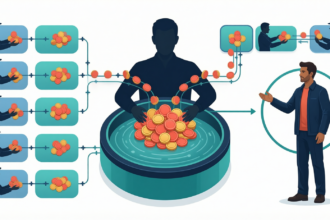
In his truly fascinating book, Pull, David Siegel writes about the semantic web. Web 3.0 will, at least in part, be enabled by personal data lockers (PDLs). PDLs will have massive ramifications in a number of areas, especially with regard to data management.
For example, in what will amount to nothing less than a major paradigm shift, customer relationship management will ultimately be replaced by vendor relationship management. In laymen’s terms, companies will no longer be responsible for maintaining accurate information about their customers’ addresses, credit card numbers, and the like. Rather, customers will be responsible for maintaining their own personal information. Updates to addresses and payment information will cascade to different organizations’ internal systems, leading to increased efficiencies and dramatically reducing incorrectly addressed mail and other annoyances.
No one said that this is going to happen anytime soon, but it will happen.
Simon Says
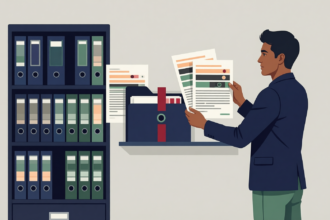
There is a middle ground here. No one is saying that employees ought to be responsible for maintaining their own salaries. At the same time, though, employee self-service technology has existed for years that enables employees to maintain their own addresses, tax information, benefits, and the like. Lamentably, many organizations have failed to take advantage of these applications. They’ll tell you that they don’t have the budget or that it’s not a priority right now.
Even worse, some have actually spent the time, money, and effort implementing these technologies only to cancel their deployments because of a wide variety issues. Excuses typically come down to:
- They don’t trust our employees to maintain their own information.
- Misplaced security concerns.
If course, all of this is bunk. These people are really saying that they need to protect their own jobs, even if employees can maintain their own data much more effectively than HR departments can. Facebook and LinkedIn are cases in point.
Feedback
What say you?