The goal of Industry 4.0 is deceptively simple: maximize efficiency and profits, operate a leaner organization and, wherever possible, introduce automation in areas that humans find dangerous or repetitive. Accomplishing each of these feats requires buy-in of the monetary and mental varieties. It also requires access to meaningful operational information. In other words, it needs big data. Any company that wants to reap the rewards of Industry 4.0 will need to tackle the following big data challenges first.
1. Siloed Data
A lack of cross-platform, inter-departmental data sharing is probably the biggest challenge in Industry 4.0. Company data that exists in a “silo” is data might benefit one party or department, but often otherwise goes to waste. True business intelligence isn’t possible if every department within an organization can’t share data and insights with one another. For an example of what you might be leaving behind, consider the example of a semiconductor manufacturer who, in a manner of speaking, closed a “data loop” by sending back data from the testing phase of production and seamlessly “folding it in” to earlier stages of development. This resulted in the company identifying faulty products earlier and improving their quality across the board.
2. Data System Redundancy
Another problem closely related to siloed data is data system redundancy. Your company probably uses an enterprise resource planning system to keep tabs on every part of your business, including your customers and vendors. But what if you had more than one ERP — say, one for every facility or sales territory — to transfer data between? What if you had 30? That’s what happened with Anheuser-Busch InBev as they consolidated their subsidiaries to become one of the biggest names in brewing. At one point in time, the company had 27 different enterprise planning systems. Now, they’re transitioning to just one to take better advantage of data analysis, reporting and other digital tools that benefit from a central, ordered repository of enterprise data.
3. Talent Shortages
Employers everywhere are scrambling to bring data specialists aboard to help build and maintain databases and then gather (or build tools to gather) insights from all of the organized data. This creates a problem — every company is ramping up their staffing at the same time. As we speak, U.S. companies need more than 150,000 data scientists. That’s according to a LinkedIn survey of American businesses. This isn’t over a couple of years — these positions are available right now. A secondary challenge closely related to staffing involves the skills you single out in the job candidates you bring in for interviews. There are hard skills involved, like mathematics and software development. Those are the non-negotiables. But there are lots of soft skills that good data scientists need, too, like the ability to communicate well and tell others about the stories they see in data.
More Read

4. Security and Data Access
Much has been written about the security vulnerabilities of the Internet of Things, including industrial machine control devices. And much more has yet to be written. Across the commercial landscape, business decision-makers remain hesitant to invest in the IoT and other digital transformative technologies because they worry over the security gaps these assets introduce. In fact, some 77% of companies surveyed by Forrester and ForeScout say they now face “significant” security challenges they didn’t have to worry about before. But what are these challenges, and how can companies answer them in kind? Here’s a look:
- Connected industrial equipment including sensors, trackers and control devices don’t always ship with robust security out of the box. Employees must be well-versed on update procedures to make sure remote devices receive security patches regularly.
- Data access within digital-first companies is another grave concern in data security. Companies must implement proper credentialing procedures to make sure personnel can only access the databases for which they have clearance.
- Even physical security in modern warehouses and manufacturing plants is a top-level concern. Server closets must be kept locked and surveilled at all times, with proper entry logging procedures, to make sure your valuable servers and analytical equipment (not to mention all of the intellectual property stored there) stays put.
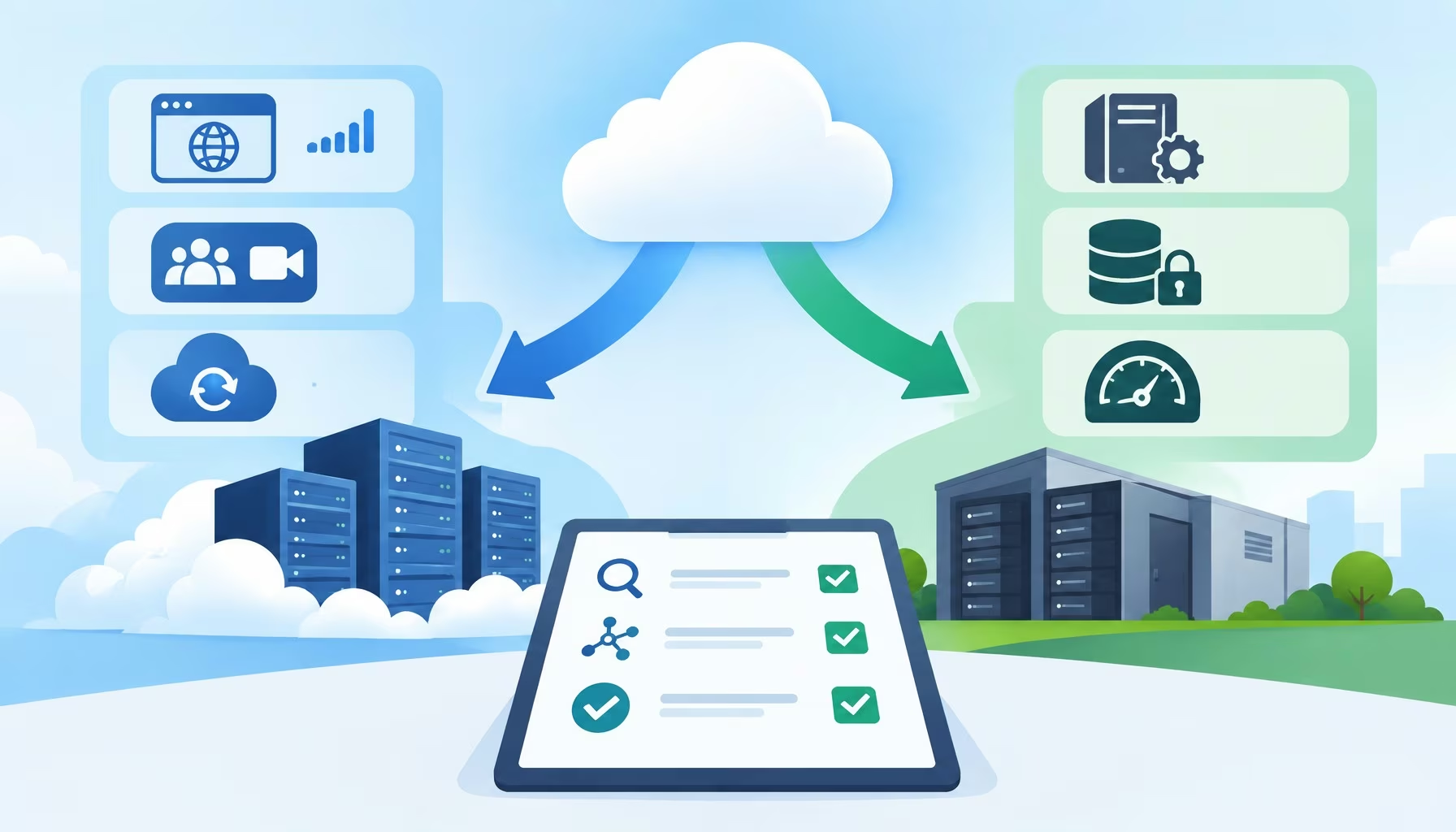
Lots of details might escape your notice when it comes to the security of your data and your ability to access it. If you have a contract with an outside company to use their data facilities, ask yourself — do you know how well they storm-proofed their data center? There’s always a tradeoff involved with building in-house data infrastructure or relying on somebody else’s. But some of the challenges, like planning for the unforeseen, are the same across both experiences.
5. A Lack of Buy-In (And Compatibility)
Finally, there’s the challenge of securing buy-in. There’s no denying Industry 4.0 is taking off in a huge way, and it could improve productivity in American industries like transportation, energy delivery, health care, manufacturing and much more, by as much as 35%. In the meantime, though, we have a patchwork of new and legacy systems — and they don’t always work well together. Here, we can see where adopting disruptive digital technologies opens new doors for companies but also raises the stakes in complex supply chains. Just like your company’s departments need the right digital tools to make data flow smoothly, your company needs to be able to exchange records, authentication, notifications and more instantly and seamlessly.
Conclusion
So long as your company remains mindful of these challenges and you invest in the right people, you can find creative ways to overcome these challenges. There’s just too much productive and profit potential in big data and Industry 4.0 to bow out now because things seem complicated.