Cookies help us display personalized product recommendations and ensure you have great shopping experience.

By using this site, you agree to the Privacy Policy and Terms of Use.
Accept
SmartData CollectiveSmartData Collective
  • Analytics
    AnalyticsShow More
    business using business intelligence
    How to Use a Competitive Intelligence Dashboard to Turn Market Data Into Smarter Marketing Decisions 
    9 Min Read
    unusual trading activity
    Signal Or Noise? A Decision Tree For Evaluating Unusual Trading Activity
    3 Min Read
    software developer using ai
    How Data Analytics Helps Developers Deliver Better Tech Services
    8 Min Read
    ai for stock trading
    Can Data Analytics Help Investors Outperform Warren Buffett
    9 Min Read
    media monitoring
    Signals In The Noise: Using Media Monitoring To Manage Negative Publicity
    5 Min Read
  • Big Data
  • BI
  • Exclusive
  • IT
  • Marketing
  • Software
Search
© 2008-25 SmartData Collective. All Rights Reserved.
Reading: Adapting to Winds of Change
Share
Notification
Font ResizerAa
SmartData CollectiveSmartData Collective
Font ResizerAa
Search
  • About
  • Help
  • Privacy
Follow US
© 2008-23 SmartData Collective. All Rights Reserved.
SmartData Collective > IT > Cloud Computing > Adapting to Winds of Change
Big DataCloud ComputingCommentaryExclusiveITRisk Management

Adapting to Winds of Change

paulbarsch
paulbarsch
3 Min Read
Image
SHARE

Image

Image

Look around at global economic conditions. More than skirmishes—near flat out war—in Ukraine, Gaza, Iraq and Syria.  China pushing up GDP numbers by loading local provinces with more debt. European economies are on the mend, but not yet turning the corner. Fickle western consumers more pre-occupied with the latest smartphone app than the new product you’re selling. It’s in stressful economic conditions that you need to make sure your business has the ability to cycle capacity up or down when needed. You need cloud computing.

According to an article in the Financial Times, during the World Cup, Ghana’s authorities had to “import 50 megawatts of energy from neighboring Ivory Coast” just to keep televisions on during Ghana’s National Soccer team’s games. Fortunately, Ivory Coast had enough spare electricity to sell to Ghana, because there might have been riots in the streets had Ghanaian authorities not figured out a way to meet the demands of thousands of televisions.

More Read

Image
HTTPS now the rule, rather than the exception
Reviewing the Benefits and Drawbacks of Flash Storage
Five Online Visibility Guidelines that Incorporate Big Data
Connecting the Dots: Misunderstood Dimensional Models
AI is Disrupting SEO in Huge Ways in 2023

Just like Ghanaian authorities, many businesses are unprepared for volatile capacity needs and capricious consumers who want what they want, and now.  That’s why enterprises that not only have a cloud computing strategy, but the ability to quickly deploy cloud resources on a whim, will ultimately fare better than those still trying to spell “c-l-o-u-d”. 

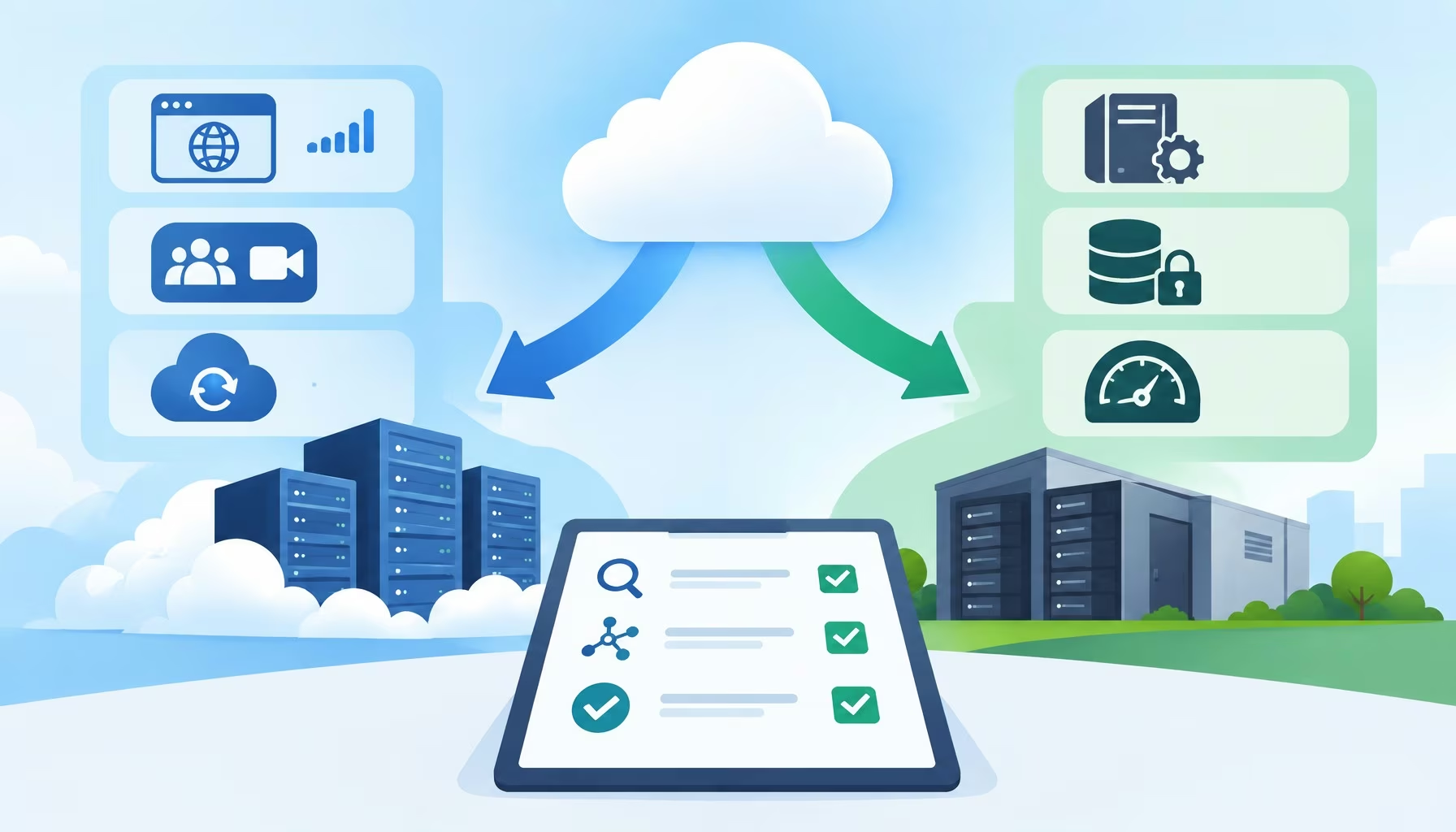
This means having an information architecture documented that includes cloud, signed agreements with providers, an understanding of applications and databases or file systems needed, security policies in place, applications written and ready to take advantage of cloud resources, data loading strategies (VPN or dedicated circuit?), processes to scale cloud resources up and down (and triggers when to do so), data governance for onsite and cloud systems, business continuity plans and more.

There’s much work to do before you can take advantage of cloud resources, and just-in-time planning doesn’t cut it. With the flexibility, speed and power that cloud offers, there’s really no excuses to let opportunities to capture unplanned demand pass you by. 

Can you ramp up and down based on erratic business conditions? Can you weather economic fluctuations? Are you flexible enough to point resources towards unmet consumer demand?  Can you quickly adapt to global winds of change? Cloud computing infrastructures are ready. Are you? 
TAGGED:risky business
Share This Article
Facebook Pinterest LinkedIn
Share

Follow us on Facebook

Latest News

AI driven big data company
How AI-Driven Workflows Are Changing the Way Companies Think About Data Risk
Artificial Intelligence Data Management Exclusive Risk Management
ai product development
Why Businesses Outsource AI Product Development Companies
Exclusive News
banking tools
The Fintech and Banking Tools Global Entrepreneurs Rely On
Fintech Infographic
business using business intelligence
How to Use a Competitive Intelligence Dashboard to Turn Market Data Into Smarter Marketing Decisions 
Analytics Big Data Exclusive Marketing

Stay Connected

1.2KFollowersLike
33.7KFollowersFollow
222FollowersPin

You Might also Like

Image
Cloud ComputingCommentaryExclusive

Debunking Five Cloud Computing Myths

6 Min Read
Image
AnalyticsCommentaryExclusiveModelingPredictive AnalyticsWorkforce AnalyticsWorkforce Data

The Math Says Yes, But Human Behavior Says No

6 Min Read
Image
Big DataBusiness IntelligenceRisk Management

4 Business Risks That Might Prevent Big Data ROI

5 Min Read
Image
Big DataCloud ComputingCommentaryExclusiveMobilityPolicy and Governance

It’s Time to Ditch Scarcity Thinking

5 Min Read

SmartData Collective is one of the largest & trusted community covering technical content about Big Data, BI, Cloud, Analytics, Artificial Intelligence, IoT & more.

data-driven web design
5 Great Tips for Using Data Analytics for Website UX
Big Data
ai is improving the safety of cars
From Bolts to Bots: How AI Is Fortifying the Automotive Industry
Artificial Intelligence

Quick Link

  • About
  • Contact
  • Privacy
Follow US
© 2008-25 SmartData Collective. All Rights Reserved.
Welcome Back!

Sign in to your account

Username or Email Address
Password

Lost your password?