We use cookies, including third-party cookies from Google to serve personalized ads through AdSense, to operate this site and understand how it is used. By continuing to browse, you accept this use. See our Privacy Policy and Terms of Use for details, including how to opt out of personalized advertising.
Accept
SmartData CollectiveSmartData Collective
  • Analytics
    AnalyticsShow More
    chatgpt image jul 21, 2026, 04 34 30 pm
    4 Core Benefits of Predictive Maintenance after Vibration Analysis
    10 Min Read
    How Does Data Mining Boost Customer Satisfaction in Logistics? Harnessing Analytics for Results -- AI-generated illustration
    How Does Data Mining Boost Customer Satisfaction in Logistics? Harnessing Analytics for Results
    11 Min Read
    chatgpt image jul 13, 2026, 04 23 45 pm
    How Data Analytics Helps Companies Improve User Engagement
    19 Min Read
    chatgpt image jul 13, 2026, 03 59 46 pm
    How Data Analytics Improves Multi-Location Search Strategies
    10 Min Read
    cybersecurity efforts
    How Behavioral Analytics and AI Are Redefining Cybersecurity for Boca Raton Businesses
    14 Min Read
  • Big Data
  • BI
  • Exclusive
  • IT
  • Marketing
  • Software
Search
© 2008-25 SmartData Collective. All Rights Reserved.
Reading: Science Needs to Be Less Certain
Share
Notification
Font ResizerAa
SmartData CollectiveSmartData Collective
Font ResizerAa
Search
  • About
  • Help
  • Privacy
Follow US
© 2008-23 SmartData Collective. All Rights Reserved.
SmartData Collective > Big Data > Data Visualization > Science Needs to Be Less Certain
AnalyticsBig DataCommentaryData VisualizationData WarehousingExclusiveModelingPredictive AnalyticsRisk Management

Science Needs to Be Less Certain

paulbarsch
paulbarsch
5 Min Read
Science Needs to Be Less Certain
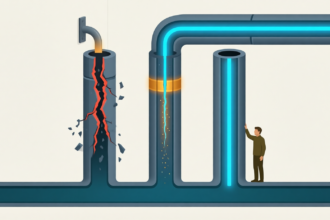
Illustration generated with Qwen Image.
SHARE

A disturbing trend is afoot, where key topics in science are increasingly considered beyond debate—or in other words settled. However, good science isn’t without question, discovery and even a bit of “humility”—something that scientists of all stripes (chemists, mathematicians, physicists and yes even data scientists) should remember.

Recently, the online site for Popular Science discontinued its online comments for certain topics. The reasoning for such a policy was clear according to an editor; “A politically motivated, decades-long war on expertise has eroded the popular consensus on a wide variety of scientifically validated topics. Everything, from evolution to the origins of climate change, is mistakenly up for grabs again. Scientific certainty is just another thing for two people to “debate” on television.”

Thus, it was clear that because the science behind a smattering of topics was settled, there was no need for further debate. Instead, the magazine promised to open comments for topics on “select articles that lend themselves to vigorous and intelligent discussion.”

Now one can hardly blame Popular Science. Commenting online has been out of hand for some time, especially when denizens of the internet choose character assassination and cheap shots to prove a point. And to be sure, instead of enlightened discussion, sometimes comment sections devolve to least common denominator thinking.

More Read

Tips for Developing a Super HR Analytics Team
Using Skip Tracing and Data Mining to Find Off-Market Real Estate
Will Bollywood take the shine off Communications revenue? Competing in Media & Communications with data-driven analytics
The Center of Analytics Success Takes on Communication Skills
Data Science at LinkedIn: My Team

That said, Popular Science couldn’t be any more wrong. Last I checked, good science was all about hypothesizing, testing, discovery and repeatability. It was about debate on fresh and ancient ideas, with an understanding that there was little certitude and more probabilities in play, especially because the world around us is constantly changing. We’re learning more, discovering more, and changing our theories to reflect the latest evidence. We’re testing ideas, failing fast and moving on to the next experiment. And things we believe to be true today are sometimes proven either less true or completely false tomorrow.

However, it disturbs me to see debate cut off—on any topic—because we know the facts and the numbers prove them true. Facts change—as Christopher Columbus would attest, were he alive today. And worse, we have scientists who disparage others because 97% of “the collective” agree on a given topic. As if consensus determined what is true.

The blogger Epicurean Dealmaker laments on the same topic; “The undeniable strength of science as a domain of human thought is that it embeds skepticism…science is not science if it does not consist of theorems and hypotheses which are only—always and forever more—taken as potentially true until they are proven otherwise. And science itself declares its ambition to constantly test and retest its theories and assumptions for completeness, accuracy, and truth, even if this happens more often in theory than in fact.”

As we travel down the path of the next big thing –the transformation of multiple disciplines including business, medicine, artificial intelligence and more with “Big Data,” let us not forget that in a complex world—while our analysis and numbers prove one thing today—they may be woefully inadequate for tomorrow’s challenges.

So let’s encourage debate, discussion, testing and re-testing of theories and experimentation using data and analytic platforms to learn more about our customers, our companies and ourselves. And don’t shut off debate because everyone agrees—chances are they do not. The old adage, ‘conflict creates’ holds true, whether in the chemistry or data lab. The future of our companies, economies and societies depends on it.

TAGGED:risky business
Share This Article
Facebook Pinterest LinkedIn
Share

Follow us on Facebook

Latest News

Analyst points at colorful circular data dashboard on screen - information technology business metrics
How Fragmented Workplace Tech Undermines Reliable Business Metrics and Reporting
Cloud Computing Exclusive Infographic IT
Using Multi-Source Data and Analytics to Detect Operational Drift Across Franchise Networks -- AI-generated illustration
Using Multi-Source Data and Analytics to Detect Operational Drift Across Franchise Networks
Exclusive Infographic
Beyond The First Impression: The Long-Lasting Impact Of Sensory Marketing -- AI-generated illustration
Beyond The First Impression: The Long-Lasting Impact Of Sensory Marketing
Infographic Marketing
The Infrastructure Gap Slowing Data Center Growth -- AI-generated illustration
The Infrastructure Gap Slowing Data Center Growth
Big Data Cloud Computing Exclusive Infographic IT

Stay Connected

1.2KFollowersLike
33.7KFollowersFollow
222FollowersPin

You Might also Like

The Rule of Three Works for IT
Best PracticesCloud ComputingCommentaryExclusiveITMarketing

The Rule of Three Works for IT

4 Min Read
When Big Data Loses to the Anecdote
Big DataCommentaryCulture/Leadership

When Big Data Loses to the Anecdote

4 Min Read
Be Wary of the Science of Hiring
AnalyticsCommentaryData MiningDecision ManagementExclusiveRisk ManagementStatisticsWorkforce AnalyticsWorkforce Data

Be Wary of the Science of Hiring

7 Min Read
Less Dogma Equals Better Decision Making
CommentaryData ManagementData WarehousingDecision ManagementExclusiveMobilityPolicy and Governance

Less Dogma Equals Better Decision Making

5 Min Read

SmartData Collective is one of the largest & trusted community covering technical content about Big Data, BI, Cloud, Analytics, Artificial Intelligence, IoT & more.

How To Get An Award Winning Giveaway Bot
Big Data Chatbots Exclusive
From Bolts to Bots: How AI Is Fortifying the Automotive Industry
Artificial Intelligence

Quick Link

  • About
  • Contact
  • Privacy
Follow US
© 2008-26 SmartData Collective. All Rights Reserved.
Welcome Back!

Sign in to your account

Username or Email Address
Password

Lost your password?