We use cookies, including third-party cookies from Google to serve personalized ads through AdSense, to operate this site and understand how it is used. By continuing to browse, you accept this use. See our Privacy Policy and Terms of Use for details, including how to opt out of personalized advertising.
Accept
SmartData CollectiveSmartData Collective
  • Analytics
    AnalyticsShow More
    chatgpt image jul 21, 2026, 04 34 30 pm
    4 Core Benefits of Predictive Maintenance after Vibration Analysis
    10 Min Read
    How Does Data Mining Boost Customer Satisfaction in Logistics? Harnessing Analytics for Results -- AI-generated illustration
    How Does Data Mining Boost Customer Satisfaction in Logistics? Harnessing Analytics for Results
    11 Min Read
    chatgpt image jul 13, 2026, 04 23 45 pm
    How Data Analytics Helps Companies Improve User Engagement
    19 Min Read
    chatgpt image jul 13, 2026, 03 59 46 pm
    How Data Analytics Improves Multi-Location Search Strategies
    10 Min Read
    cybersecurity efforts
    How Behavioral Analytics and AI Are Redefining Cybersecurity for Boca Raton Businesses
    14 Min Read
  • Big Data
  • BI
  • Exclusive
  • IT
  • Marketing
  • Software
Search
© 2008-25 SmartData Collective. All Rights Reserved.
Reading: The Emerging Big Data Ecosystem
Share
Notification
Font ResizerAa
SmartData CollectiveSmartData Collective
Font ResizerAa
Search
  • About
  • Help
  • Privacy
Follow US
© 2008-23 SmartData Collective. All Rights Reserved.
SmartData Collective > Business Intelligence > Knowledge Management > The Emerging Big Data Ecosystem
Big DataKnowledge ManagementNew Products

The Emerging Big Data Ecosystem

Barry Devlin
Barry Devlin
0 Min Read
The Emerging Big Data Ecosystem
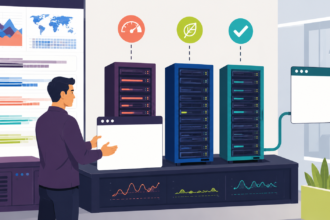
Illustration generated with FLUX.2 [Klein 9B] via local ComfyUI.
SHARE

Slowly but surely, big data is becoming mainstream.  Of course, if you listened only to the hype from analysts and vendors, you might think this was already the case.  I suspect it’s more like teenage sex, more talked about than actually happening.  But, seems like we’re about to move into roaring twenties.

I had the pleasure to be invited as the external expert speaker at IBM’s PureData launch in Boston this week.  In a theatrical, dry-ice moment, IBM rolled out one of their new PureData machines between the previously available PureFlex and PureApplication models.  However, for me, the launch carried a much more complex and, indeed, subtle message than “here’s our new, bright and shiny hardware”.  Rather, it played on a set of messages that is gradually moving big data from a specialized and largely standalone concept to an all-embracing, new ecosystem that includes all data and the multifarious ways business needs to use it.

Despite long-running laments to the contrary, IT has had it easy when it comes to data management and governance.  Before you flame me, please read at least the rest of this paragraph.  Since the earliest days of general-purpose business computing in the 1960s, we’ve worked with a highly modeled and carefully designed representation of reality.  Basically, we’ve taken the messy, incoherent record of what really happens in the real word and hammered it into relational (and previously popular hierarchical or network) databases.  To do so, we’ve worked with highly simplified models of the world.  These simplifications range from grossly wrong (all addresses must include a 5-digit zip-code–yes, there are still a few websites that enforce that rule) to obviously naive (multiple purchases by a customer correlate to high loyalty) as well as highly useful to managing and running a business (there exists a single version of the truth for all data).  The value of useful simplifications can be seen in the creation of elegant architectures that enable business and IT to converse constructively about how to built systems the business can use.  They also reduce the complexity of the data systems; one size fits all.  The danger lies in the longer-term rigidity such simplifications can cause.

The data warehouse architecture of the 1980s, to which I was a major contributor, of course, was based largely on the above single-version-of-the-truth simplification.  There’s little doubt it has served us well.  But, big data and other trends are forcing us to look again at the underlying assumptions.  And find them lacking. IBM (and it’s not alone in this) has recognized that there exists different business use patterns of data which lead to different technology sweet spots.  The fundamental precept is not new, of course.  The division of computing into operational, informational and collaborative is closely related.  The new news is that the usage patterns are non-exclusive and overlapping; and they need to co-exist in any business of reasonable size and complexity.  I can identify four major business patterns: (1) mainstream daily processing, (2) core business monitoring and reporting, (3) real-time operational excellence and (4) data-informed planning and prediction.  And there are surely more.  This week, IBM announced three differently configured models: (1) PureData System for Transactions, (2) for Analytics and (3) Operational Analytics, each based on existing business use patterns and implementation expertise.  Details can be found here.  I imagine we will see further models in the future.

More Read

Analyze Big Data Effectively and Efficiently: Five Opportunities [INFOGRAPHIC]
How to Overcome BYOD Security Challenges
How to Access 100M Time Series in R in Under 60 Seconds
Analytics at Google: Great Example of Data-Driven Decision-Making
Data-Driven eCommerce Case Study: Cohorts and Segmentation

All of this leads to a new architectural picture of the world of data–an integrated information platform, where we deliberately move form a layered paradigm to one of interconnected pillars of information, linked via integration, metadata and virtualization.  A more complete explanation can be found in my white paper, “The Big Data Zoo–Taming the Beasts:  The need for an integrated platform for enterprise information”.  As always, feedback is very welcome–questions, compliments and criticisms.
Share This Article
Facebook Pinterest LinkedIn
Share

Follow us on Facebook

Latest News

Flat editorial illustration: The article presents a bifurcated enterprise decision: European organizations evaluating VMware alte
Cloud Infrastructure and Workload Migration: A Data-Driven Look at VMware Alternatives in Europe
Cloud Computing
Synthetic Data vs Real Web Data: Comparison, Limitations, and Collection Methods  -- AI-generated illustration
Synthetic Data vs Real Web Data: Comparison, Limitations, and Collection Methods 
Big Data Exclusive
Illustration of mobile analytics dashboards with ad performance charts connected to backend databases
11 Best Sisense Alternatives for Embedded Analytics
Business Intelligence Exclusive
Analyst points at colorful circular data dashboard on screen - information technology business metrics
How Fragmented Workplace Tech Undermines Reliable Business Metrics and Reporting
Cloud Computing Exclusive Infographic IT

Stay Connected

1.2KFollowersLike
33.7KFollowersFollow
222FollowersPin

You Might also Like

“Average” Statistics that Bruise Our Ears
CommentaryData MiningExclusivePredictive AnalyticsStatistics

“Average” Statistics that Bruise Our Ears

4 Min Read
Social Searching Everything, For Everyone: Product Review
Marketing AutomationSocial Data

Social Searching Everything, For Everyone: Product Review

4 Min Read
5 Huge Benefits Of Big Data For Employee Scheduling For 2020
Big DataExclusive

5 Huge Benefits Of Big Data For Employee Scheduling For 2020

7 Min Read
6 Ingenious Data-Driven Marketing Ideas for CBD Brands
Marketing

6 Ingenious Data-Driven Marketing Ideas for CBD Brands

12 Min Read

SmartData Collective is one of the largest & trusted community covering technical content about Big Data, BI, Cloud, Analytics, Artificial Intelligence, IoT & more.

Chatbots and SEO: How Can Chatbots Improve Your SEO Ranking?
Artificial Intelligence Chatbots Exclusive
Artificial Intelligence for eCommerce: A Closer Look
Artificial Intelligence

Quick Link

  • About
  • Contact
  • Privacy
Follow US
© 2008-26 SmartData Collective. All Rights Reserved.
Welcome Back!

Sign in to your account

Username or Email Address
Password

Lost your password?