Cookies help us display personalized product recommendations and ensure you have great shopping experience.

By using this site, you agree to the Privacy Policy and Terms of Use.
Accept
SmartData CollectiveSmartData Collective
  • Analytics
    AnalyticsShow More
    composable analytics
    How Composable Analytics Unlocks Modular Agility for Data Teams
    9 Min Read
    data mining to find the right poly bag makers
    Using Data Analytics to Choose the Best Poly Mailer Bags
    12 Min Read
    data analytics for pharmacy trends
    How Data Analytics Is Tracking Trends in the Pharmacy Industry
    5 Min Read
    car expense data analytics
    Data Analytics for Smarter Vehicle Expense Management
    10 Min Read
    image fx (60)
    Data Analytics Driving the Modern E-commerce Warehouse
    13 Min Read
  • Big Data
  • BI
  • Exclusive
  • IT
  • Marketing
  • Software
Search
© 2008-25 SmartData Collective. All Rights Reserved.
Reading: Harvesting Data: What Is the Mood in the World?
Share
Notification
Font ResizerAa
SmartData CollectiveSmartData Collective
Font ResizerAa
Search
  • About
  • Help
  • Privacy
Follow US
© 2008-23 SmartData Collective. All Rights Reserved.
SmartData Collective > Big Data > Data Mining > Harvesting Data: What Is the Mood in the World?
Data Mining

Harvesting Data: What Is the Mood in the World?

Erica Driver
Erica Driver
4 Min Read
SHARE

Every day, we create 2.5 quintillion bytes of data.* This data comes from everywhere—from posts to social media sites, digital pictures and videos posted online, and cell phone GPS signals, to name a few. The amount of data in our world has been exploding. Analyzing large data sets, so called “big data,” becomes a key basis of competition and innovation. The question is: How are we going to harvest all this data? Traditional BI is too clumsy to get the job done. Why?

Every day, we create 2.5 quintillion bytes of data.* This data comes from everywhere—from posts to social media sites, digital pictures and videos posted online, and cell phone GPS signals, to name a few. The amount of data in our world has been exploding. Analyzing large data sets, so called “big data,” becomes a key basis of competition and innovation. The question is: How are we going to harvest all this data? Traditional BI is too clumsy to get the job done. Why? Big data is time sensitive; there isn’t enough time for business users and developers to spend months documenting and coding the analysis requirements. Also, big data has a lot of variety; it comes from both structured and unstructured data sources.

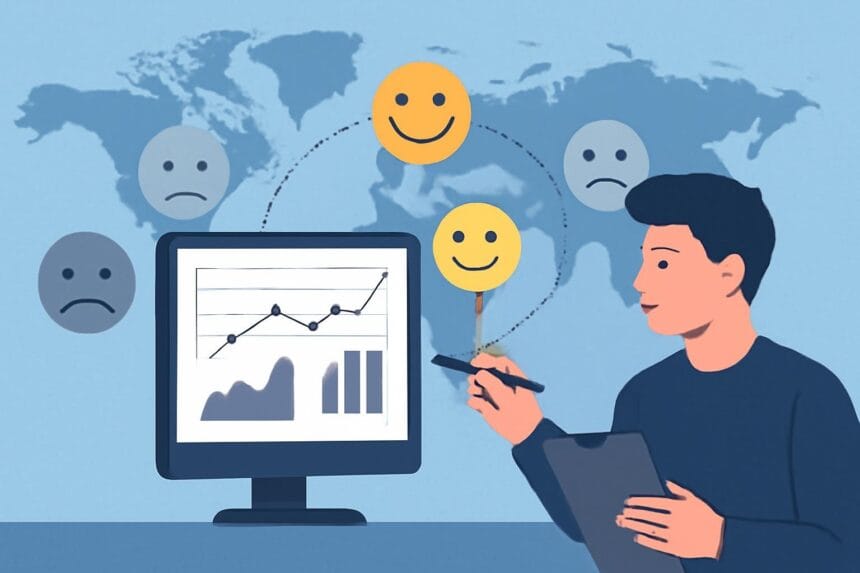
QlikView is the perfect fit for analyzing big data. To prove my point, I created a QlikView application analyzing human feelings all over the world. Everyday millions of blog posts are written. People blog about technology, politics, health, etc. and they talk about their feelings.  I wondered if I could scan all of these blogs and analyze human feelings all around the world.

I found an API (We Feel Fine), which has been harvesting information about human feelings from a large number of logs since 2005. Every few minutes, the system searches the world’s newly posted blog entries for occurrences of the phrases “I feel” and “I am feeling” and stores 15,000 to 20,000 new emotions per day. I used the API to extract the data (in QlikView, developers can define web files as data source). Then I started asking questions and exploring this unstructured data.

Do women feel fat more often than men? Does rainy weather affect how we feel? What are the happiest cities in the world?  Do Europeans feel sad more often than Americans? You can download my application from QlikCommunity, to ask your own questions and formulate your own insights about the human condition.


World Mood.png


QlikView provides developers with a complete set of tools for managing data extraction and transformation, all offered in one comprehensive product. It can extract data from both structured and unstructured data sources and automatically creates associations in the data. Because QlikView operates entirely in memory, it does not require data to be stored in specific, aggregated formats. Once the data is loaded, users can start exploring the data right away, creating charts and answering questions with zero wait time. These are some of the features that make QlikView the perfect fit to discover big data. By the way, how am I feeling? I am feeling like Qliking!  


* McKinsey Global Institute – Big data: The next frontier for innovation, competition, and productivity


Share This Article
Facebook Pinterest LinkedIn
Share

Follow us on Facebook

Latest News

student learning AI
Advanced Degrees Still Matter in an AI-Driven Job Market
Artificial Intelligence Exclusive
mobile device farm
How Mobile Device Farms Strengthen Big Data Workflows
Big Data Exclusive
composable analytics
How Composable Analytics Unlocks Modular Agility for Data Teams
Analytics Big Data Exclusive
fintech startups
Why Fintech Start-Ups Struggle To Secure The Funding They Need
Infographic News

Stay Connected

1.2kFollowersLike
33.7kFollowersFollow
222FollowersPin

You Might also Like

How To Develop A Top-Notch Data Warehousing System

5 Min Read

Data Warehousing and Data Science

6 Min Read
Hadoop in advertising
AnalyticsBig DataCloud ComputingData MiningData VisualizationData WarehousingHadoopHardwareITMapReduceMarketingMarketing AutomationOpen SourcePredictive AnalyticsSentiment AnalyticsSocial DataSocial Media AnalyticsSoftwareSQLUnstructured DataWeb AnalyticsWorkforce AnalyticsWorkforce Data

Hadoop in Advertising & Media: Is Data Analytics Making Old Media New?

5 Min Read
Image
Big DataBusiness IntelligenceData MiningSocial Data

Developing a Big Data Strategy Was Never Easier

3 Min Read

SmartData Collective is one of the largest & trusted community covering technical content about Big Data, BI, Cloud, Analytics, Artificial Intelligence, IoT & more.

AI and chatbots
Chatbots and SEO: How Can Chatbots Improve Your SEO Ranking?
Artificial Intelligence Chatbots Exclusive
ai is improving the safety of cars
From Bolts to Bots: How AI Is Fortifying the Automotive Industry
Artificial Intelligence

Quick Link

  • About
  • Contact
  • Privacy
Follow US
© 2008-25 SmartData Collective. All Rights Reserved.
Go to mobile version
Welcome Back!

Sign in to your account

Username or Email Address
Password

Lost your password?