A German journalist recently sent me a few questions about data privacy for an article he’s writing. What usually happens in these situations is that you send back a bunch of answers, and the journalist picks perhaps a single sentence to quote–if that. (I know this because I’ve spent my career whittling down people’s thoughts and insights.) Germany is an interesting case, because I know of no other country nearly as eager to protect data privacy–and as worried about the incursions of the Numerati. So I figured I’d blog my full answers:
Q: What do you think as an American about the German fear of privacy in the web?
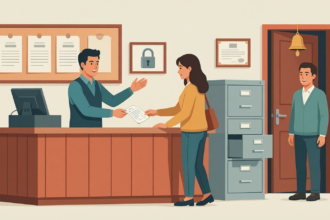
A: I think it’s foolish to generalize about a “German” attitude regarding privacy. You have a big and diverse country of more than 82 million people, and millions of them are sharing intimate details about their life on blogs and social networks. That said, there tends to be more concern in Germany about the privacy implications associated with electronic networks. I would argue that the concept of privacy in each society evolves over time. Many of our ancestors (and many of mine, like yours, lived in German villages) thought it was perfectly natural that the shopkeepers knew what they bought, what they ate, and who they walked around with. There was little privacy in a village. In the second half of the 20th century, by contrast, many of us grew accustomed to traveling in cars, shopping in big impersonal hypermarkets, and being treated, by business and society alike, as a number. For many, this anonymity became synonymous with privacy.
I think many of us will appreciate the customized service that comes from being known–which in the modern world is derived from an analysis of our data. There do need to be controls, so that we can calibrate which of our details we want to share. And I think that the concerns expressed by so many Germans will force companies to create these tools for us.
Q: How do you think that our view of privacy will change in the next ten years?
A: I think we will rethink our secrets and come to understand that some of them should remain secrets, and others not. Hopefully, each person will be able to control his or her own data.
Q: Will our children laugh about our fears of internet tracking services because it will be normal to be tracked?
A: Our children will laugh at us about many things. I think they will view most tracking as benign. But if companies, or governments, abuse this, there could be a large backlash, perhaps led by our children.
Q: Which advantages do we have when machines track our digital life?
A: We get customized service, medicine calibrated to our specific needs (and genotype).
It is no luxury to be treated, in the market or the hospital, as a member of a herd. How many times have you dealt with a bureaucracy and wanted to say: “You don’t understand my case! I’m different. I don’t fit into your stupid boxes.” If we want large organizations to understand why each of us is unique, and to deal with us as individuals, we need to furnish them with information about ourselves. It’s as simple as that.
Response to German privacy fears