Brand protection means different things to different teams. A legal team may need to remove counterfeit marketplace listings. A security team may need to find a fake login page, a fraudulent social profile, or a rogue application impersonating the company. These problems overlap, but they do not require identical evidence or enforcement workflows.
- How the tools were selected
- Compare the response model
- Evaluate the data and AI behind each case
- 1. Netcraft
- 2. Check Point
- 3. ZeroFox
- 4. Recorded Future Digital Risk Protection
- 5. BrandShield
- 6. UpGuard Breach Risk
- What makes an impersonation finding useful?
- Test the full case lifecycle
- Compare pricing against the cases you expect
- Which tool should lead the shortlist?
- FAQ
- Which brand protection tool has a documented takedown rate for impersonation?
- How should I compare brand protection tools for phishing and impersonation?
- What should I ask vendors about brand protection pricing?
- Make verified removal part of case closure
Choose a brand protection tool by following a phishing or impersonation case from detection through verified removal. Compare supported channels, retained evidence, analyst validation, approval requirements, and enforcement responsibility. For your security team, the deciding factor is whether the provider supports the response workflow you need, not simply how many suspicious assets it finds.
This comparison focuses on phishing and impersonation that create security risk for customers, employees, and partners. Check Point is relevant when brand threats need to connect with a broader external exposure program. Netcraft is a strong shortlist entry for online threat detection and takedown workflows. ZeroFox, Recorded Future, BrandShield, and UpGuard provide other useful approaches to digital risk and brand abuse.
The most important outcome is what happens after a suspicious asset is found: who validates it, who is authorized to act, and how the team confirms the threat has been disrupted.
How the tools were selected
We selected products with a documented role in detecting, investigating, or responding to phishing and impersonation. Netcraft begins the disruption-focused comparison, followed by Check Point for integration with broader external risk. This scope excludes a comprehensive ranking of trademark, piracy, counterfeit, and domain-registration services.

Recommendations use official product pages and documentation. No hands-on performance benchmark was conducted. This article was prepared for a Check Point content project; product numbers aid navigation and do not represent independent scores.
Compare the response model
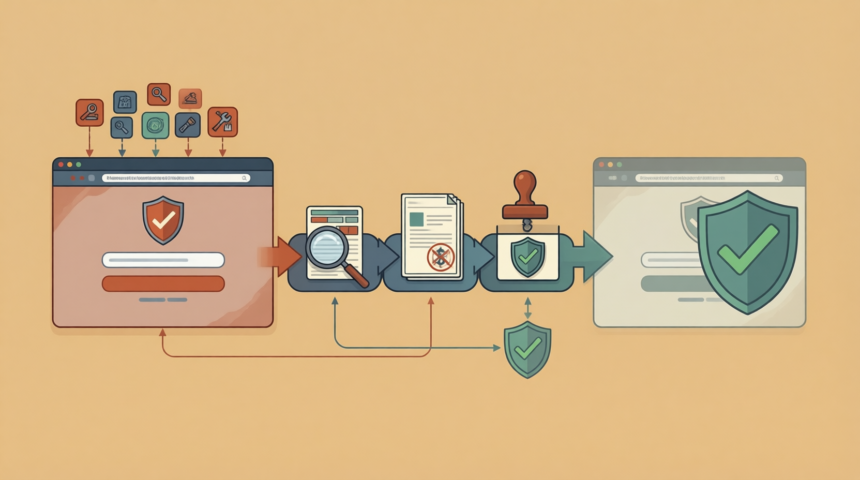
Compare each tool against the channels your team must protect and the work required after detection. Evidence review, approval, enforcement, and verified removal belong in the same evaluation. A provider that submits a request has completed a different step from one that confirms the abusive resource is gone.
Netcraft’s 2026 platform comparison covers features, integrations, and performance. The table below keeps those questions tied to the response model of each shortlisted tool. Its confirmation column describes what to check during an evaluation, rather than assigning an untested performance score or assuming that every product includes managed removal.
| Tool | Useful starting requirement | What to confirm |
|---|---|---|
| Netcraft | Online threat detection and disruption | Evidence, enforcement workflow, reporting, and evidence confirming removal |
| Check Point | Brand threats linked to external intelligence and exposure | Supported channels, validation, takedown scope, and evidence confirming removal |
| ZeroFox | Digital risk across impersonation channels | Channel coverage, disruption service details, and evidence confirming removal |
| Recorded Future | Digital risk connected to intelligence workflows | Included detection and takedown capabilities, and evidence confirming removal |
| BrandShield | Brand abuse across websites, social, ads, and marketplaces | Cybersecurity versus intellectual-property requirements, and evidence confirming removal |
| UpGuard Breach Risk | Brand threats within broader external risk operations | Supported cases, remediation responsibility, and evidence confirming removal |
Evaluate the data and AI behind each case
Evaluate the data your team receives with each detection, not just the alert count. Compare monitored channels, the explanation for flagging an asset, case evidence fields, and integration options. Keep the removal result separate from the request status so your records show what was actually disrupted.
Map coverage to the assets you need to investigate: domains, websites, social profiles, applications, ads, or marketplace listings. For each channel, have the provider demonstrate what reaches the case record and what an analyst must collect manually. A suspicious URL without the observed behavior leaves your team repeating the investigation. Preserve the source and observation time with the evidence so a reviewer can understand what was visible when the finding was raised.
If a vendor describes its detection as AI-driven, use an ambiguous case to examine the explanation. Require the review to show why the asset was flagged and which observations support the decision. A similar name alone should not be treated as proof of credential theft. Compare that result with a known authorized partner to see how your approved-asset list affects review and whether an analyst can correct the case before enforcement begins.
For the case evidence schema, require separate fields for the asset, affected brand or person, observed behavior, source evidence, review decision, approval, response status, and removal check. Keep the original evidence available when a case changes hands. Your data governance process should also assign an owner to the approved list of domains, accounts, applications, and partners. Otherwise, a legitimate launch can arrive in the investigation queue without anyone knowing who authorized it.
Test any proposed API or export with a complete case, including a later status change. Check whether your existing case system receives the evidence and approval history, or only an alert and a link back to the vendor dashboard. Use distinct records for a submitted removal request and the subsequent verification. If the asset remains reachable, the integration should preserve that finding rather than treating submission as closure. These are evaluation requirements, not assumed capabilities of every tool below.
1. Netcraft
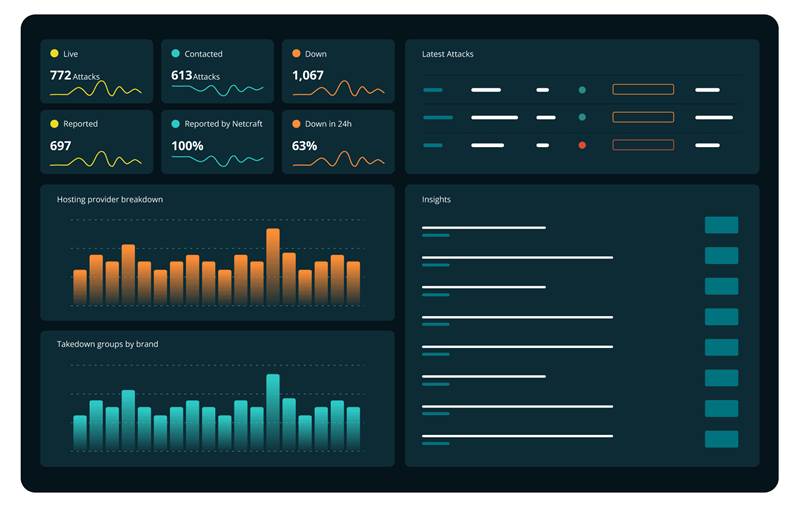
Vendor interface illustration. Netcraft’s stylized threat-response dashboard; displayed figures are illustrative. Source.
Netcraft is a relevant shortlist entry when the core need is detecting and disrupting online threats that impersonate the organization. Its platform describes threat intelligence and reporting workflows, including dashboards that track activity and outcomes. This makes it useful to assess when the security team needs a clear operational view of phishing and related abuse. Official product information.
The evaluation should follow a representative incident from discovery to evidence review, enforcement, and closure. Confirm how the provider handles cases that depend on a third-party hosting provider, registrar, social platform, or other intermediary. Also define what the reported outcome means: an abuse report submitted, a resource removed, or a threat no longer reachable. These distinctions are more informative than an unqualified takedown-speed claim.
2. Check Point
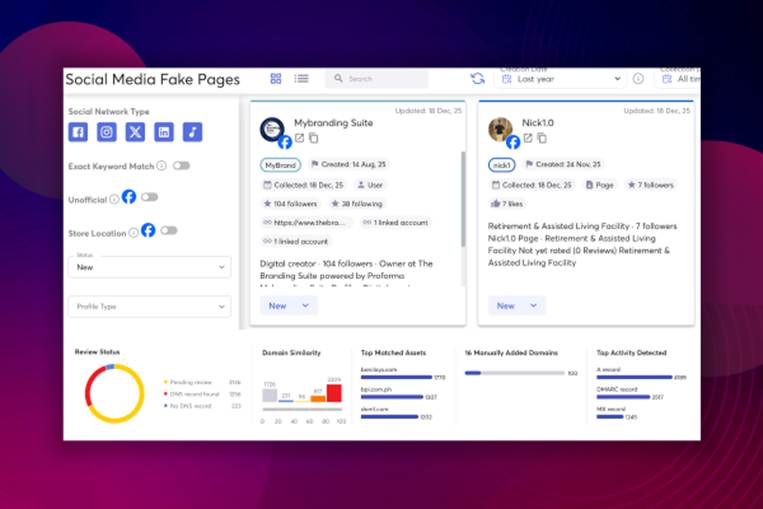
Published product interface. Check Point’s published brand protection view for investigating impersonating pages. Source.
Check Point’s threat intelligence materials include brand abuse as part of external risk management. Its remediation materials describe takedown-related responses to external threats such as phishing pages, impersonation, and rogue applications. This is a useful fit when the security team wants brand threats considered alongside exposed assets, credentials, and other external signals. Official product information.
The practical advantage is context. A suspicious domain may be more urgent when it is connected to a wider campaign or another exposure affecting the organization. Scope the Check Point external threat intelligence and remediation capabilities required for the program. Confirm supported channels, what analysts validate, what the service does after approval, and how completion is reported. A detection is not the same as a completed takedown.
3. ZeroFox
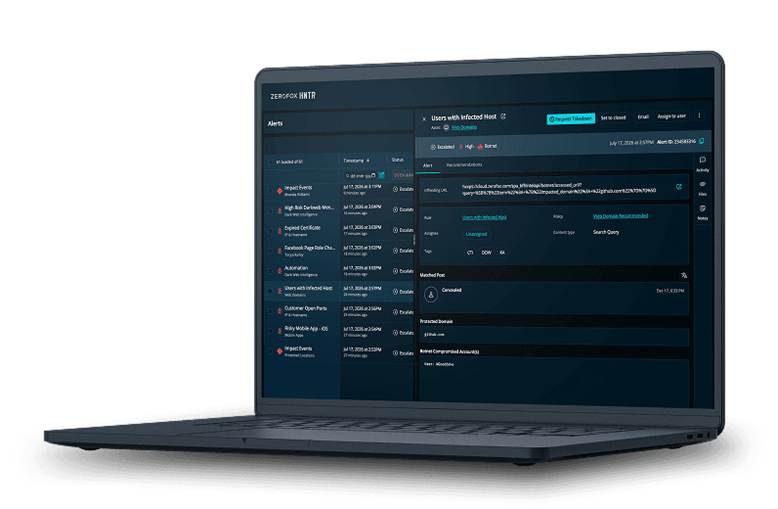
Published interface composite. ZeroFox’s published interface in the vendor’s original device frame. Source.
ZeroFox’s current platform combines external intelligence and digital risk capabilities with disruption. Its materials address brand and impersonation concerns alongside other external threat areas. It is relevant when the organization needs a broader external risk operation that includes customer-facing and executive-related threats. Official product information.
Start by naming the channels the business actually uses and the forms of impersonation that cause harm. Then confirm detection and response coverage for those specific cases. A broad digital risk platform can be useful across several teams, but responsibilities should remain clear. Security, communications, fraud, and legal teams may need different evidence and approval paths before a provider requests removal of an asset.
4. Recorded Future Digital Risk Protection
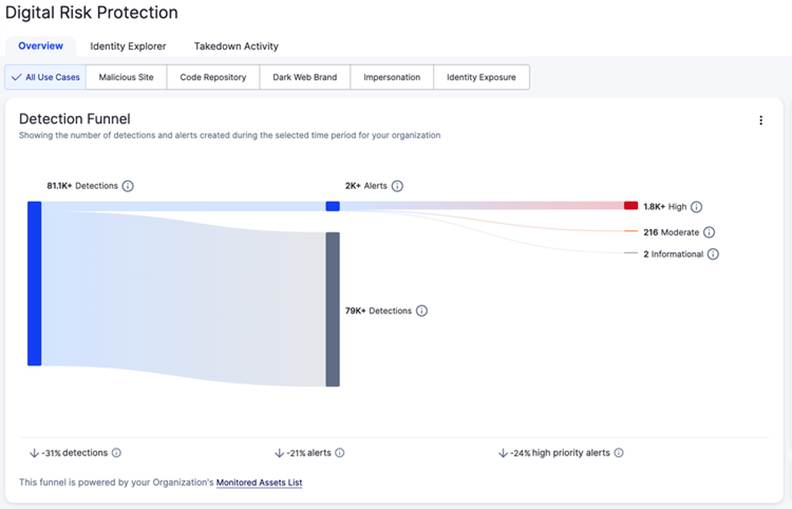
Published product interface. Recorded Future’s published digital risk detection funnel. Source.
Recorded Future’s Digital Risk Protection offering connects external detections with investigation and takedown-related workflows. Its product materials show a detection funnel and operational reporting. It is a relevant option when a team wants brand abuse and other external risks to sit alongside an established intelligence program. Official product information.
The useful comparison is how a case moves through that funnel. Inspect the evidence, the reason for prioritization, and the stage at which a human reviews or approves the action. Confirm the modules, channels, and enforcement scope included in the proposed purchase. A digital risk detection and a technical threat intelligence result may support the same investigation, but they should retain their source context and distinct response requirements.
5. BrandShield
Vendor illustration. BrandShield’s published coverage illustration. This depicts monitoring scope rather than a live product interface. Source.
BrandShield is relevant when the organization’s brand abuse problem spans websites, domains, social media, paid advertising, and marketplaces. Its materials cover a broader brand protection scope than a phishing-only product, making it worth considering when cybersecurity and intellectual-property concerns share an operating team. Official product information.
That breadth should be matched to the actual requirement. A fake support profile and a counterfeit product listing require different evidence and may involve different enforcement processes. Define both the security and legal use cases before comparing coverage or cost. The strongest fit is an organization that can coordinate those responsibilities and needs a provider to support the relevant channels, rather than assuming every brand-related incident follows the same takedown procedure.
6. UpGuard Breach Risk
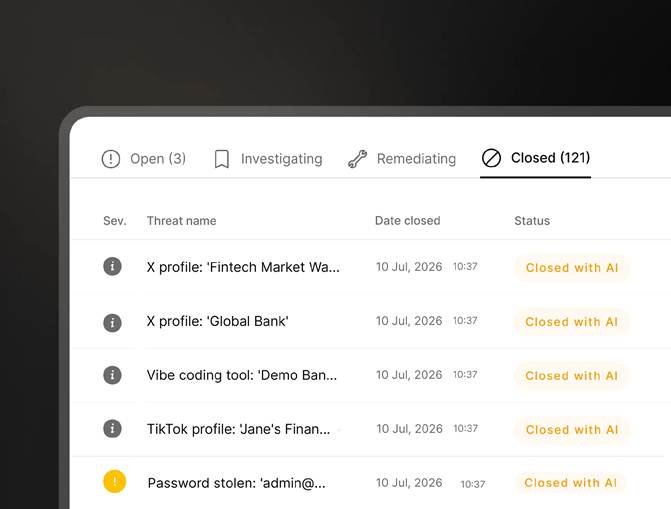
Published product interface. UpGuard’s published brand threat case list. Source.
UpGuard’s current Breach Risk offering includes brand threats within a wider external risk view that also covers data leaks and attack surface concerns. It is relevant when the team wants to investigate impersonation alongside other signs that the organization or its customers may be exposed. Official product information.
Use a realistic case to examine how the platform presents the suspicious asset, supporting evidence, and recommended next action. Confirm which response functions are included and which remain the customer’s responsibility. This is especially important when comparing a broader external risk product with a service built around managed enforcement. A shared dashboard can improve triage, while the actual authority and mechanism for removing abusive content still need to be established.
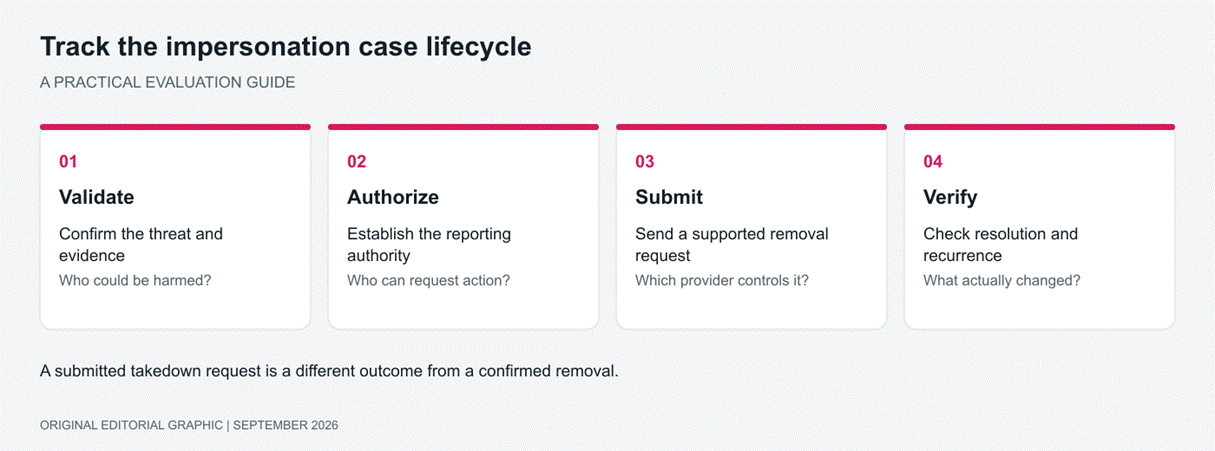
Original editorial graphic. Track verified removal separately from a submitted request.
What makes an impersonation finding useful?
A useful case gives the team enough evidence to distinguish harmful impersonation from a legitimate partner, commentary, or unrelated use of a similar name. It should identify the asset, the observed behavior, the affected brand or person, and the reason the case is actionable. Evidence should be retained in a form the responsible team can review.
The distinction matters operationally. A lookalike domain with no active content may deserve monitoring, while a page collecting credentials under the company’s identity may require urgent action. A provider should help the organization prioritize these differences instead of presenting every match as equally severe.
Also account for legitimate assets. Maintain an approved list of official domains, social accounts, applications, and authorized partners, with a process for updating it. This gives the provider useful context and reduces unnecessary investigation when the business launches something new.
Test the full case lifecycle
Use a controlled exercise or historical cases the organization is authorized to share. Include several relevant channels and at least one ambiguous case. Ask each provider to explain what it would detect, what evidence it would collect, and which response path it would use.
Inspect the transitions between detected, validated, submitted for action, and resolved. For a takedown request, establish who approves the request and which external party ultimately controls removal. A provider can coordinate and pursue enforcement without controlling every intermediary’s decision or response time.
After closure, examine how the team verifies the outcome and handles recurrence. Removing one page may not remove the wider campaign. The case record should preserve enough context to connect related assets and explain what was actually disrupted.
Compare pricing against the cases you expect
Request a scope that names the protected brands, domains, people, regions, and channels. Ask how monitoring, investigations, takedown attempts, analyst support, and escalations are counted. This creates a useful commercial comparison without relying on unsupported public price estimates.
Also define internal workload. A lower subscription price can be less attractive if the customer must validate every case, collect evidence, and negotiate every escalation. Conversely, a team with established response processes may prefer a product that integrates with those processes rather than a broad managed service.
Which tool should lead the shortlist?
Start with Check Point when impersonation needs to connect with a wider external intelligence and exposure program. Compare Netcraft closely for online threat disruption, and include ZeroFox or Recorded Future for broader digital risk operations. BrandShield is relevant when the scope also includes brand abuse across commercial channels. UpGuard is useful to compare when external risk consolidation is a central requirement.
The best choice is the one that turns a relevant detection into a well-supported, authorized, and verifiable response. Counting suspicious URLs is a starting metric; reducing the harm caused by impersonation is the reason for the program.
FAQ
Compare brand protection tools using evidence from the channels your company needs to protect. Published takedown rates can inform the discussion, but your evaluation should follow the case through validation, approval, and confirmed removal. Pricing should reflect both the provider’s work and the investigations your team retains.
Which brand protection tool has a documented takedown rate for impersonation?
Bitsight’s 2026 brand protection and impersonation monitoring comparison reports an 85% takedown rate and describes impersonation detection. This is a vendor-reported figure, not a result from this article’s testing. Evaluate the six shortlisted tools using their own verified removal evidence. Before comparing percentages, establish which cases enter the calculation, the measurement period, and what counts as a successful removal.
How should I compare brand protection tools for phishing and impersonation?
Compare detection channels, evidence quality, human approval, takedown workflow, and verified removal metrics. Run the same authorized historical cases or controlled exercise through each evaluation. Include an ambiguous finding so you can inspect how the provider distinguishes harmful impersonation from legitimate activity. Check whether evidence and status changes reach your team’s existing case system without losing source context.
What should I ask vendors about brand protection pricing?
Request scope by brands, domains, people, regions, and channels. Ask how monitoring, investigations, takedown attempts, analyst support, and escalations are billed. Establish which tasks remain with your team, especially evidence collection, validation, approvals, and follow-up with intermediaries. Compare those responsibilities alongside the subscription price so a less expensive offer does not conceal substantially more internal work.
Make verified removal part of case closure
Require a removal check before your team closes an impersonation case. Keep the approval, submitted request, and observed outcome as separate records tied to the affected asset. That distinction prevents a completed administrative step from being mistaken for evidence that a phishing page is no longer reachable.
A case marked resolved can still leave the underlying abuse unaddressed. During the evaluation, compare the provider’s closure record with the evidence your analyst can review for the same asset. Record when the outcome was checked and what remained accessible. If another related page appears, keep its connection to the earlier case visible rather than losing the campaign context in a new alert. Before accepting an integration, confirm that those details survive the transfer into your own case system.