It wasn’t long ago that we wrote about how big data was setting new standards in the field of web design. More web developers are going to rely heavily on data-driven technology to improve the quality of their work in the near future.
The way we do things digitally is only getting more advanced. The more we learn about technology, the more we want to build it and use it across different platforms. So, how is new software changing the world of graphic design?
Intuitively comprehensible online software like Crello helps graphic designers generate ideas, follow the latest trends in the niche, and craft original works in minutes. As a rule, such tools provide users with professional, customizable templates to adjust via numerous objects and editing opportunities from their library. Plus, the access to free premium images, royalty-free stock files, and animations are the perks engaging designers to add such software to their toolkit. Graphic designers work with Crello to get the most out of its unique features and make their digital works stand out.
Alexandra Schwartz talked in detail about the value of data analytics in the design field. She cites other experts saying that it is a surprisingly recent phenomenon for companies to use big data to test design elements, since they have used it extensively in other fields, such as healthcare for years. However, it is clearly becoming very useful.
More Read
These new advances are not only changing the way in which designers do their job, but they are also predicting trends and learning how to better design software itself. Algorithms and learning machines can make it all sound very complicated, but there isn’t too much to it, and you don’t have to be any sort of expert to understand how machine learning algorithms are used within this realm and how they predict trends and changes.
Basic Graphic Design Overview
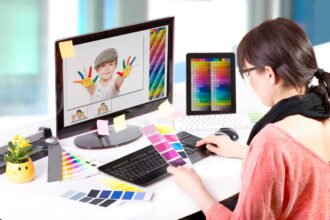
Before we dig deeper into this idea, let’s briefly go over what graphic design is and the kinds of software designers are using. Graphic design is the discipline that uses visual communication to convey messages with a specific objective. Graphic designers create images and logos that are aligned with a company’s image and makes use of contrast, color, alignment, and position. Graphic designers can work on real life images through editing, but they can also create digital designs. An example of this would be a brand logo, a digital advertisement banner, or social media image that has been created to influence or spread some type of message.
Graphic designers can use different kinds of software to create their images and designs. Their work is done digitally and can be created for many different platforms. They can use software that are more complex such as Photoshop and Illustrator and also platforms that are simpler such as Canva. These platforms can be used from the drafting and idea building stage to the very end product. Take a closer look at some of the best graphic design software out there on offer.
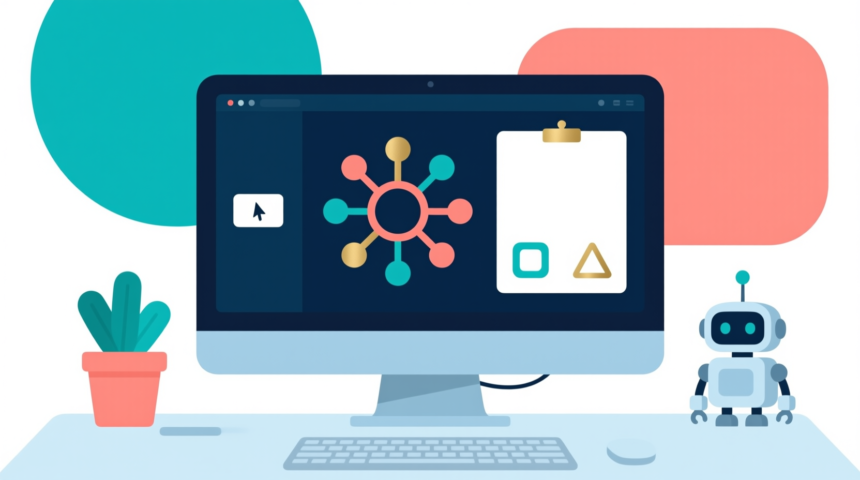
So, how can machine learning algorithms help within the practice of graphic design? Pretty much, they’re there to make things simpler and more user-friendly. They’re not there to get rid of designers altogether. Despite what all the hype makes it seem, learning machines are not the enemy.
What Is A Learning Machine and How Does It Work?
Essentially, learning machines use algorithms formed with data to automatically improve user experiences and ease of functionality of different software and systems. Machine learning is a branch of artificial intelligence (AI), and like with many forms of AI, you have to wonder about whether the human element to these tasks is somehow being eliminated. Are these new advances helping designers or making them redundant?
Artificial intelligence software such as machine learning makes the act of designing simpler in many ways and gets rid of a lot of the heavy lifting designers used to have to do. The job is definitely changing with the help of AI, but not altogether disappearing. The goal for many trained designers is to focus their work on something that AI can’t yet completely nail down, like human-centric matters and a focus that moves past user experience to human experience. The AI software is rapidly growing and has the capability to attempt to understand human-centric matters, but not to the same extent. In this case, it’s clear that AI is there to help designers make better designs.
These learning machines used within design software could be seen as the bad buy by some designers as some businesses are forgoing hiring professionals and giving the job to existing employees because the process has been simplified. This would, of course, be very frustrating because this doesn’t mean that literally anyone can use these design tools and create professional products, but this seems to be happening in some cases.
Learning machines have become quite mainstream being used across different fields such as medicine, sports, and entertainment industries. The problem here is that AI has yet to become so powerful that it can completely take over the role of a doctor, athletes, or entertainers. It’s only capable of doing what human designers program it to do. It may not take over, but it has strong capabilities to match graphic designers. However, using this technology, designers can create images that are impossible to make on their own, and this makes AI a crucial tool in the design world.
AI And Learning Machines
Here’s an important distinction to make though. Learning machines are a type of AI, but they’re not the system that could possibly take over the design industry. What these learning machines are doing are collecting and studying data that’s essentially aiding AI in learning more and aiding the software programs to become better.
While AI is definitely becoming an indispensable tool, these systems will probably never actually replace designers, but certainly make their lives easier. This kind of thinking will both allow learning machines to do their job while still keeping designers in their jobs too.
So, let’s get back to this idea of prediction. How does this work, and what are these algorithms predicting? All in all, these learning machines are looking for patterns in human behavior as well as in designs. They predict how design can evolve to make life easier for designers, users, and marketing teams. They’re constantly correlating and comparing data to further understand how design works within marketing and how the software can be improved.
There is no real need to be afraid of these learning machines and their algorithms or AI for that matter. These systems aren’t put in place to control the market or make life more difficult, nor are they outrageous programs that have minds of their own. Many people see the term AI and think about the world being overrun by robots when the reality is far from that. We interact with AI almost on a daily basis now with automated lights, voice assistants like Siri and Alexa, and many more. All of these have one thing in common: and that is to help.