Technological development is only speeding up. Virtual reality and high-tech solutions are changing reality in its numerous aspects. Today, we have smart homes with internet-connected kettles and robotic vacuum cleaners, job interviews are conducted by AI, and countless gadgets are meant to make our lives more comfortable and cozy. Very soon, humans may even be able to communicate without words, converting thoughts into electric signals. And healthcare, of course, is not excluded from this rapid pace of advances, with psychiatric disorders now diagnosed by man-made machines. Artificial intelligence seems to be getting smarter every day. The media are full of stories praising technological feats. On the internet, between watching your favorite TV series, you are bound to spot headlines related to AI. One of the spheres that are adopting AI solution most readily, is medicine. Now, diagnosing patients with post-traumatic stress disorder is facilitated by a special computer program.
Connection between speech and PTSD
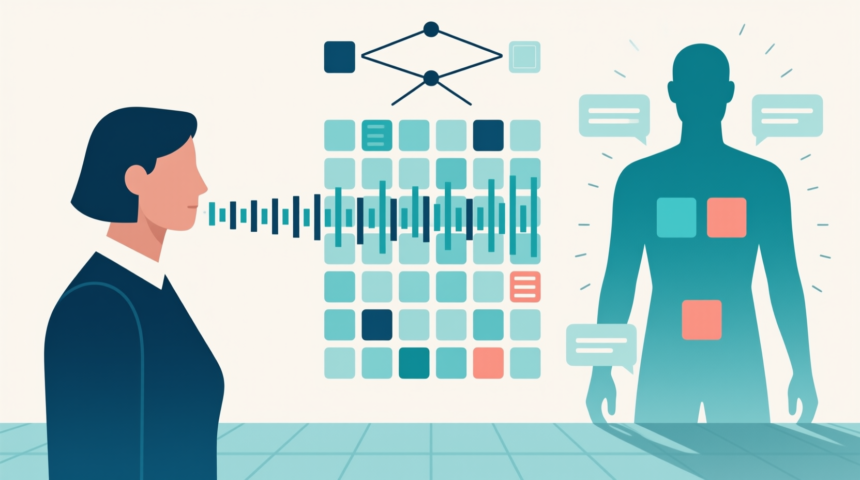
PTSD is a well-known phenomenon. It is estimated that around two-thirds of the global adult population have to overcome a traumatic event at some point in life. On average, around 12% of affected individuals suffer from the disease. The condition causes repeated and strong negative feelings whenever a patient is reminded of the trigger. Clearly, individuals coming back from war are a particular risk group. A post from Science Daily recently showed that AI can diagnose PTSD by analyzing voices. Military veterans may now be accurately diagnosed with PTSD just by having their voices analyzed. According to a fresh study published in April accuracy. issue of the Depression and Anxiety scientific journal, this AI device is able to tell the difference between the voices of patients with PTSD and healthy individuals. Moreover, it is reported to demonstrate stunning (89%) accuracy. Traditionally, the diagnosis was achieved by means of a self-report assessment or clinical interview, neither of which excludes biases. The medical community has long been working to devise truly unbiased and measurable markers. Finally, it has achieved success.
Proving that the perceived correlation between PTSD and gaming is highly exaggerated
In the past, it was believed that gaming frequently caused PTSD. People that the number of people that lost money was so high that people never would recover. Online gambling in NZ cited recent research showing that this isn?t the case at all. Big data showed there is very tenuous link between gaming and PTSD.
New methods
For the research, the team used special statistical/machine learning method. Dubbed ?random forest?, it has the following features:
- ability to “learn” ways of classifying individuals based on examples;
- creation of mathematical models and decision rules;
- the accuracy that increases with the growth in the volumes of uploaded data.
The features characteristic of patients with PTSD included a metallic, emotionless tone, and deterioration of speech clarity overall. Although the exact mechanisms of disease development were beyond the scope of the study, it was based on the premise that traumatizing situations modify brain circuits. Hence, both emotions and muscle tone are affected, changing the person’s voice.
The procedure
Typical lengthy diagnostic interviews were conducted on the record. Participants included 53 vets with service-related PTSD who fought in Afghanistan and Iraq and 78 healthy vets. Next, these records were uploaded into the software, the brainchild of SRI International, which created the ubiquitous Siri. As a result, the program identified 40,526 particular vocal features, which the system examined for commonalities. According to one of the authors of the study, Charles R. Marmar, MD, the conclusions mean that speech-based features could be applied for the purpose of diagnosis. Further improvement and validation will enable researchers to implement the technology in clinics quite soon.
What?s next?
Undoubtedly, the results of the study have been encouraging. it is questionable whether robots can ever replace human beings in healthcare, but reliable diagnostic tools are priceless. Researchers in this field are planning to enhance the voice tool by feeding it with more data. Once it has been validated on some independent sample, they may secure state approval for actual clinical use.