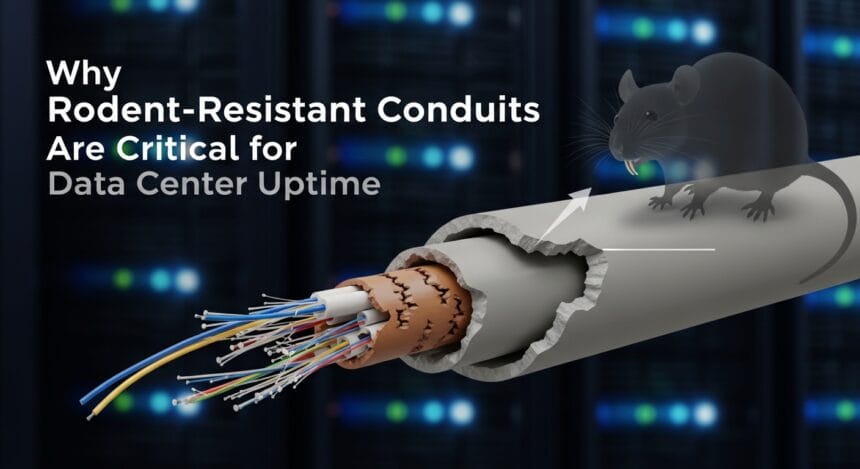
In the data center industry, few qualities are more important than uptime. Keeping processes running 24/7 is crucial, as these facilities full of servers are critical for society to function smoothly. So many operations depend on uninterrupted reliability, and cable management and preservation are vital to achieving this goal.
- Preventing Catastrophic Downtime and Revenue Loss
- Ensuring End-to-End Data Integrity
- Mitigating Invisible, Cumulative Damage
- Eliminating Fire Hazards
- Reducing Spiraling Operational and Maintenance Costs
- Upholding Service Level Agreements (SLAs) and Brand Reputation
- Future-Proofing the Physical Layer
- FAQs on Chew-Proof Electrical Tubing and Wire Protectors
- Why do mice chew through fiber-optic cables?
- What material can rodents not chew through?
- How do data centers keep mice out of conduits?
- Effective Protection for Wiring for Data Center Assets
Countless factors can compromise wiring, but rodents are an often-overlooked deterrent. This makes rodent-resistant braided sleeving and effective protection for wiring a major priority for stakeholders.
Preventing Catastrophic Downtime and Revenue Loss
Every millisecond of downtime counts in a data center, especially during peak hours. A 2022 analysis discovered how much money these facilities are losing to unplanned downtime. Over 60% of disruptions cost organizations more than $100,000, compared with 39% in 2019. Around 43% of failures are power-related, including inoperable or destroyed equipment. If rodents infiltrate a data center, the price could be catastrophic.
Therefore, applying adequate shielding to conduits is an up-front investment, but the cost of negligence is greater. Rodent-resistant braided sleeving from industry experts like AerosUSA is an option for data centers with pests of all variants. Typically, these casings are made from materials such as tin-copper wire, galvanized steel wire and polyester, among others. They protect against heat, heavy weights, impacts and abrasion. This multifunctionality is essential for future-proofing facilities.
More Read

Ensuring End-to-End Data Integrity
Data centers need to consider information in transit as much as safely delivered packets. A rodent chewing through wires may not cause a full outage, but even a temporary fault can lead to as much damage to the user experience as a complete shutdown.
These interruptions could corrupt data or cause latency slowdowns, making intensive, data-driven operations, such as artificial intelligence (AI) training, perform poorly. Protecting conduits ensures every aspect of data center utility remains shielded.
Mitigating Invisible, Cumulative Damage
Rodent-resistant infrastructure protects uptime in the short and long term. It may take a collection of mice a long time to dig into a conduit and bite through thick cables. Implementing shielding and deterrent measures against rodent activity early is vital for discouraging them from entering the facility in the future.
Because issues may not be noticeable immediately, the pest problem may be nearly out of control by the time effects become tangible. They would have had time to infiltrate the building uninhibited, making them more difficult to eradicate. Therefore, diagnosing the entry point and implementing an immediately effective preventive solution becomes more challenging.
Eliminating Fire Hazards
AerosUSA advises facilities to use protective equipment to keep the entire data center safe from more than a split cable. Mice or rats getting through cable insulation could lead to electrical arcing and short circuits. Data centers are full of flammable materials, including chemicals and stray dust particles. This environment makes it easy for spaces to ignite quickly.
Its team warns, “When rodents chew wires, this can cause electrical shortages and fires, endangering the safety and efficiency of the company. The material used in this rodent-resistant expandable sleeving repels rodents, even when stuffed with food.” Therefore, more than uptime is at stake. Whole data centers could be lost if teams fail to consider the big-picture impact of pests.
Reducing Spiraling Operational and Maintenance Costs
While there could be major disasters leading to complete reconstructions, there are also cumulative maintenance costs to consider. Rodent-resistant braided sleeving prevents technicians from constantly planning downtime to replace wires or repair gaps.
This reactive maintenance cycle diminishes operational efficiency and leads to compounding expenses that could far exceed the capital expenditures required to install the conduits in the first place. A proactive approach is more financially sound, and it reduces repair burdens for teams.
To ensure these considerations are met, AerosUSA recommends chew-proof electrical tubing that shields equipment while also deterring gnawing. Repelling the rodents is just as important as making it difficult for them to bite through conduits and wires. These measures will make future breaches less likely while saving organizations and their bottom lines.
Upholding Service Level Agreements (SLAs) and Brand Reputation
Data centers are responsible for upholding some of the industry’s most stringent SLAs, regulations and frameworks. Because a shortage or shutdown could lead to data loss and corruption, a rodent could result in a compliance violation. Essential or private information could be irretrievable or compromised, leading to security issues and erosion of client confidence.
For facilities serving critical sectors, such as health care and finance, dismissing the impact of rodents could lead to a loss of trust and reputational damage. It would make prospective clients question the facility’s ability to institute physical risk management, leading to fines, penalties and even insurance premium hikes. Data center facilities are an intensely competitive industry, so businesses must invest in eliminating these risks with effective protection for wiring.
Future-Proofing the Physical Layer
Cable management in data centers is becoming increasingly complex, making every maintenance request, retrofit or replacement more disruptive to operations than the last. This market will reach $64.7 billion by 2032. Braided sleeves are accessible, user-friendly and easily replaceable, making future-proofing physical equipment more streamlined.
AerosUSA clarifies this, saying, “Braided sleeving is expandable to manipulate the wires into the sleeving. Poke the wires through the sleeving until they go all the way through. Use a simple push-and-slide method to push the wires in through the sleeving and slide the wires to the very end.”
Many environments endure increasing varieties and intensities of stress, from temperature pressures to weight. Designing conduit-laden spaces intentionally will help data centers maintain uptime and stay operational for longer.
FAQs on Chew-Proof Electrical Tubing and Wire Protectors
The advantages of investing in protective conduit measures are apparent, but experts may continue to have questions regarding materials, placement and long-term effectiveness. Understanding more about rodent behaviors can also prepare teams for potential damage.
Why do mice chew through fiber-optic cables?
Rodents swarm through conduits and bite through cables of all types for one reason — they need to keep their teeth at a certain length. Cabling is hardy and lengthy, giving a family of rodents plenty of real estate to work with so their dental hygiene remains intact. They may also be looking for a safe place to avoid harsh weather, which is why conduits are so appealing.
What material can rodents not chew through?
Data centers have several options, but the most common is metal casing or meshing. Copper and steel are go-to options for tubing and cable protection. The metals are too harsh on a rodent’s teeth, making it difficult and detrimental for them to maintain the effort. Other options include more heavy-duty shielding with concrete or stone barriers. Alternatively, some tubing leverages coatings and other sealants to keep mice at bay.
How do data centers keep mice out of conduits?
Shielding conduits and wires is vital for data center uptime, but a more robust preventive strategy aims to keep them out of the facility entirely. This requires a multipronged approach. The building envelope needs comprehensive sealing. Then, infrastructure experts can take additional measures by installing conduits in elevated areas to make it more difficult for rodents to access them.
Effective Protection for Wiring for Data Center Assets
Safeguarding conduits and their cables should be top of mind for all data center workers and investors. While most focus on environmental controls and subsequent damage, preventing rodents from permanently tearing through them is another concern that requires targeted solutions. Seeking advice from professionals who know which materials are best suited to these applications is crucial to ensuring as close to 100% uptime as possible.