Cookies help us display personalized product recommendations and ensure you have great shopping experience.

By using this site, you agree to the Privacy Policy and Terms of Use.
Accept
SmartData CollectiveSmartData Collective
  • Analytics
    AnalyticsShow More
    predictive analytics risk management
    How Predictive Analytics Is Redefining Risk Management Across Industries
    7 Min Read
    data analytics and gold trading
    Data Analytics and the New Era of Gold Trading
    9 Min Read
    composable analytics
    How Composable Analytics Unlocks Modular Agility for Data Teams
    9 Min Read
    data mining to find the right poly bag makers
    Using Data Analytics to Choose the Best Poly Mailer Bags
    12 Min Read
    data analytics for pharmacy trends
    How Data Analytics Is Tracking Trends in the Pharmacy Industry
    5 Min Read
  • Big Data
  • BI
  • Exclusive
  • IT
  • Marketing
  • Software
Search
© 2008-25 SmartData Collective. All Rights Reserved.
Reading: SOA Mandates Data Management
Share
Notification
Font ResizerAa
SmartData CollectiveSmartData Collective
Font ResizerAa
Search
  • About
  • Help
  • Privacy
Follow US
© 2008-23 SmartData Collective. All Rights Reserved.
SmartData Collective > Business Intelligence > SOA Mandates Data Management
Business Intelligence

SOA Mandates Data Management

EvanLevy
EvanLevy
3 Min Read
SHARE

By Evan LevyI’ve always said that the focus on SOA is too much on the “A” for “architecture.” The whole idea of SOA is to define application functions and services that need to be accessible to other systems. Prior to SOA, it was always hairy to move data from one system to another. But everyone thinks that SOA is an integration framework. In fact it’s a means of remotely accessing other systems and their related information without having to know the details. For instance, I don’t need to know how my cell phone number was assigned; I just need to…

By Evan Levy

I've always said that the focus on SOA is too much on the "A" for "architecture." The whole idea of SOA is to define application functions and services that need to be accessible to other systems. Prior to SOA, it was always hairy to move data from one system to another.

More Read

virtual reality apps
Here’s How Big Data Is Transforming Augmented Reality
The Perils of Analysts Demanding Perfection and Precision
How Businesses Are Using AI to Make Smarter, Faster Decisions
Follow your SQL Server on Twitter!
Demographics Meet Analytics: An Interview with comScore CMO Linda Abraham

Cellphone-main_Full
 But everyone thinks that SOA is an integration framework. In fact it's a means of remotely accessing other systems and their related information without having to know the details. For instance, I don't need to know how my cell phone number was assigned; I just need to remember that number so I can share it with my friends.

As I've said before, SOA is the evolutionary result of all the middleware companies trying to convince us to buy their hardware-independent products. SOA's ability to business flexibility today is just as remote as the code objects of decade ago promising to make business more nimble. SOA isn't a business term. It's a technical term for technical people to focus on re-use, standard parts, and standardized processes.

Holygrail
Companies turning to SOA are looking for the holy grail. Consider the emergence of the term "SOA governance" to address the conundrum of SOA development planning. The core issue is how to simplify developers' work in building applications without having to understand the technical details and obstacles in between. Just because I have advanced features and functions doesn't mean I don't still have to focus on software development fundamentals. Design reviews, code re-use, and development standards still matter.

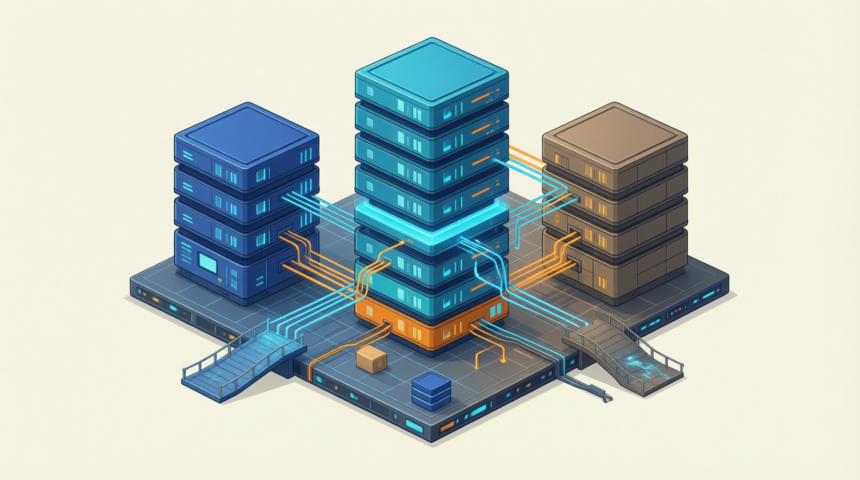
The real challenge with implementing any kind of web service, or defining services that can be re-used, is in ensuring that the data they are dependent on is well-defined. Unfortunately there is no such thing as a business process that is data-independent. Until you've standardized your data, which means implementing data management and maintaining data in a sustainable way, you can't have re-usable services. Period.
Link to original post

Share This Article
Facebook Pinterest LinkedIn
Share

Follow us on Facebook

Latest News

street address database
Why Data-Driven Companies Rely on Accurate Street Address Databases
Big Data Exclusive
predictive analytics risk management
How Predictive Analytics Is Redefining Risk Management Across Industries
Analytics Exclusive Predictive Analytics
data analytics and gold trading
Data Analytics and the New Era of Gold Trading
Analytics Big Data Exclusive
student learning AI
Advanced Degrees Still Matter in an AI-Driven Job Market
Artificial Intelligence Exclusive

Stay Connected

1.2kFollowersLike
33.7kFollowersFollow
222FollowersPin

You Might also Like

What SAP Users Think About Digital Transformation

4 Min Read

The Big Bad Boucher Bill, and Its Possible Exceptions

7 Min Read

Some thoughts on advanced analytics in 2010

5 Min Read
ai in software development
Artificial Intelligence

AI Software Can Help Your Business Cultivate a Competitive Edge in 2021

11 Min Read

SmartData Collective is one of the largest & trusted community covering technical content about Big Data, BI, Cloud, Analytics, Artificial Intelligence, IoT & more.

ai is improving the safety of cars
From Bolts to Bots: How AI Is Fortifying the Automotive Industry
Artificial Intelligence
ai chatbot
The Art of Conversation: Enhancing Chatbots with Advanced AI Prompts
Chatbots

Quick Link

  • About
  • Contact
  • Privacy
Follow US
© 2008-25 SmartData Collective. All Rights Reserved.
Go to mobile version
Welcome Back!

Sign in to your account

Username or Email Address
Password

Lost your password?