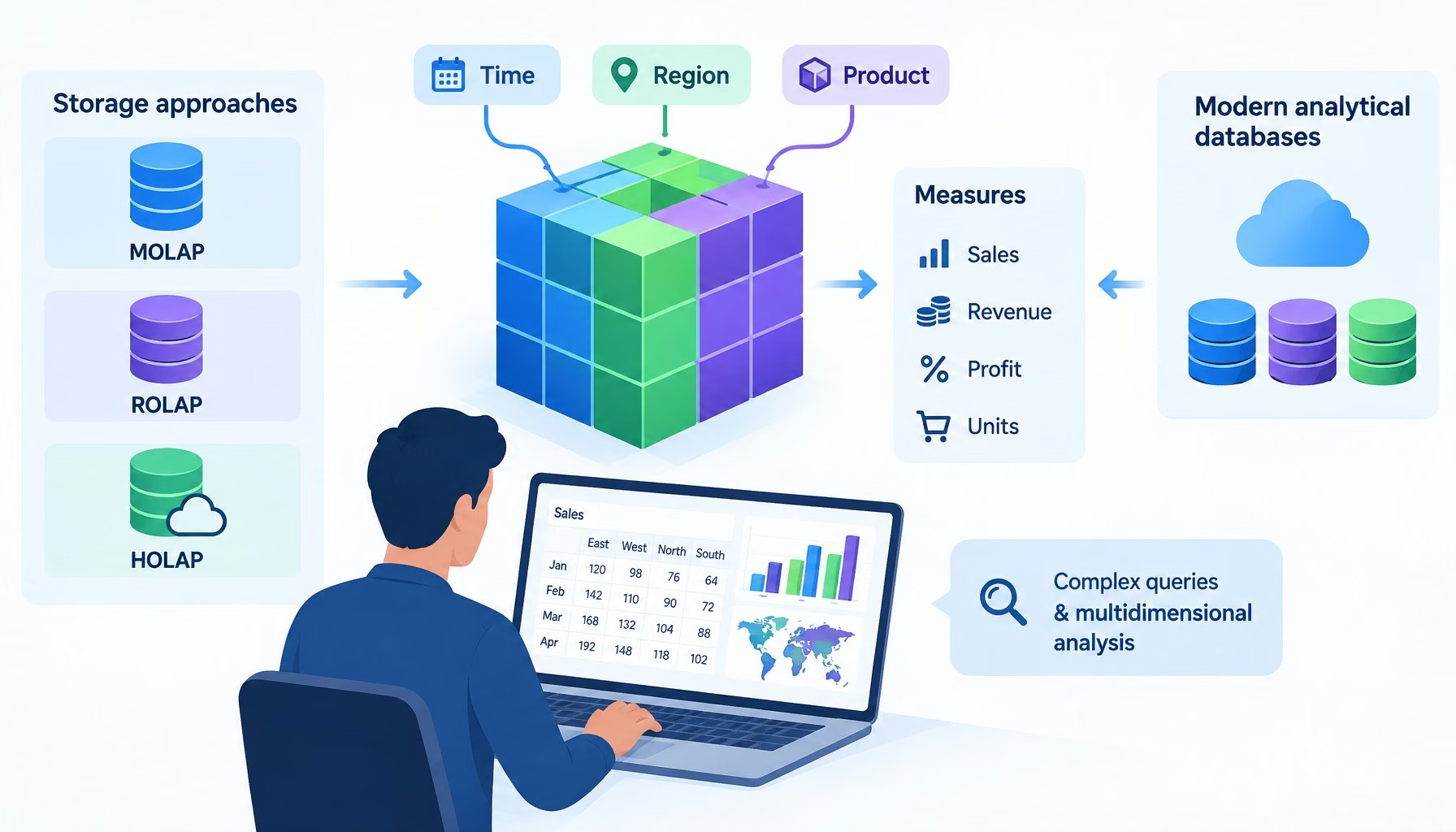
Big data is big business these days. In recent years, companies have realized the value that data analytics can bring to the table and have jumped onto the band wagon. Virtually everything nowadays is being monitored and measured, creating vast streams of data, often faster than companies can deal with. The problem is, by definition big data is big, thus small discrepancies or mistakes in data collection can result in significant problems, misinformation and inaccurate inferences drawn down the line.
With big data, comes the challenge of analyzing it in a business-centric way and the only way to achieve this, is to ensure that companies have data management strategies in place.
There are, however, techniques for optimizing your big data analytics and minimizing the “noise” that can infiltrate these large data sets. Here are five of them:
Optimizing data collection
Data collection is the first step in the chain of events that eventually results in business decision making. It is important to ensure the relevance of the data collected and the metrics the business is interested in.
Define the types of data that are have an impact on the company and how analysis will add value to the bottom line. Essentially, contemplate customer behaviors and what pertinence this will have for your business and then use this data for analysis.
Storing and managing data is an important step in data analytics. It is imperative so that data quality and efficiency of analysis is maintained.
Take out the trash
Dirty data is the scourge of big data analytics. This comprises customer information that is inaccurate, redundant or incomplete and can wreak havoc in algorithms and result in poor analytic outcomes. Making decisions based on dirty data is a problematic scenario.
Cleansing data is vital and involves discarding irrelevant data and retaining only high quality, current, complete and relevant data. Manual intervention is not the ideal paradigm and is unsustainable and subjective, thus the database itself needs to be cleansed. This type of data infiltrates the system in various ways, including time dependent shifting such as changing customer information or storage in data silos which can corrupt the dataset. Dirty data can affect the obvious sectors such as marketing and lead generation but finance and customer relationships are also adversely impacted through business decisions based on faulty information. The consequences are widespread, including misappropriation of resources, focus and time.
The answers to this dirty data conundrum are the controls in place to ensure the data going into the system is clean. Specifically, duplicate free, complete and accurate information. There are applications and companies that specialize in anti debugging techniques and cleansing data, that these avenues should be investigated for any company interested in big data analytics. Data hygiene is the top priority for marketing personnel as the knock-on effect of poor data quality can cost companies substantially.
To get the most bang for your buck data-wise, time must be taken to ensure the quality is sufficient to give an accurate view of the business for decision making and marketing strategies.
Standardize the dataset
In most business situations, data comes from various sources and in various formats. These inconsistencies can translate into erroneous analytical results which can skew statistical inferences considerably. To avoid this eventuality, it is essential to decide on a standardized framework or format for the data and strictly adhere to it.
Data integration
Most businesses today comprise different autonomous departments and thus many have isolated data repositories or “silos”. This is challenging, as changes in customer information from one department will not be transferred to another, and thus they will be making decisions based on inaccurate source data.
To relieve this issue, central data management platforms are necessary, integrating all departments and thus ensuring greater accuracy in data analysis as any changes made are instantly accessible to all departments.
Data segregation
Even if the data is clean, organised and integrated there, could be analytical issues. In this circumstance, it is helpful to segment the data into groups, bearing in mind exactly what the analysis is trying to achieve. This way, trends within subgroups can be analysed which may make more sense and be of greater value. This is especially true when looking at highly specific trends and behaviors that may not relate across the entire dataset.
Data quality is essential to big data analytics. Many companies try to dive in headfirst with analytic software, without a thought as to what is going into the system. Resulting in inaccurate extrapolations and interpretations which can be costly and damaging to companies. A well-defined, well administered database management platform is an indispensable tool for businesses making use of big data analytics.