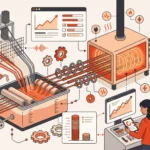
Data integration has always faced complex technical issues. Obviously the technically savvy will always be needed for many aspects of data integration, and require solutions that can handle complex problems. But this approach isn’t enough for what businesses need and want today from Modern Data Integration. Making room for business ubiquity – business user participation and input – continues to be a challenge.
SaaS and cloud services are important technologies for modern data integration. SaaS, in particular, has brought into play ease-of-use and focused workflows to help non-technical users move through pre-built integrations. More vendor solutions are improving user experiences and solution efficiency, for both technical and less-technical users. There is increasing development of streamlined UIs, powered by sophisticated technologies behind the scenes, thus speeding data integration tasks.
There seem to be more discussions addressing business data needs, connecting data integration more directly to desired business outcomes via business processes. Including business users in more areas of data management has seen growth both in “lip service” and actual implementations. For the majority of vendors, a business user remains a tech-savvy power user. So we still have miles to go before business ubiquity in data integration includes more types of business roles.


The Much-Needed Business Facet of Modern Data Integration
Business ubiquity is not limited to direct participation by business users but includes the overarching notion of Business informing all activities around data integration functions. This means empowering all sorts of business roles to work in partnership with IT, to inform, validate, and provide context to data integration processes. Business roles can help determine if data integration functions will deliver the right data, and will know where problems are likely to occur.
The Modern Data Integration technology platform should provide access points for business users, as well as templates for practices and processes that help organizations engender useful, dynamic and continuous collaborations between business and IT – and the growing involvement of business roles at many levels. Collaborative approaches are usually iterative and involve processes that are both human-based and technology-based. Modern data integration solutions should include all appropriate collaborative aspects.
Modern Data Preparation
We’re seeing growing attention on tools that more quickly connect business users to the data they need, without much intervention from IT. Data integration is not an easy-peasy undertaking for anyone. But we can break out components that are more amenable to business user access and participation, such as data preparation. There is real value in moving these tasks from IT to business users who can connect data to business processes, usage realities, professional knowledge, and pertinent requirements.
Self-service data preparation solutions include the integration of disparate data sources. These solutions address all of the functions that make the data business-usable and reliable: profiling or exploring, cleansing (which should follow organizational data quality guidelines), enrichment, and so on.
Business users working with data preparation solutions can achieve greater agility to respond to new data sources, new business initiatives, narrow windows of opportunity, impending competitive threats, and unexpected market changes – all of the realities of fast-changing and highly digital business worlds.
Business Use of Data Profiling
Data profiling started off as a technology and methodology for IT use. But data profiling can be an important tool for business users to gain full value from data assets. When given the right tools and practices for data profiling, business users should quickly identify inconsistencies and problems for data, before it is used for reporting and intelligence purposes. It’s also a sensible way for business users to understand more about the data they utilize in applications, processes, and analytics.
From such “data intelligence”, business users can have a greater understanding different data sources to be able to ask the right questions for BI and analytics projects. They’ll also know if they have the right data and all of the data that they need to answer their questions.
Business Data Libraries for Ready-to-go Data
Data libraries are another aspect of improving business-IT collaboration. Modern data integration solutions are doing a better job of attaining the holy grail of business-ready data: directories or libraries of available data views, particularly the data that results from a variety of integrations. This data could be accessed by IT or business users, with the safety net of role-based constraints built in. Such business data libraries greatly aid reusability, as well as allow business users to utilize the data sets that they need, but may not know how to generate.
Modern Data Governance for Data and Application Integration
Today’s myriad of data sources, data integration tools, and approaches, means that data governance is mission critical to ensuring trustworthy and business-usable data. As data and application integration processes overlap more and more in modern data integration, data governance now must oversee all integration approaches, as a centralized function.
Because of the new world of modern data integration, there is more pressure on data governance functions to accept new realities involving business users and self-serve data solutions. Organizations must establish guidelines and processes to directly manage when it’s beneficial for business users to perform data prep or integration – or when then work is best done by technical teams due to complex technical requirements.
Modern Data Quality
For modern data integration evolution to work well for business user participation, data quality is paramount. More and more organizations understand that data can be a valuable asset, that intelligence can be derived from a variety of data sources, and that analytics of many kinds can greatly benefit decision making, future direction, competitiveness, and innovation. But many organizations aren’t well-prepared to tackle the work that must be done to ensure that data is reliable, timely and relevant.
One reason data management and data quality are so important is that a lot of data that can be useful to the enterprise has a very short shelf life. So business processes and activities must be able to tap into data as soon as possible. But that data is only useful if it has high quality. All of the amazing new technologies of modern data integration solutions will mean nothing if the data is unreliable, and therefore unusable.
Business Ubiquity – Organizational Symbiosis
Business users increasingly have the potential to utilize powerful capabilities to explore, manipulate and merge new data sources without IT support. There is an obvious advantage to organizations to fully support and empower business users to work more directly in many aspects of data management.
Modern data integration solutions should not only support business ubiquity but can also benefit from it. Vendors can achieve this by making sure that these solutions:
- Provide natural access points for business users backed by built-in guidance to make sure these users don’t misstep
- Document and support collaborative processes between IT and business roles in ways that improve data integrations
- Participate in building a comprehensive plan for business user participation and help execute it
- Trace and monitor metrics that are established to connect data integration processes to business outcomes and impact
- “Know” that technology is only part of what is needed to create, implement and reap value from data integration processes
- Support agile change involving both IT and business roles