Imagine that you wanted to see a review of the latest weekend blockbuster, but you couldn’t just Google its Rotten Tomatoes score. Instead, you had to submit a written request to an information technology department, wait five days, then sift through a binder-sized report that breaks down the reviews by publication type, readership size, and reviewer age.
As fascinating as that information might be, it took five days too long — you went to the movie days ago on a hunch it would be good.
Welcome to the world of traditional business information.
But just like the nature of data itself, that world is quickly changing.

A Flawed Formula
Based on a concept of centralized data analysts, traditional BI creates a system where IT specialists create deep-dive reports, typically for C-suite executives because analysts’ time is too valuable to spread any thinner.
Traditional BI is better than no BI, but business happens outside the C-suite, too, and traditional BI can’t hope to meet the breadth and volume of data demands from every business user or keep pace with the competitive data landscape. The “time to insight” is just too slow. Users can’t afford to send requests and wait days or weeks for a report that could already be outdated. To get the most out of the data your company collects, relevant data points need to be available to all business users when they need it.
From Delivered Data to Self-Delivery
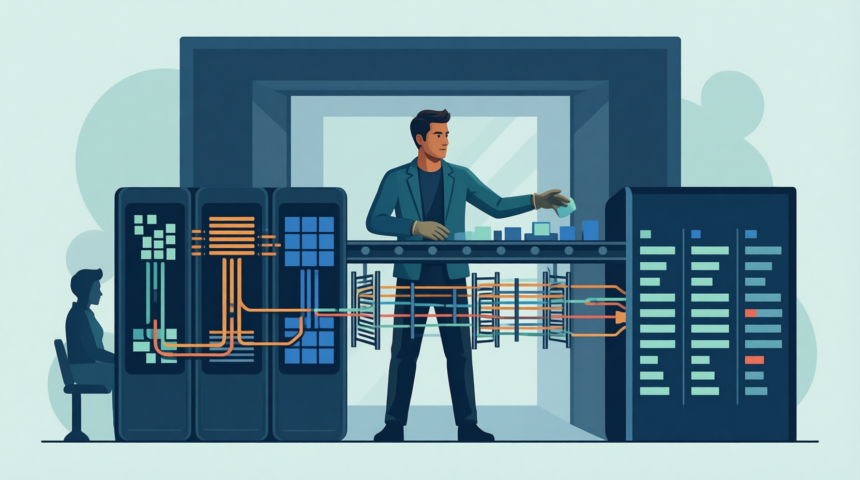
The next phase of modern BI involves distributing the power of data analysis throughout an organization. By pulling real-time data from all sources — the data warehouse, weblogs, social media, and factory sensors — into user-friendly dashboards, users can access information at the speed of business. This business discovery is at the core of being a data-driven business at all points of the production, delivery, and service cycles as well as in marketing, advertising, and other front-office functions.
However, self-service BI still requires all business users to be analysts, and even with access to the right data, they don’t have time to monitor dashboards and analyze data every day.
Users need to be told when significant events are happening in the data that require their attention. Automatically uncovering anomalies in the data, pairing those results with the correct context, and pushing it to the user via the appropriate device will mean BI finally becomes a valuable, scalable business tool all the way down the line. Not only that, but according to a 2014 report by Logi Analytics, 88 percent of business users want to accomplish tasks on their own time, and 83 percent want their organizations to be more data-driven, meaning team members want to engage with data.
The implications for business are broad. This type of platform can alert programmers to a drop in user reviews for a newly updated mobile app or let them analyze time spent in the app to inform subsequent improvements. It can show marketers the effectiveness of the latest email campaign on individual target markets. Hotel managers can be notified of demand spikes. Wherever the application, it takes the guesswork out of business and reveals opportunities to improve that would otherwise remain hidden.
Breaking Free From Traditional BI Shackles
By freeing data from the IT silo and putting it in the hands of everyone, you can shed administrative layers and produce results much faster. Tasks that could take months, even a year, in a traditional system can now be performed in a matter of days or hours with a self-service setup.
Departments also no longer need to compete for limited resources. Because users can interact with data daily or as needed, self-service becomes more flexible — you get much more timely, relevant, and actionable data than if you submitted a request and waited for the information.
But to maximize ROI, you have to get users on board. The “center of gravity” for BI is moving to the business side of the enterprise. And for large teams with access to extensive data sets, the benefits of engaging every business user are especially pronounced. But to engage the non-analysts among us, users need to be told what’s happening in the data that’s impacting their roles.
Think of it as a “democratization” layer to traditional BI — the layer that makes the whole organization smarter, faster, and more profitable. And once that data is democratized, the entire company benefits.