 Few trends have had as big of an impact on businesses as big data. Companies of all shapes and sizes have taken to big data with eagerness as they realize how much it can benefit their organizations. There’s little disputing big data’s impressive advantages, from opening up new avenues of innovation to increasing business productivity.
Few trends have had as big of an impact on businesses as big data. Companies of all shapes and sizes have taken to big data with eagerness as they realize how much it can benefit their organizations. There’s little disputing big data’s impressive advantages, from opening up new avenues of innovation to increasing business productivity. But to properly use big data, a company has to collect and process it first, and that means gathering as much information as possible from multiple sources. Thanks to big data technology like Hadoop and databases like Cassandra, this is getting easier. (More on Hadoop vs. Cassandra). While it’s certainly possible that a business can utilize all the data they collect, more often than not, some data will remain unused. This is particularly a problem when it comes to unstructured data. Over time, all that unused data could pose a problem, clogging up data centers much like the gunk that can plug up a house’s water pipes. Experts have coined a term for this type of data — dark data, and if your company doesn’t clean it up, you could be opening your organization to added costs and increased security risks.
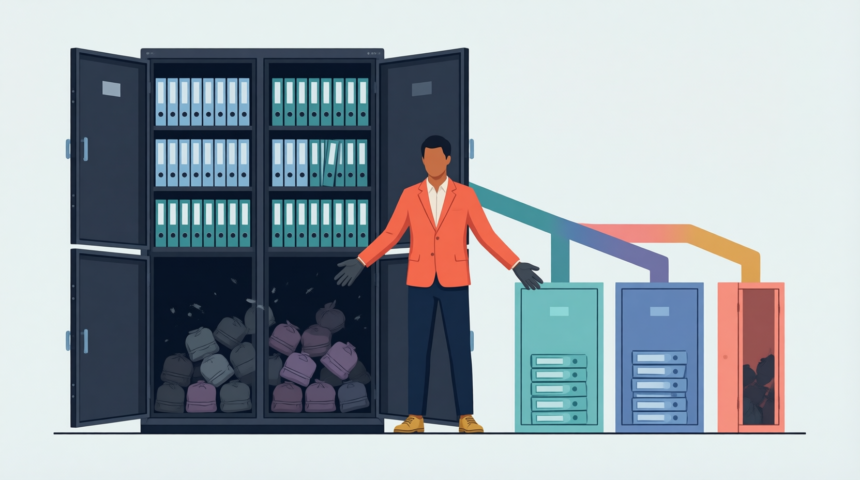
To properly deal with dark data, you’ll first need to identify it. So what exactly is dark data? In a nutshell, dark data is the information collected, processed, and stored by a business that is then not put to any specific use. Often, dark data will sit unused for years, taking up valuable space in a data center while your company continues to collect even more data. What can start off as a small problem can grow rapidly as unused information continues to pile up. All that extra data contributes to increased expenses, but more seriously, it is usually unprotected, opening up the possibility of a data breach and other security mishaps.
So if dark data is costly and dangerous, why do companies even bother keeping it around? The truth is many organizations prefer to store all the information they collect to ensure they are in compliance with all laws and regulations. At the same time, businesses are reluctant to just toss out unused data because they never know if they might need it at some time in the future. Big data analytics can yield some promising solutions to problems, and to come to those solutions, organizations need the relevant data. As the usual mindset goes, just because you don’t need it now doesn’t mean it won’t prove valuable in the future. Such thinking, however, doesn’t always work in reality. If anything, it’s much the same mentality of packrats and hoarders. Even if an organization doesn’t adopt that specific mindset, many businesses feel they’re simply too busy to bother with cleaning up dark data.

It’s true that a thorough cleanup of dark data can be time-consuming, but the results are well worth the effort. The main challenge is to get rid of dark data while still holding onto any necessary data. There are several ways you can do this at your organization. One of the most effective methods is filtering your data. When gathering data generated by machines and the internet, you’ll find a lot of valuable information along with data that is largely useless. By identifying and isolating the data you need, you can keep it separated from all the other noise. This helps prevent unneeded data from piling up in the first place. Certain big data tools can help in this effort, but it’s up to each business to recognize what data is the most valuable to keep and what is best tossed away.
Organizations can also make an active effort in cleaning up their data centers by exporting dark data to other repositories. This is where cloud computing can be especially handy. If your company has a steady partnership with a cloud provider, using them to store unneeded data is a smart and economical choice. When using this method, you’ll get rid of the data from your data centers but still have it available should you realize you need it for a new analytics project. Business may also choose to archive their data in a separate location from their data centers, such as transferring information to hard disk drives which, while possessing poorer performance than flash storage, are a less costly alternative.
Make no mistake, dark data can be detrimental to your business. Without the right management and data retention policies, unused data can quickly become a burden on an organization. The best strategy is to adopt a plan early and stick with it so you never have to face the challenge of cleaning up loads of dark data at once. A clean data center can often mean the difference between successful use of big data and wasted time and resources.




![The Viability of Big Data [INFOGRAPHIC]](https://www.smartdatacollective.com/wp-content/uploads/2026/08/viability-big-data-infographic-330x220.jpg)