
We use cookies, including third-party cookies from Google to serve personalized ads through AdSense, to operate this site and understand how it is used. By continuing to browse, you accept this use. See our Privacy Policy and Terms of Use for details, including how to opt out of personalized advertising.
Accept
SmartData CollectiveSmartData Collective
  • Analytics
    AnalyticsShow More
    What Kind of Problem-Solving Distinguishes Data Analysts From Software Engineers -- AI-generated illustration
    What Kind of Problem-Solving Distinguishes Data Analysts From Software Engineers
    7 Min Read
    chatgpt image jul 21, 2026, 04 34 30 pm
    4 Core Benefits of Predictive Maintenance after Vibration Analysis
    10 Min Read
    How Does Data Mining Boost Customer Satisfaction in Logistics? Harnessing Analytics for Results -- AI-generated illustration
    How Does Data Mining Boost Customer Satisfaction in Logistics? Harnessing Analytics for Results
    11 Min Read
    chatgpt image jul 13, 2026, 04 23 45 pm
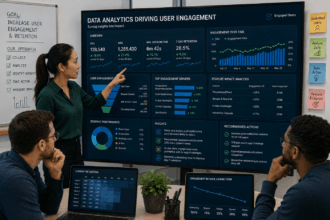
    How Data Analytics Helps Companies Improve User Engagement
    19 Min Read
    chatgpt image jul 13, 2026, 03 59 46 pm
    How Data Analytics Improves Multi-Location Search Strategies
    10 Min Read
  • Big Data
  • BI
  • Exclusive
  • IT
  • Marketing
  • Software
Search
© 2008-25 SmartData Collective. All Rights Reserved.
Reading: All Is Not Lost: Finding Value In Marketing Attribution Data
Share
Notification
Font ResizerAa
SmartData CollectiveSmartData Collective
Font ResizerAa
Search
  • About
  • Help
  • Privacy
Follow US
© 2008-23 SmartData Collective. All Rights Reserved.
SmartData Collective > Business Intelligence > CRM > All Is Not Lost: Finding Value In Marketing Attribution Data
AnalyticsCRMMarketingMarketing AutomationWeb Analytics

All Is Not Lost: Finding Value In Marketing Attribution Data

BillFranks
BillFranks
6 Min Read
All Is Not Lost: Finding Value In Marketing Attribution Data
Illustration generated with FLUX.2 [klein 4B] via Cloudflare Workers AI.
SHARE

In my last blog, I laid out some facts that call into question the extensive effort many organizations put into attributing individual customer sales to individual marketing touch points via common attribution methods. To summarize, Suresh Pillai, head of Customer Analytics & Insights for Europe at eBay, showed that all reasonable attribution algorithms led to effectively the same aggregate credit to each marketing lever and also the same credit as a random method.

Contents
  • Leveraging Attribution Data
  • The Path Forward

If in many cases it isn’t possible to achieve a result different from a random allocation, is all lost? The answer is no. While the detailed customer data utilized for attribution may not be as useful as expected for traditional attribution purposes, it still has a lot of value. Let’s discuss how.

Leveraging Attribution Data

Data and, therefore, information, is valuable. I assume that anyone reading this will agree with that assertion. At the same time, any given piece of information may not be relevant or helpful for any specific purpose. In other words, information has value when placed in the right context. Suresh’s conclusion  (and my own) as outlined in my April blog simply states that customer level data about which touch points preceded a purchase do not necessarily help with the process of allocating credit for a specific sale for a given customer back to those touch points.  However, there are other uses for the information.

Another key point of Suresh’s talk, which I did not address last month, focused on how the patterns of touch points that preceded a purchase can provide useful insights in other ways. In other words, it is useful to know the fact that a customer first saw an email, then later performed a search, and then made a purchase. It ends up that there are certain mixes of touch points that outperform others when it comes to driving sales.

More Read

Big Data Conundrum: Show Me the Money!
Past, Present, and Future of Predictive Analytics: Our Analysis & Findings
It’s Time for a New Definition of Big Data
Analytics For Gmail Are Now Possible – For You, or Your Employees
Wielding Analytics to Conquer the Customer Experience Battle

Suresh is not alone in this assertion. I also saw one of my colleagues from Teradata, Yasmeen Ahmad, discuss the exact same concept at an event that I also spoke at in London earlier this year. She discussed how segmenting customers based on the mix of touch points each customer utilized led to some very interesting insights.

As luck would have it, I also saw my friend Justin Cutroni, Google’s Analytics Evangelist, make the same point when we both spoke at an event at a Wharton Business School event a few weeks back. When I see three experts share the same suggestion within weeks of each other based on completely different work streams, it gets my attention.

The Path Forward

The important takeaway is that detailed data about how a customer works toward a purchase is, in fact, very useful. Rather than using it in the traditional way for attribution, use it to segment customers based on the combination of touch points that lead to purchase (or lack thereof). Once customers are segmented according to these interaction patterns, substantial insights can be achieved about how customers behave. It is also possible to apply very precise costs to each customer’s interactions since you’ll know what you had to pay for each touch point that the customer utilized.

Really, this distinction comes down to a common issue with analytics. Namely, any time that you aggregate or summarize data some information is lost. By going straight to attribution, we effectively aggregate the data for each customer from the outset. However, by maintaining the precise pattern of interactions over time for each customer, we retain additional information that is lost once the data has been aggregated.

My conclusion last month was a bit of a “downer.” It pointed out the gap between perceived and real value of common attribution processes, and it also didn’t provide any ideas about how to redirect efforts to achieve a positive outcome. This month, I want to wrap up with a positive conclusion and a high impact way to move forward.

By all means, continue to collect the detailed information that feeds traditional attribution processes. By using this data in a different manner than is typical, you’ll be able to derive real value. Identify each customer’s unique path to purchase (or lack of purchase) and then group customers on that basis. You’ll likely learn a number of things both about your customers and your marketing efforts. In addition, you’ll be able to assign costs and match that to revenues in order to assess what mixes work best.

When I see experts from eBay, Google, and Teradata all reach the same conclusion independently, it makes me take notice and reconsider my own thinking. I suggest you similarly reconsider your thinking and commit to exploring how the approach outlined in this blog can help your organization.

Originally published by the International Institute for Analytics

Share This Article
Facebook Pinterest LinkedIn
Share
ByBillFranks
Follow:
Bill Franks is Chief Analytics Officer for The International Institute For Analytics (IIA). Franks is also the author of Taming The Big Data Tidal Wave and The Analytics Revolution. His work has spanned clients in a variety of industries for companies ranging in size from Fortune 100 companies to small non-profit organizations. You can learn more at http://www.bill-franks.com.

Follow us on Facebook

Latest News

Flat editorial illustration: The article's core relationship is the engineering transition from an AI prototype to a production-r
From AI Prototype to Production: Observability and Scalability Requirements for Data-Heavy SaaS Applications
Artificial Intelligence Exclusive
Preparing Data Systems and Governance for a Scaling Global Gaming Brand -- AI-generated illustration
Preparing Data Systems and Governance for a Scaling Global Gaming Brand
Big Data Infographic
How Restaurant POS and Ordering Data Reveal Generational Customer Patterns -- AI-generated illustration
How Restaurant POS and Ordering Data Reveal Generational Customer Patterns
Exclusive Infographic
From Trucks To Data: How Telematics Can Improve Freight Transportation -- AI-generated illustration
From Trucks To Data: How Telematics Can Improve Freight Transportation
Big Data Exclusive Infographic

Stay Connected

1.2KFollowersLike
33.7KFollowersFollow
222FollowersPin

You Might also Like

Big Data Is Changing Every Industry, Even Yours!
Big DataBusiness IntelligenceBusiness RulesCloud ComputingData MiningDecision ManagementHadoopITLocationMapReduceMobilityModelingOpen SourcePredictive AnalyticsSocial DataSocial Media AnalyticsSoftwareUnstructured DataWeb AnalyticsWorkforce AnalyticsWorkforce Data

Big Data Is Changing Every Industry, Even Yours!

7 Min Read
chatgpt image jul 13, 2026, 04 23 45 pm
AnalyticsBig DataExclusive

How Data Analytics Helps Companies Improve User Engagement

19 Min Read
Are You Enchanting? A Book Review
Market ResearchMarketingSocial Data

Are You Enchanting? A Book Review

3 Min Read
Top Trends in Cloud Innovation
AnalyticsBig Data

Top Trends in Cloud Innovation

9 Min Read

SmartData Collective is one of the largest & trusted community covering technical content about Big Data, BI, Cloud, Analytics, Artificial Intelligence, IoT & more.

Artificial Intelligence for eCommerce: A Closer Look
Artificial Intelligence
ai chatbot
How AI Website Chatbots Improve Customer Support and Lead Generation
Chatbots Exclusive

Quick Link

  • About
  • Contact
  • Privacy
Follow US
© 2008-26 SmartData Collective. All Rights Reserved.
Welcome Back!

Sign in to your account

Username or Email Address
Password

Lost your password?