Today, we live in an always-on digital world. We work online. We socialize online. We shop online. We bank online. We support causes online. Not to mention, we drive on toll roads with our EZPasses, go to Disney World with our MagicBands, and check our personal stats with our Fitbits. We are living in a big data world.
And when it comes to big data’s impact on privacy, we seem to be caught in this tug-of-war with multiple players and perspectives. Let’s look briefly at four of these perspectives.
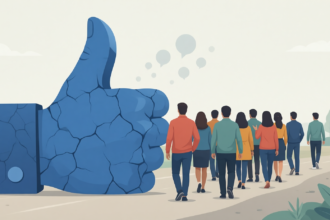
Perspective #1: The Consumer. As consumers, we like free. We just do. But what does “free” cost us in this digital world we live in? I’ll tell you: the cost is our personal information. And typically, the higher the perceived value of the app or service we’re using, the more information we’re willing to share.
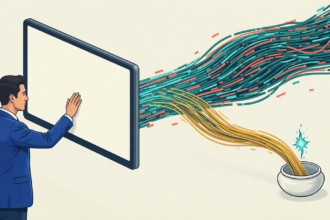
It sort of makes sense when we hear reports that up to 70% of all data in the digital universe is being generated by us, the consumer. Everything we do is leaving a digital footprint and letting others know: “We were here.” And if we were here, we can be tracked and our data can be found – by any individual, company or government agency. For good or for bad.
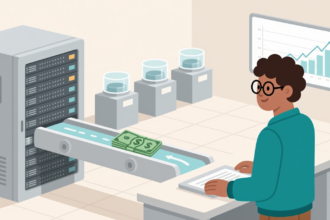
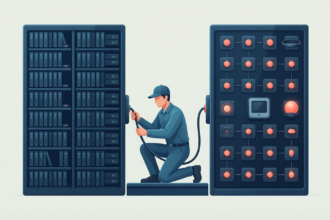
Perspective #2: The Private Sector. While companies are motivated to make money, sometimes it’s not the consumers’ money they’re necessarily after. Or even the advertising dollars. It’s the data they want – because with the data, they can figure out who their audiences truly are – on both a macro and micro level. Yet companies are struggling to keep up.
With technology advancing so quickly and data growing exponentially, how are companies supposed to keep on top of the accompanying and escalating data privacy issues and concerns? With more technology? Maybe, but not so fast.
I like how Marie Wallace of IBM explains that data privacy is more of a societal challenge than a technological one. Her point is that we have the technical ability to build systems that are transparent, ethical, respect privacy, and ensure personal autonomy. The problem is that society-at-large has not yet made a big deal about putting these protections in place.
So until then, companies are going be hard-pressed to focus on data privacy given everything else that’s on their plate. It boils down to priorities.
Perspective #3: The Constituent. Earlier this year, I was at a technology event put on by the mayor of L.A. A gal who called herself “Dee” came up to me after a panel discussion and shared this:
“Big Brother?! I’m not afraid of what the government knows about me. I’m more afraid of the internet and what it will expose about me. Heck, I’m even more afraid of people on the street with their smartphones who can take my picture without my permission and post it anywhere. I’ve been so diligent about living a private life, yet now I live in fear.”
Dee’s concern really wasn’t with Big Brother as much as it was with Big Companies collecting big data on her. While some of us share Dee’s concerns, there are others who are convinced we’re moving towards a more Orwellian surveillance state.
And then there are those who are advocating for a global, virtual “Cheers” where everyone, everywhere, knows our name—and our dog’s name, and where our significant other went to grade school, and what we had for dinner last night. “I’ve got nothing to hide!” is their rally cry.
As constituents in this digital age, we’re each having to define and redefine what privacy means to us.
Perspective #4: The Public Sector. There are no universal laws governing the collection and usage of data, let alone protecting a global citizen’s right to privacy. I use the term “right to privacy” loosely because it means something different depending on which country you’re in.
For example, in the US, our view of privacy is focused on the home and on the person. Did you know that there are only four privacy torts that set the standards by which privacy violations are determined in the American courts? When a violation occurs, the first question we ask is, “What’s the harm?” And that harm must be tangible.
However, in Europe, we find that the right to privacy is centered around preserving the individual’s honor and dignity in the public sphere. When a privacy violation occurs there, the first question asked is “What’s the harm to the individual?” And this time, the harm doesn’t have to be tangible; it can be intangible.
Then beyond the U.S. and Europe, there are those who live in more repressive regimes, like China, Syria and Russia – and they have zero expectation of privacy.
The global right to privacy discussion is all over the map. Literally.
It’s all about trust. Big data privacy is not a fun discussion. It’s subtle, complex, yet very important. And we’ve barely scratched the surface with these four perspectives in this post. We didn’t even get into the interplay between consumers. Or consumers and Big Companies. Or Big Companies and small companies. Or constituents and Big Brother. Or Big Brother and Big Companies…
Moreover, this privacy issue is only getting bigger, especially as companies and government agencies get better at collecting, analyzing, and (sometimes) selling the data we’re freely sharing with them. Trust – not more technology – is the glue that’s going to keep this big, complex data ecosystem together.
Your takeaway. Who are you entrusting with your data, your personal information? And who’s trusting you (and your company or agency) with their data? Can you be trusted? A couple of weeks ago, I watched a news story about Target’s new CEO. Do you know what’s keeping him up at nights? It’s figuring out ways to regain his customers’ trust. He’s on the right track.