Enterprise performance management (EPM) processes – such as budgeting, planning, financial consolidation, reporting, and analysis – are clearly owned and managed by the CFO and Finance department and can be extended across the enterprise.
The systems used to support these processes are typically evaluated, selected, and maintained by Finance – especially in today’s market where Software as a Service (SaaS) or cloud-based EPM solutions are becoming the favored deployment approach.
However, the CIO and other Information Technology (IT) executives are also important stakeholders and are often asked to be part of the evaluation team. And in organizations that rely heavily on IT for support of internal systems, the CIO may be asked to lead the evaluation and selection process for new EPM systems.
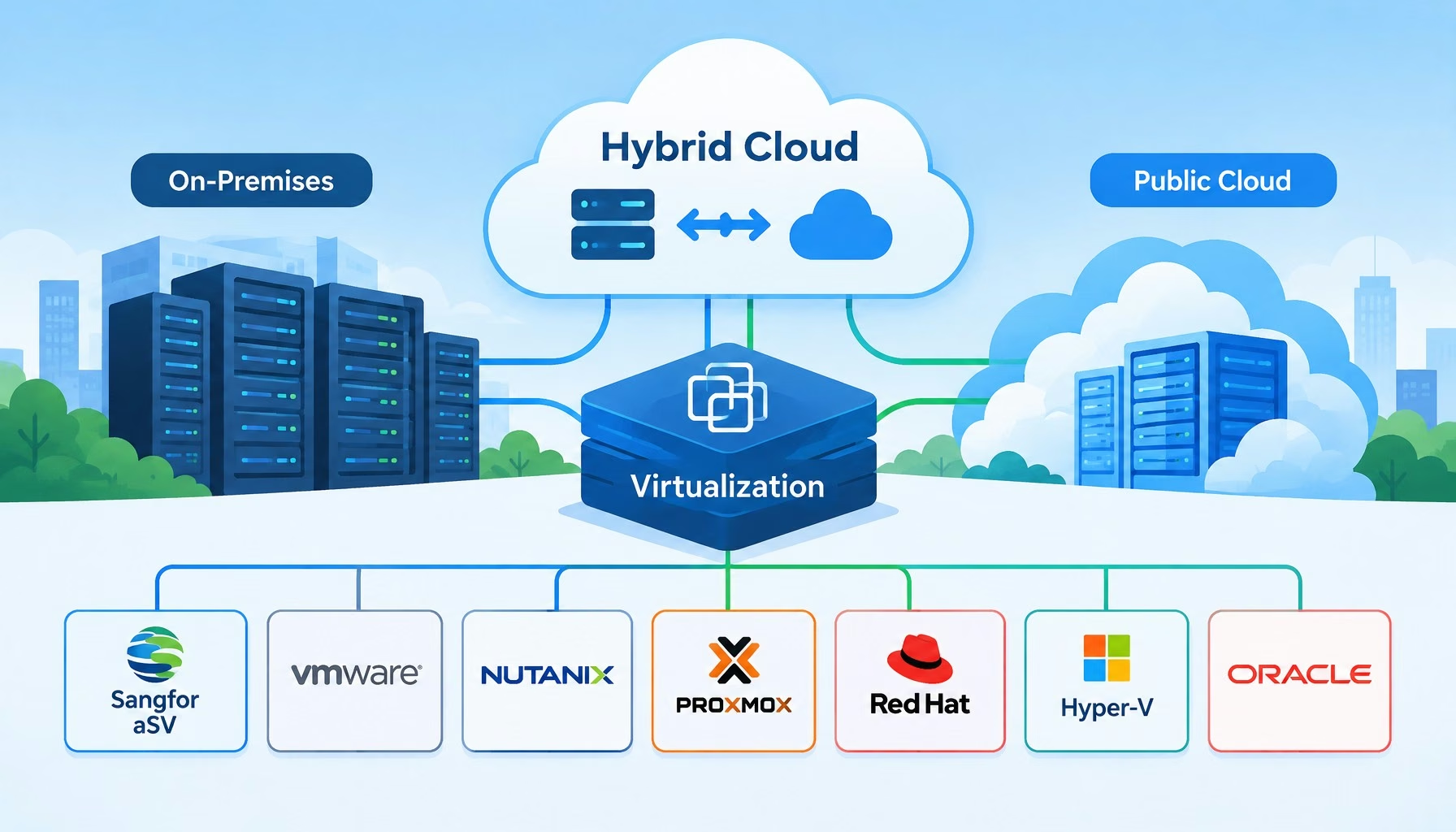
In either case, if IT executives are participating in the evaluation and selection of a new EPM software solution, here are 6 key things they need to know about the advantages of cloud-based EPM software over on-premises systems.
6 Key Advantages of Cloud-Based EPM

1. Reduce reliance on spreadsheets and manual processes – If the Finance organization is reliant on spreadsheets and email for managing corporate processes – such as budgeting, planning, forecasting, financial consolidation, and reporting – they are likely spending too much time on data collection and error tracking and not enough time on value-added analysis. Cloud-based EPM software can help streamline key processes, improve accuracy of plans and reports, and make Finance more productive and efficient.
2. Provide Finance autonomy and control – In the era of complex, on-premises EPM software, Finance was often too reliant on IT for implementation support, ongoing maintenance, and upgrades of the software. Cloud-based EPM software provides Finance with more control and autonomy and reduces the burden on IT to install and support these systems.
3. Leverage investments in ERP and other systems – Cloud-based EPM software is a great complement to existing ERP systems, whether they are deployed on-premises or in the cloud. In fact, implementing an EPM solution, prior to an ERP upgrade, is a great way to limit disruption to planning and financial reporting both during and after the upgrade. Today’s cloud-based EPM solutions can integrate data from any source, often with direct connectors to leading ERP, HCM, CRM, and other systems.
4. Reduce IT infrastructure and support costs – If the organization is currently using or considering costly, on-premises EPM software, cloud-based EPM can provide a lower cost alternative. By migrating its EPM systems to the cloud, the organization can eliminate high-cost, up-front license fees, eliminate hardware and other infrastructure costs, and eliminate ongoing support and upgrade costs. These costs are replaced by a predictable, annual software subscription that covers all of the software, support, and infrastructure.
5. Provide needed scalability to support growth – Building on the prior point, deploying or moving EPM software to the cloud provides a scalable solution that scales and grows with the needs of your business, without the need to purchase additional IT infrastructure. Whether it’s adding more users, integrating more data, or accessing additional modules and features – a cloud-based EPM platform provides the ability to license what your business needs today, with the elasticity to grow and expand over time, at minimum cost and disruption to the business.
6. Focus resources on mission-critical systems – The last point is an important one. By deploying EPM solutions in the cloud, the CIO and IT can focus resources and time on more mission-critical systems. I’m not saying that corporate budgeting, planning, forecasting, and reporting aren’t important processes – these are certainly critical to the business. But these processes and systems are fairly standard across organizations and can easily be supported by third-party software, with some configuration to meet specific business requirements. By leveraging the cloud, the IT team can put the EPM systems in the capable hands of Finance to focus its resources on other systems that are unique to the business.
The Cloud is Now
Cloud-based software is rapidly becoming the predominant deployment approach for business software in the 21st century. It has gained rapid acceptance in Sales & Marketing, Human Resources, Customer Service, and now Finance. Why is this? Because of the benefits cloud-based software brings to the lines of business, as well as IT:
- Speed of deployment
- Autonomy from IT and more self-service
- Faster innovation, with quarterly feature releases
- No hardware or infrastructure to set up or maintain
- Total cost of ownership is lower
- Security that is even better than most on-premises data centers
To learn more about the power and benefits of cloud-based EPM software, check out our free white paper “EPM in the Cloud.”