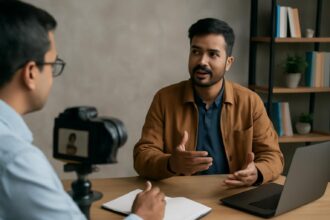
Eric Steinberg, SVP Research at CBS, and Tom H. C. Anderson discuss TV City.
Today I’m speaking with fellow Next Gen Market Research Group member Eric Steinberg who is SVP at CBS and has quite an interesting market research operation. CBS has gone well beyond what most of us would refer to as DIY research and have set up, as Eric calls it “The Henry Ford Model of Research”. The Vegas based facility is located at the MGM Grand and is open 12+ testing hours per day, 7 days a week!
Television City at The MGM Grand
More Read

Tom: Hi Eric, thanks for your participation in the Next Gen Market Research Group on LinkedIn, and thanks for agreeing to this interview. It’s always interesting for me to see how companies are challenging research as we know it.
Eric, can you briefly describe your research operation and facilities at the MGM Grand?
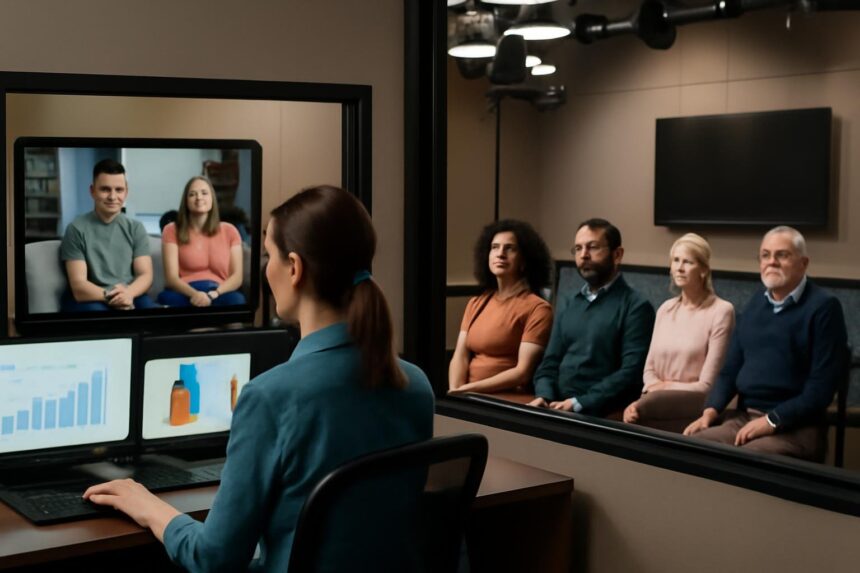
Eric: The brainchild of David Poltrack, Chief Research Officer at CBS, Television City at the MGM Grand is a full service facility that was built for the purpose of testing media, specifically television shows, but has evolved to handle other types of products. It has two theater style screening rooms and two focus group rooms that also can support the screening of media. Both rooms are equipped with touch screen computers which respondents use to record their opinions and dials to record moment-to-moment responses. The data is stored on servers that can be accessed on a secure website at any time, even while the project is still completing. The focus group rooms are equipped with teleconferencing equipment. We can monitor the groups with an online/interactive system with archive and search capabilities. We also have some cutting edge research tools like an eye-tracking system and Neurofocus, Inc.’s brain wave monitoring technology.
But the research capabilities are really only a part of the story. TV City is also an attraction at the hotel. To the consumer who is strolling down the concourse, TV City is a colorful array of plasma screens and TV themed displays. Among those displays could be the latest in home technology. It has a gift shop with CBS Corporation-themed merchandise. We also use the space to hold special events like book signings by CBS stars, “Meet the Survivors,” and other events that can promote CBS products and recruit respondents for research on those products. We even had CBS News in there during the Presidential Debates to watch voters turn dials and discuss the candidates’ performances during post-debate analysis.
Tom: It certainly sounds like an impressive set up. So what do you mean when you say you have a “Henry Ford Model type of Research”?
Eric: I’m hoping when you hear “Henry Ford” you think efficiency and not just “assembly line” which has come to connote a one-size-fits-all process, which is not what we are doing at TV City. I was specifically referring to the way we recruit national samples in a rapid fashion and complete our research efficiently. Because of our location at an entertainment themed hotel on the Las Vegas strip, we attract people from all over the country in one place. We are constantly running screenings of our shows so we can conduct research all day long and into the evening. Simultaneously we may run sessions for people to sample websites or movie trailers, again taking respondents as they come to us, which saves costs in recruiting.
Tom: Obviously Las Vegas draws individuals from all 50 states and abroad, but aren’t you concerned about the fact that these individuals might be different somehow demographically or possibly more importantly, psycho graphically? Additionally, are you concerned that those who seek out the “Television City” facility are different from other Vegas patrons in some way? What if anything do you do to control for this? Have you found any differences in the types of answers you get from other research methods?
Eric: I think all of those questions distill down into one: Is the research that has been done here predictive and reliable? The answer is clearly yes. The track record of how shows have tested vs. how they’ve performed on the air is impressive. We’ve had other companies use the facility, and while I don’t know what their specific results have been, they have returned to do more research.
That said, we are conscious of the site’s demographics and if we feel we need better representation of a specific group, we can target that group in our recruiting.
Tom: What kinds of research have you found works better or worse in this environment, and what kinds do you think work better with other traditional and/or online research methods?
Eric: This is an ideal place for testing programs/media, especially for a broad audience. We often wonder: How long can someone sit at the pool in the Las Vegas heat before they’ll want to sit in the air conditioning and watch TV? People love the idea that they can express their opinions about media to the very entities that produce/deliver that media. Plus, the respondents describe the experience very favorably. Most importantly, the information is reliable. I’d say the site works best when one has a specific show, product, website, etc., that they want to put in front of a diverse national sample. We have an online panel that we’ve recruited from visitors to TV City, and I think that works better for attitudinal research that requires very large samples.
Tom: Can you tell me some interesting/unexpected results you’ve had with a particular TV show? Something that was unexpected and/or highly actionable?
Eric: I can’t get into specific shows, but I can certainly share some stories. We had a pilot a few years ago that was delivered in an abbreviated condition. The story was thin, the producers put in lots of special effect sequences that just filled time, and some of the performers did not connect with the audience. Despite all the flaws, the show’s concept was strong and so interesting that viewers gave the show a much more favorable rating than we expected. After some re-casting and re-writing, the show was put on the schedule is still a hit today. We’ve had other instances where a show tested ok, but a character was so despised by the audience that we removed them from the show immediately.
We’ve also tested some promos that created an undesirable impression that we didn’t expect, enabling us to pull them before they aired. A funny example was the show that inadvertently created the impression of an incestuous relationship. Needless to say, we weren’t going for THAT. But these are the types of things that can happen when we are too close to a project, hence the importance of testing them.
Tom: I also noticed you are using Tobii eye tracking technology. I know this is a relatively new technology from Scandinavia, and I’ve spoken extensively with them looking into using it for some of Anderson Analytics clients as well. How have you found it so far?
Eric: We’ve found it helpful in evaluating our print ads. We usually have several concepts to choose from and the eye-tracking helped us see what was drawing the attention of respondents. This can be especially important when a new series is launching since the concept used becomes the series’ key art and will shape the campaign to come.
Tom: I also noticed you have a TV City store/gift shop. Do research participants receive CBS merchandise as incentives and/or what type of incentives, if any, do you typically offer?
Eric: We’ve used a variety of incentives, but we frequently use coupons (10% off the retail price) that can be redeemed at the gift shop. We sometimes use coupons for the Starbucks shop down the hall and we offer cash for most focus groups.
Tom: What have been some of the difficulties in running this type of research operation (internal and external)?
Eric: Managing the capacity can be an issue. I use the site extensively, but other entities within CBS want to use it too. Plus, we want outside companies to use the facility. So juggling the priorities between the divisions is always a challenge.
Tom: How has the economy affected your research/operation lately?
Eric: Our operations have not been affected by the downturn in the economy. Our average daily participation has not changed in the year over year comparisons. Obviously there is a concern because tourism to Las Vegas has declined, as well as its convention business. But destination hotels like the MGM Grand, and others on the strip from which we draw respondents, find a way to maintain their share of visitors so we still get a large pool of potential respondents.
Tom: Thank you Eric, I Anderson Analytics will soon have the opportunity of conducting some research at your facility with some of our non-TV (travel/leisure industry) clients.
Beyond Research
Interactve Monitors
Stations
Focus Group
Special Event
Special Event: Survivor
Special Event: Amazing Race
Special Event: Late Late Show Live Remote
Gift Shop
Traffic
Tom H. C. Anderson – Anderson Analytics