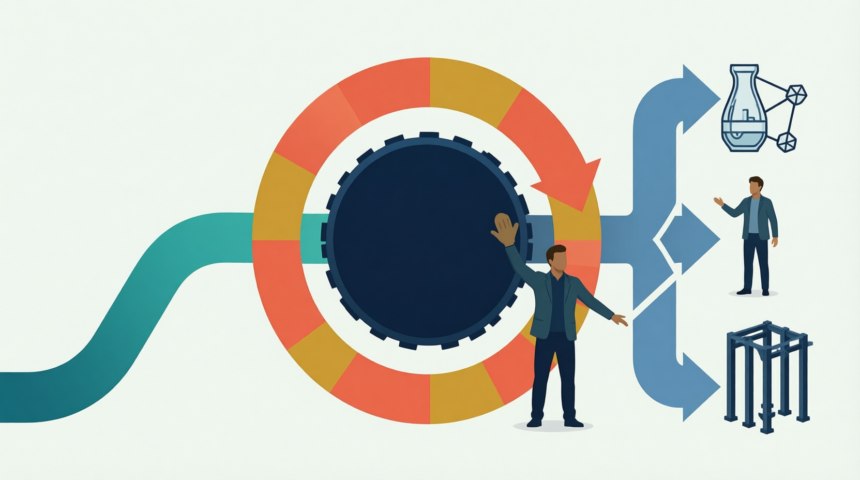
According to the Financial Times, companies are on record pace to return over one trillion dollars to shareholders this year via share buybacks and dividends. With creaking IT infrastructures and under-investment in other areas such as plants, equipment, employee training and more, this isn’t just a flawed strategy; it’s a dangerous one for the future health of companies across the globe.
Investors are tired of companies hoarding cash. While much of these dollars are often locked away on international balance sheets, there is clamor to return a significant chunk of this cash back to investors via dividends and share-buybacks. And just about every company of significant size is either boarding or already on the buyback gravy train according to an FT article; “dividends have climbed on average 14 per cent annually over the past four years” and “buybacks to rise at a double-digit rate this year.”
While $1T is expected to go back to shareholders, the strategy is not without critics. There is concern that returning such a large amount of cash to shareholders simply inflates stock prices and earnings per share growth, consequently leaving companies starved for investment.
“We haven’t seen much allocation of resources to capital,” says Bruce Kasman, head of economic research for JPMorgan. This is concerning, as such business investment can arguably help companies meet the needs of customers today and tomorrow. For example, this article shows the consequences of under-investment in keeping legacy systems performing in the banking industry. Even more troubling is the lack of investment in modern and cutting-edge technologies that might enable killer customer facing applications and improve customer satisfaction scores.
More Read
While burgeoning balance sheets may require some share buybacks—or at least enough to offset stock based compensation for directors and above—$1T does an seem excessive sum, especially while companies are spending 80% of their ever-so-flat IT budgets keeping existing and antiquated legacy systems functional.
If not share buybacks and dividends, where else could those monies be spent? For starters, while there’s an under-investment in IT on the whole, there are promising new technologies in play that could really make a difference for companies such as: mobile payments, embedded sensors for manufacturing systems, robotics, and even Hadoop and its related YARN applications.
Moreover, with practically a data breach and a destructive IT attack in the news each day, there’s a woeful under-investment in security (physical and software) to safeguard customer data. Another idea: investing in skills and technical training so that employees can serve customers better; this of course ultimately helps increase customer satisfaction and may improve company revenues.
Too many share repurchases may end up hurting the future performance of companies, especially when there are so many functional company departments, divisions and systems withering on the vine from lack of investment. Not to mention the dearth of innovation and creativity that’s kept at bay while investors and activist shareholders gorge themselves on the redistribution of cash flooding into their accounts.
There’s no way to avoid returning some cash to appease activist investors. But for the majority of it, there must be investment opportunities for innovation that aren’t getting a fair shake. VC icon, Peter Theil, famously said; “We wanted flying cars, instead we got 140 characters.” Let’s not sell ourselves short on innovation. We can do better than returning $1T to shareholders via buyback binges. Indeed, we must for our companies to have a fighting chance in the future.