
We use cookies, including third-party cookies from Google to serve personalized ads through AdSense, to operate this site and understand how it is used. By continuing to browse, you accept this use. See our Privacy Policy and Terms of Use for details, including how to opt out of personalized advertising.
Accept
SmartData CollectiveSmartData Collective
  • Analytics
    AnalyticsShow More
    What Kind of Problem-Solving Distinguishes Data Analysts From Software Engineers -- AI-generated illustration
    What Kind of Problem-Solving Distinguishes Data Analysts From Software Engineers
    7 Min Read
    chatgpt image jul 21, 2026, 04 34 30 pm
    4 Core Benefits of Predictive Maintenance after Vibration Analysis
    10 Min Read
    How Does Data Mining Boost Customer Satisfaction in Logistics? Harnessing Analytics for Results -- AI-generated illustration
    How Does Data Mining Boost Customer Satisfaction in Logistics? Harnessing Analytics for Results
    11 Min Read
    chatgpt image jul 13, 2026, 04 23 45 pm
    How Data Analytics Helps Companies Improve User Engagement
    19 Min Read
    chatgpt image jul 13, 2026, 03 59 46 pm
    How Data Analytics Improves Multi-Location Search Strategies
    10 Min Read
  • Big Data
  • BI
  • Exclusive
  • IT
  • Marketing
  • Software
Search
© 2008-25 SmartData Collective. All Rights Reserved.
Reading: Why Google Wave failed and Social Business Intelligence won’t
Share
Notification
Font ResizerAa
SmartData CollectiveSmartData Collective
Font ResizerAa
Search
  • About
  • Help
  • Privacy
Follow US
© 2008-23 SmartData Collective. All Rights Reserved.
SmartData Collective > Business Intelligence > Why Google Wave failed and Social Business Intelligence won’t
Business Intelligence

Why Google Wave failed and Social Business Intelligence won’t

Yellowfin
Yellowfin
4 Min Read
Why Google Wave failed and Social Business Intelligence won’t
Photo by tungnguyen0905 on Pixabay (https://pixabay.com/photos/technology-business-futuristic-7111795/)
SHARE

A few people have mentioned that the new collaborative features in Yellowfin have a stong Google Wave feel about them.  It’s true, we did look to Google Wave as a source of inspiration.  But, we believe there’s a huge difference in what Google Wave had to offer, compared to what Social and Collaborative BI will provide for the enterprise.

Google Wave: A solution without a problem

As a concept, Google Wave was ingenious. We use the past tense seeing as Google is sadly closing it down.

Google Wave provided a shared space on the web for people to communicate, share documentation and collaborate in real-time. Participants could also embed information – such as formatted text, videos, photos and maps – into the forum for discussion, or to give context to existing discussions. Google Wave provided many of the features and functionality that should be included in successful Social Business Intelligence (BI) (or enterprise collaborative decision-making) platforms.

However, Google Wave failed to achieve high levels of success because it’s a collaborative engine without a problem.   It was a collaborative platform that had no focus in terms of collaboration.  For example, users know they’re sharing photos on Flickr, but Google Wave had no such focal point.

More Read

AI Advances Facilitate SCRUM Teams For Agile Development
If you are now the CEO
AI Is Transforming CBD Rapidly Into A Massive Billion-Dollar Industry
The Role of Decision Requirements in the Analytical Life Cycle
Why You Should Enhance Your Email Campaigns With AI

So how does Social Business Intelligence differ?

So how does Social BI differ I hear you ask? Simple. Social BI has been, and is continuing to be developed, in response to an existing ‘problem’ – the quest for better, faster and collaborative decision-making. Social BI components have a specific role and purpose to fulfill – to facilitate organizational collaboration around reporting and analytics and organizational data. Google Wave did not.

An enterprise collaborative platform integrated within a BI solution enables users to collaborate where their information (BI content) is.  Their data, and their reports are the focal point of their collaboration.

An example

But let’s use an example.

You’re using your BI tool to search for data on last month’s sales results from the Americas. You find a startling anomaly – sales have skyrocketed compared to previous months. Why? What has been done differently? How do we replicate it?

If the collaborative decision-making platform is within the BI tool, you can immediately start the investigation, inviting others into the conversation in full view of the data. There’s no need to set up meetings and discussions in isolation from your data set.

The collaborative process remains clearly documented in a single open-access space, and discussion remains on topic – the underlying information (data) is right there.

You need both your collaborative platform and your information in the one place to enable successful collaborative decision-making.

TAGGED:business analyticsbusiness intelligenceCollaborative Business IntelligenceCollaborative decision making softwareSocial Business Intelligence
Share This Article
Facebook Pinterest LinkedIn
Share

Follow us on Facebook

Latest News

Flat editorial illustration: The article's core relationship is the gap between raw bank-feed records and reliable subscription i
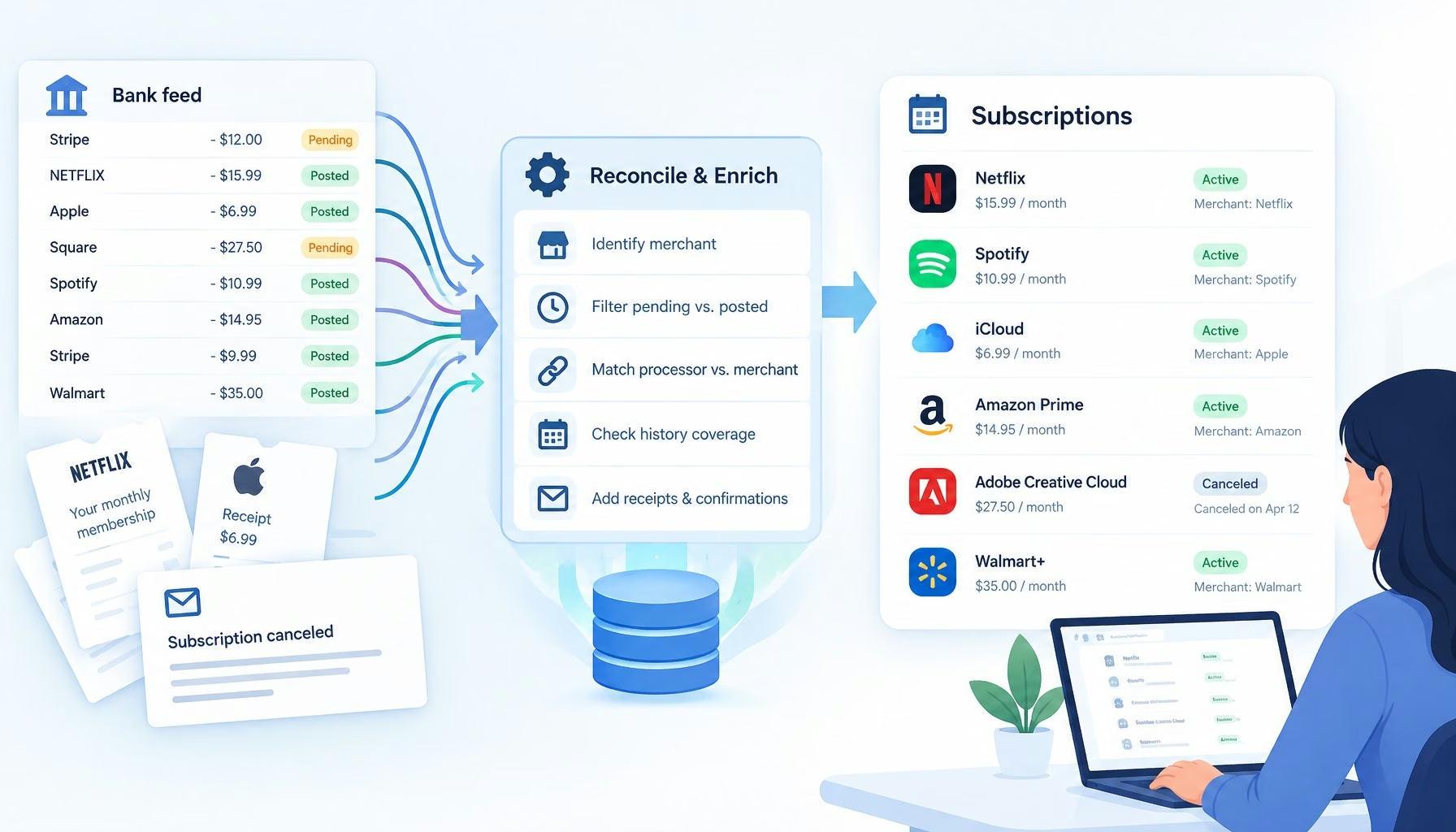
Subscription Trackers Have a Transaction Data Problem
Big Data Exclusive
Flat editorial illustration: The article's core relationship is the hypervisor as the abstraction layer that makes hybrid cloud p
7 Best Virtualization Platforms for Hybrid Cloud Environments
Big Data
Flat editorial illustration: The article's core relationship is between aggregated workplace data (occupancy, environmental, feed
How Businesses Can Use Workplace Data to Create Better Office Environments
Big Data Business Intelligence Exclusive
Flat editorial illustration: The article's core relationship is the engineering transition from an AI prototype to a production-r
From AI Prototype to Production: Observability and Scalability Requirements for Data-Heavy SaaS Applications
Artificial Intelligence Exclusive

Stay Connected

1.2KFollowersLike
33.7KFollowersFollow
222FollowersPin

You Might also Like

4 Ways to Leverage Data to Help Grow Your Business
Big Data

4 Ways to Leverage Data to Help Grow Your Business

8 Min Read
How To Use Big Data To Deliver Optimized Customer Experiences
Best PracticesBig DataBusiness IntelligenceData CollectionExclusiveMarketingPredictive AnalyticsWeb Analytics

How To Use Big Data To Deliver Optimized Customer Experiences

7 Min Read
There is Still Hope for Business Intelligence
Business Intelligence

There is Still Hope for Business Intelligence

0 Min Read
Data-Driven Recruiting is Solving Decades-Old Hiring Challenges
Big DataExclusive

Data-Driven Recruiting is Solving Decades-Old Hiring Challenges

6 Min Read

SmartData Collective is one of the largest & trusted community covering technical content about Big Data, BI, Cloud, Analytics, Artificial Intelligence, IoT & more.

ai chatbot
How AI Website Chatbots Improve Customer Support and Lead Generation
Chatbots Exclusive
From Bolts to Bots: How AI Is Fortifying the Automotive Industry
Artificial Intelligence

Quick Link

  • About
  • Contact
  • Privacy
Follow US
© 2008-26 SmartData Collective. All Rights Reserved.
Welcome Back!

Sign in to your account

Username or Email Address
Password

Lost your password?