Does it concern you that cotton from a t-shirt originated in Uzbekistan? You might care if reports are true that cotton harvested from this country came from forced or child labor. In fact, consumers are increasingly asking manufacturers and retailers to ensure goods and services are produced with sustainable and ethical business practices. With goods processed between countries and multiple supplier touches, traceability in the supply chain is more important than ever.
Consumers are becoming more and more interested in the make-up of products they’re buying. The ability to trace products through the entire supply chain—whether from field to fork or source to consumer—is becoming a competitive weapon for some companies, especially if they can authenticate then promote goods produced with sustainable business practices.
Editor’s note: Paul Barsch is an employee of Teradata. Teradata is a sponsor of The Smart Data Collective.
A Financial Times article cites that ethical spending has increased significantly in the past 20 years. As an example in the United Kingdom, “The amount of spending and investment influenced by ethical considerations almost doubled between 1999 and 2008 to reach £36 billion.” The FT article mentions the growth of fair trade and certified organic products as part of this growth trend. Marketing Profs DailyFix author, Ted Mininni, says these types of goods, “are increasingly being added to retail assortments”—and in growing numbers!

However, one of the major challenges for both retailers and manufacturers alike is authenticating ethically sourced products. There’s more to the process than taking the supplier’s word for it.
In the case of organic bananas, the FT article notes, “the food company Dole labels each of its organic bananas with a three-digit number that, when entered on its website, reveals details of the farm where that banana is grown.” Identifying where a banana is sourced, however, is simple compared to such products as sweaters or t-shirts that pass through multiple suppliers and countries.
In “The Elephant and the Dragon,” author Robyn Meredith confirms that products often “zigzag” through the global supply chain from factory to factory. “A cheap toy may be assembled by parts from 12 different factories,” she says. And something as sophisticated as an automobile might contain five to seven thousand parts.
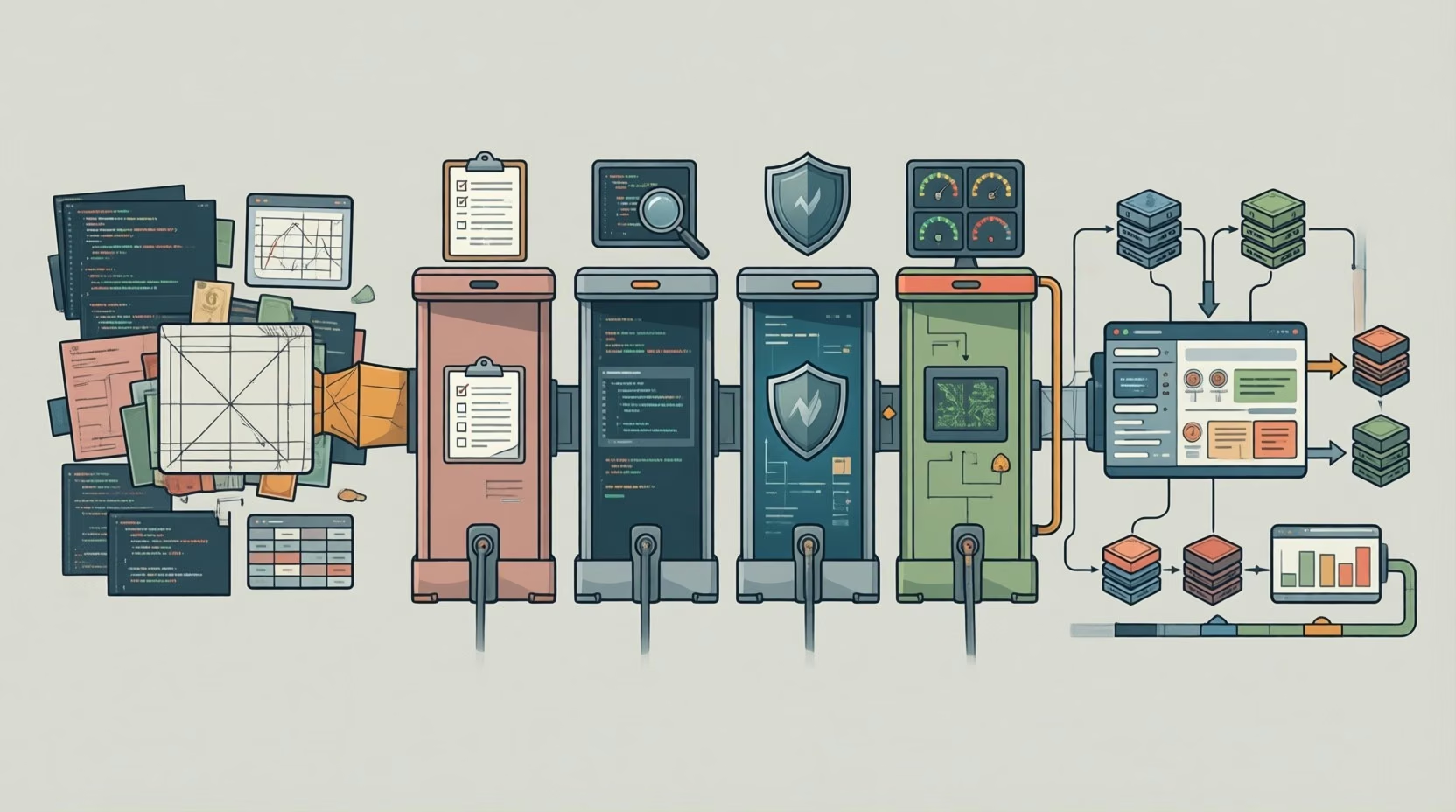
Fortunately for marketers, the challenge is not beyond the capabilities of today’s technologies. Some progressive companies are engaging in a purposeful effort to build effective policies (including auditing), technologies (supply chain analytics and infrastructure) and processes to track and monitor the extended supply chain.
Of course, implementing a data-driven supply chain infrastructure is only half the battle—supply chain managers, operations personnel and marketers must learn how to use it! Marketers, working alongside operations, will need training on the various tools and systems used to access data for reporting and query purposes. And marketers may also choose to make supply chain data available directly to consumers—similar to Dole’s web portal—thus enabling them to verify product origins for themselves!
Ethical sourcing, trade, manufacturing and retailing will continue to be a hot button for consumers. However, as seen from this article, jumping into this marketplace requires much more than just fancy signage and/or promotion. A real commitment to corporate responsibility and sustainable practices must be much more than lip service; it involves significant investment in people, processes, technology, and strategy. As seen from the complexity in supply chain traceability alone, it’s definitely not an effort a company should take lightly.
Questions:
• Does it matter to you how a product is made? Are you interested in the origins of the products and services you consume?
• The Financial Times article says that companies should make information about their supply chain public—or consumers will do it for them. Do you agree with this statement?