

Big data is having a tremendous impact on the future of modern business. Many business owners recognize its benefits, but fail to invest in it appropriately.
Harvard Business Review Analytic Services recently published The State of Digital Adoption report on big data adoption in business, and its findings may surprise or even alarm many organizations and institutions. The study was sponsored by San Francisco-based digital adoption platform WalkMe.
The report brings to light the seeming disconnect between digital transformation goals and implementation. An overwhelming majority of the business executives surveyed, at 81 percent, acknowledge the importance of big data adoption as a differentiator. However, only 20 percent consider their digital transformation strategies effective. The report also highlights the connection between successful digital transformation campaigns and the acceleration of digital adoption.
The report is the result of a survey involving 500 executives from numerous large corporations. WalkMe, a digital adoption pioneer that offers solutions used by over a thousand companies including Fortune 500 businesses, sponsored the study to gain clearer perspectives on how companies have fared so far with their digital transformation initiatives. The study?s findings are expected to help companies gain useful insights and a better understanding of big data and digital adoption including the use of digital technologies in operating businesses and the management of digital tech in the workplace.

Ineffective digital transformation through poor data utilization
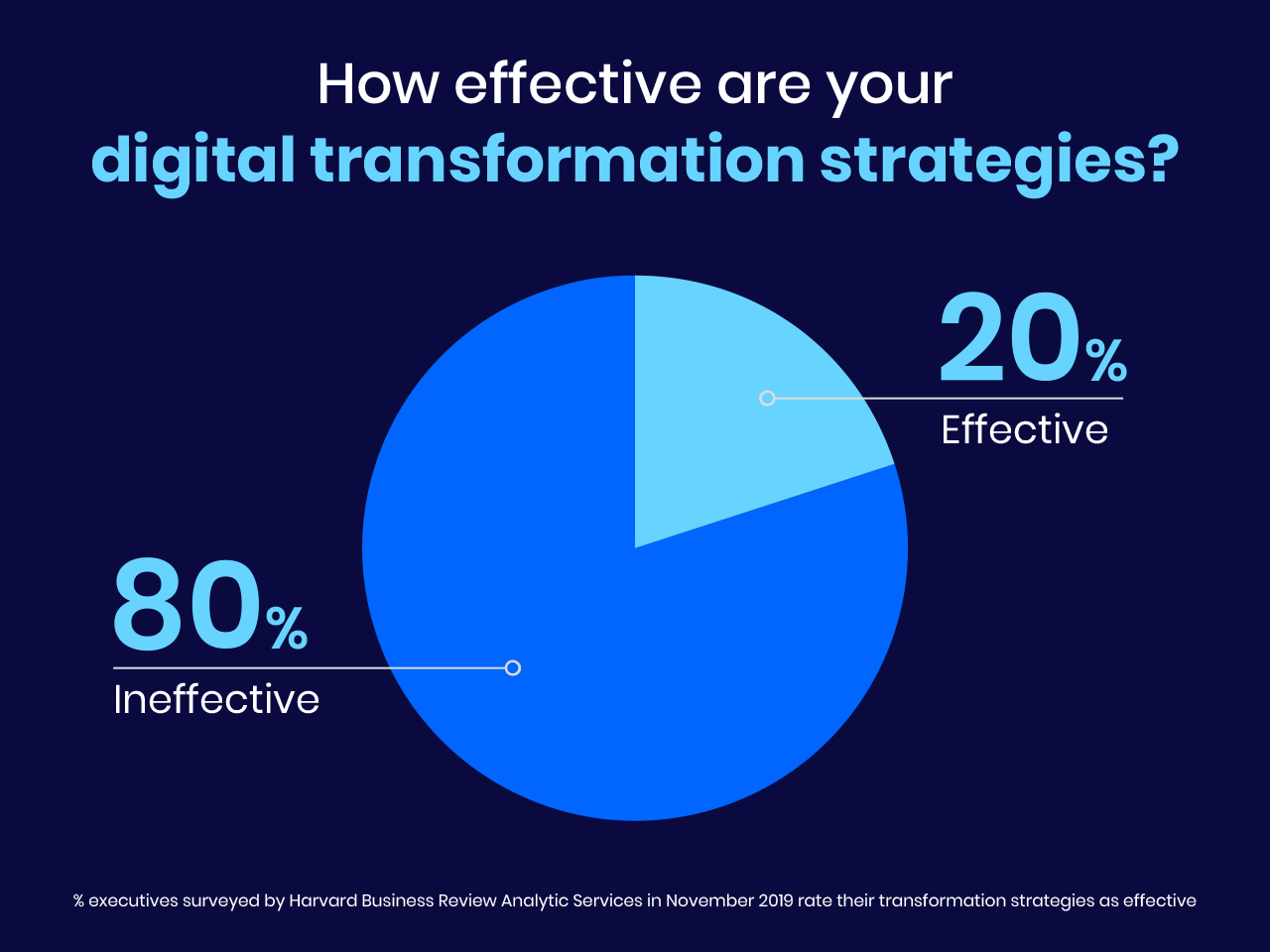
As mentioned, only a fifth of the business executives surveyed considers their digital transformation strategies effective. The study reveals a number of reasons behind this reported ineffectiveness of big data strategies that don’t get utilized. The most notable of which is the use of multiple applications in performing cross-functional business processes.
A vast majority of the survey respondents, at 82 percent, say that their typical employees use four or more digital touchpoints on a daily basis. On the other hand, 56 percent say that their typical employees are expected to master at least three of the new digital touchpoints per year.
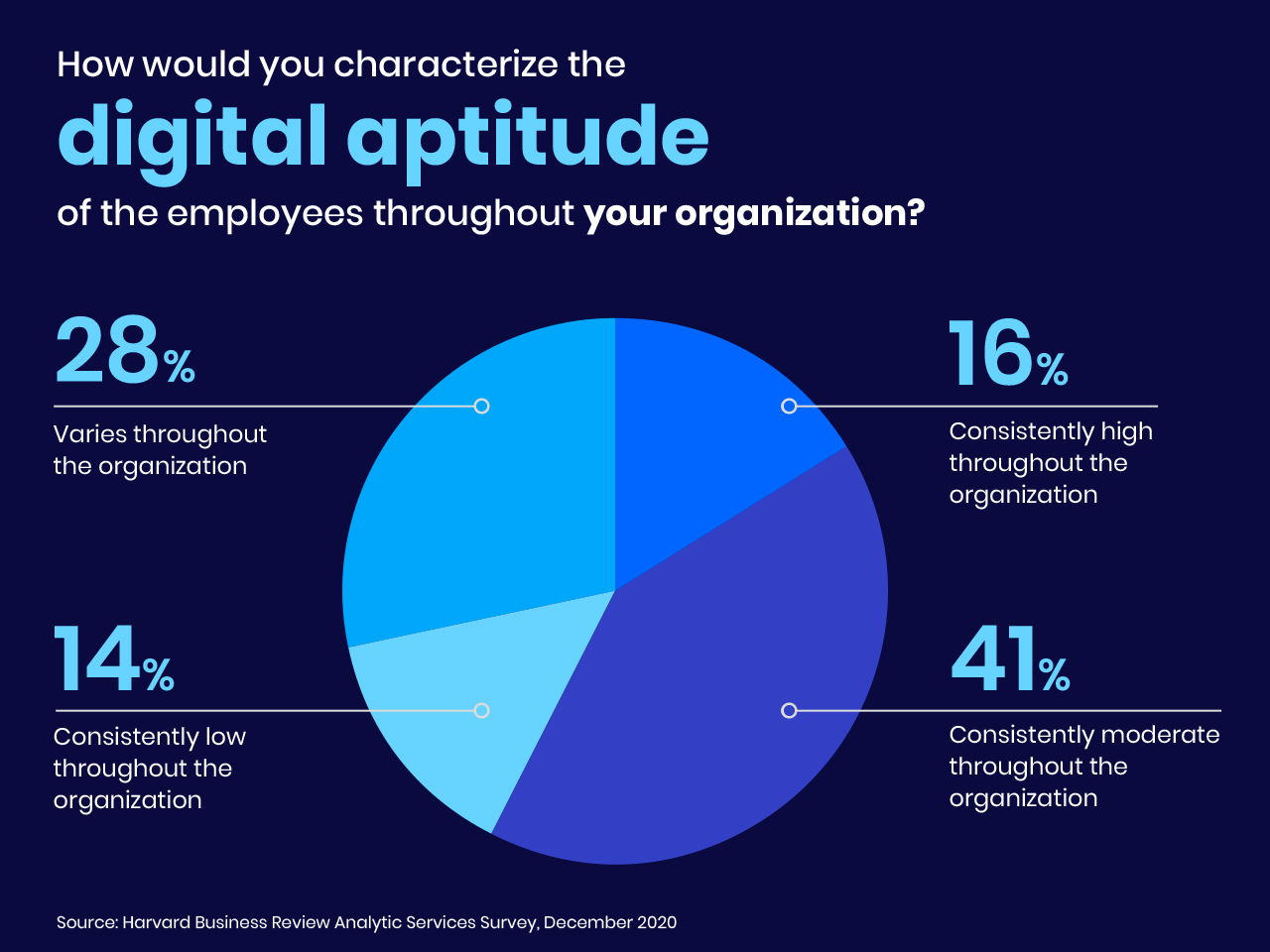
It is not inaccurate to say that the digital aptitude of typical employees in organizations cannot keep up with the rate of new digital transformation initiatives. Because of this, executives are having a hard time achieving the competitive differentiation they need in an increasingly digitally-driven world of business.
Moreover, it is worth noting that 81 percent of the survey respondents say that it is either ?important? or ?very important? to empower senior leaders in prioritizing development efforts by granting them more visibility into the digital transformation initiatives of an organization. The problem, however, is that there are no universal benchmarks for evaluating digital transformation performance. While most organizations have digital adoption efforts, they usually do not have the competence in determining their success or failure.
The report shows that organizations tend to use a combination of quantitative and/or qualitative metrics to evaluate the effectiveness of their strategies and the technologies they have chosen to adopt. The commonly used ones are employee engagement scores (36 percent), customer reviews and feedback (36 percent), company revenue (35 percent), savings on expenses (34 percent), and the speed of technology implementation (32 percent).
Several other metrics have been reported by the survey respondents including the speed of employees’ adoption of new technology, the number of new customers or customer engagements, supply chain efficiency, social media mentions, and employee turnover.
With different organizations using different metrics, it becomes difficult to have a standard way of measuring the success of their digital transformation. This results in unsystematic or poorly organized efforts. It is also alarming that 13 percent of the executives surveyed admit that they do not measure their performance or have no idea about it.
Harnessing the power of digital adoption platforms
Alex Clemente, Harvard Business Review Analytic Services Managing Director, suggests that the reported ineffectiveness of digital transformation strategies can help improve success for other companies. ?There is much to learn from the 20 percent of executives who rate their transformation strategies as effective,? Clemente says.
With the acknowledgment of their failure, they turn to digital adoption platforms. ?They leverage the visibility provided to them by digital adoption platforms (DAP) to pinpoint problem areas and to show users how to get the most value out of their tech stack,” Clemente explains.
?Digital adoption platforms provide executives with the insights they need to identify and resolve digital friction,? says WalkMe President and Co-Founder Rafael Sweary. He believes that ?The State of Digital Adoption? affirms the importance of DAPs in enabling effective digital transformation particularly in terms of time-to-aptitude, competitive agility, and ROI considerations.
Not all organizations have the right people to ensure successful and meaningful digital adoption. However, everyone has the option to rely on DAPs not only to undertake more organized digital transformations but also to have a standards-based examination of performance.
DAPs can play a vital role in digital transformations, as they are designed to help software or digital tech adapt to users. Instead of forcibly making people adapt to software and other digital tools, DAP facilitates a more effective digital adoption through the introduction of a unified and all-purpose interface for users.
DAPs act as an enabler for the exponential expansion of a digital transformation campaign. At the same time, it helps ascertain that organizations do not become too fixated on solving current problems. They must also anticipate the challenges of the future.
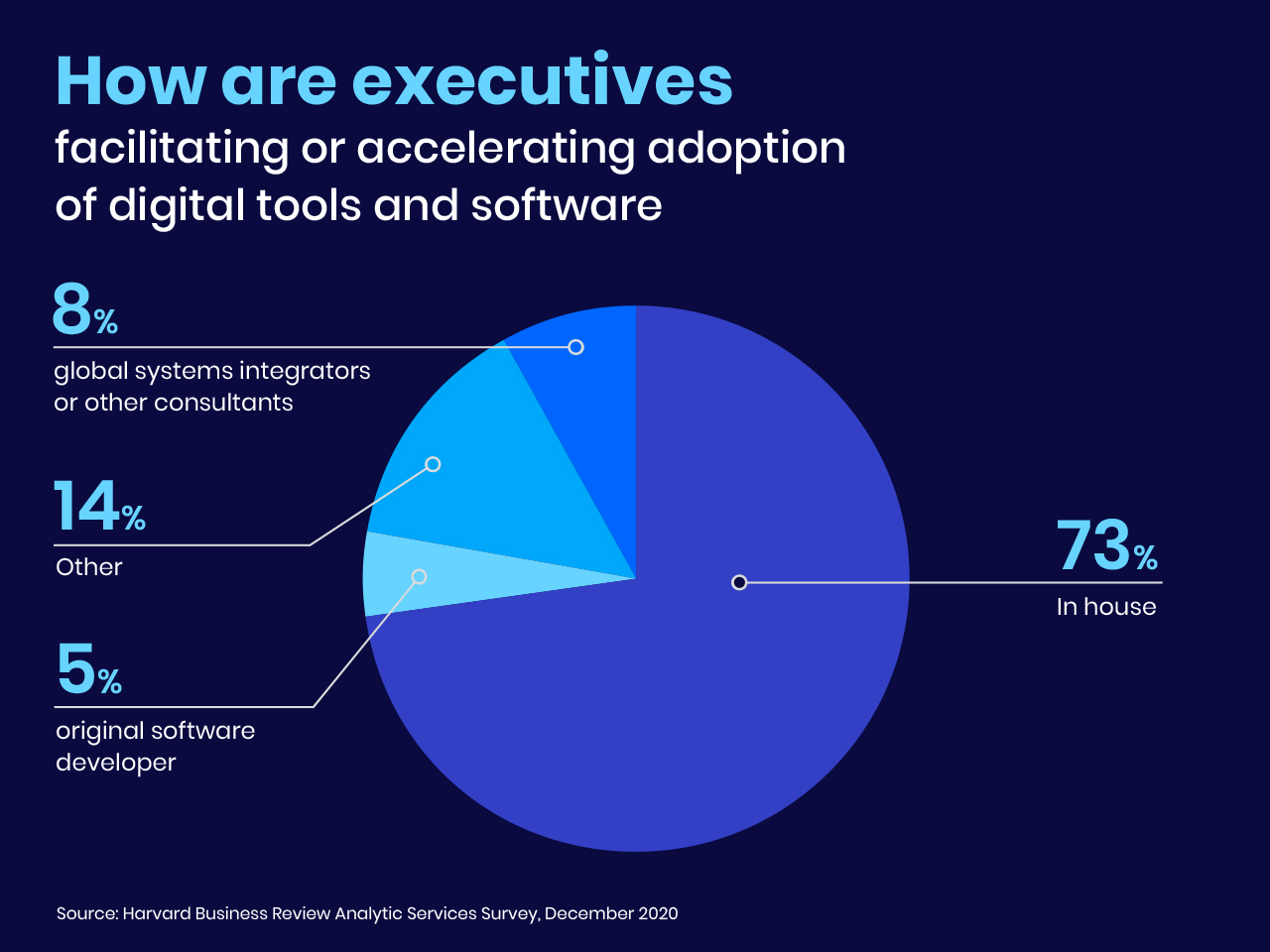
To advance the benefits of big data and digital adoption, 73 percent of executives say they are establishing in-house centers of excellence. This appears to be a growing trend among organizations, as a new job category called ?digital adoption manager? has emerged. This new position focuses on generating quicker and greater returns on technology investments.
Better digital transformation for better business outcomes
One of the biggest benefits of big data by far is that it leads to better business outcomes. Savvy business owners will take this into consideration when they try to leverage data effectively.
WalkMe?s The State of Digital Adoption report confirms the prevailing opinion that digital transformation is essential for organizations. However, it also shows that the acknowledgment of this need alone is not enough. Digital transformation implementers or managers should pay attention to their strategies in adopting new technologies. A success rate of 1 out of 5 is doubtlessly abysmal considering how much companies spend to digitalize.
The reality is that not many organizations have the in-house expertise, proficiency, and experience to achieve effective digital adoption. This should not be an excuse for organizations to fail with their digital transformation efforts. Using the right DAP facilitates successful digital transformation by improving the user experience as well as employee efficiency, business productivity, and customer satisfaction. It also delivers enhanced digital transformation visibility for CIOs as well as the executive management team of an organization.